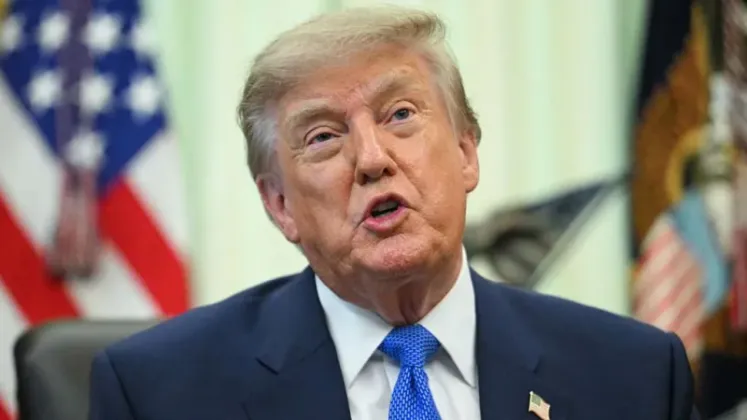
WASHINGTON - President Donald Trump has signalled that he is prepared to use his presidential veto power to block bills brought forward by the Democratic Party, after Democrats won control of both chambers of the United States Congress in the midterm elections. According to reports from Washington, Trump made the indication on Thursday while at the Oval Office in the White House. The announcement points to a period of potential friction between the White House and a Congress now led by the opposition, with the veto positioned as the president's principal instrument for resisting legislation he opposes.
A warning issued from the Oval Office
Trump's indication came in remarks made on Thursday at the Oval Office, the president's formal workspace in the White House and a setting long associated with major presidential announcements. According to the reports, the president signalled that he would use the veto to block legislation coming from the opposition party, which now controls both the House of Representatives and the Senate following the midterm elections.
The reports did not offer specifics on which bills the president might target or when the veto might first be deployed. The articles did not provide further details on specific legislation or timing, leaving open how the standoff between the White House and Congress will unfold in practice. Even so, the broad message was clear: legislation emerging from a Democratic-led Congress should not expect a smooth path to enactment while Trump remains in the White House.
The veto power and how it works
The veto is among the most consequential powers granted to an American president under the United States Constitution. It allows the occupant of the White House to reject a bill passed by Congress, and it can be overcome only through an unusually demanding legislative threshold. The bar for an override is deliberately high, reflecting the intent that a veto should stand unless an overwhelming majority of lawmakers insists otherwise.
The process typically unfolds in the following way:
- Both chambers of Congress pass a bill and send it to the president.
- If the president rejects the measure, it is returned to Congress, which may attempt to proceed without the president's approval.
- Overriding a veto requires a two-thirds majority in both the House of Representatives and the Senate.
- Such majorities are rare, since they require substantial numbers of lawmakers from the president's own party to side with the opposition.
In practical terms, a bill passed by a Congress controlled by the Democratic Party would, if Trump followed through on his indication, need to attract support well beyond the opposition's own ranks in order to become law. Any measure that fell short of the two-thirds threshold in either chamber would stop at the president's desk.
Midterm results reshape the balance of power
Midterm elections, held midway through a president's term, are a recurring test of the governing party's standing, and the latest contest delivered control of both chambers of Congress to the Democratic Party. The result leaves the president facing a legislature led by his opponents, a configuration that typically complicates the passage of legislation and sharpens exchanges between the executive and legislative branches of government.
Divided government of this kind, in which one party holds the White House and the other controls Congress, is a familiar feature of American politics. It tends to produce hard bargaining over budgets and major bills, and it raises the likelihood that a president will reach for the veto to protect his position. It is precisely in such circumstances that the veto assumes its greatest significance: a president who cannot rely on Congress to advance his agenda can still ensure that bills he opposes do not become law, provided his party retains enough seats to prevent an override. Thursday's indication suggests that Trump intends to lean on that authority as relations between the White House and the new Congress take shape.
What remains unclear
For all its force, Thursday's statement leaves a number of questions open. The reports did not identify any specific bills that might draw a veto, nor did they indicate when the president might first use the power. Much will depend on the legislation that the Democratic-led Congress chooses to prioritise and send to the White House.
What is established is the posture. In the aftermath of midterm results that handed control of Congress to the opposition, the president has signalled that the veto will be within reach whenever bills from the Democrats arrive at his desk. The development has drawn attention well beyond the United States as well, with Nepali news outlets Ratopati and Gorkhapatra Online both carrying reports on the president's comments from Washington.