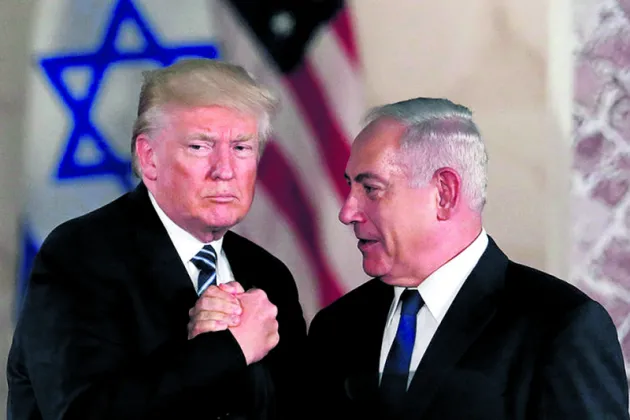
US President Donald Trump has endorsed Israeli Prime Minister Benjamin Netanyahu ahead of Israel's tightly contested election, delivering a high-profile boost to the incumbent as his Likud party fights for re-election. In a video released by Likud, and highlighted in a report by My Republica, Netanyahu showcased his close relationship with the American president, declaring that the two had "crushed Iran" and promising voters that a new term would allow the allies to "eliminate the Iranian threat" within two years or sooner. The endorsement was presented not as background decoration but as the campaign's centerpiece, with Netanyahu explicitly urging Israeli voters to take Trump's words into account when they cast their ballots.
A presidential endorsement at a decisive moment
The intervention comes as Israel's election race remains tight, with Likud contesting a vote whose outcome is far from assured. That a sitting US president would put his weight behind one side in the election gives the incumbent a form of support that advertising alone cannot provide, and Netanyahu's team has moved quickly to make the most of it. The decision to release the video through the party's own channels signals that Likud regards Trump's backing as one of its strongest selling points and intends to place the relationship with the White House at the heart of its campaign message.
For Netanyahu, the endorsement functions as external validation of the record he is asking voters to reward. Rather than relying solely on his own arguments, the prime minister has effectively borrowed the authority of the American president and handed it directly to his re-election effort. By presenting Trump's support so prominently, Likud is asking the electorate to weigh the value of that relationship alongside everything else on the table.
"Crushed Iran" and a two-year promise
The substance of Netanyahu's message in the video centers overwhelmingly on Iran. Speaking of his partnership with Trump, the prime minister said the two leaders had "crushed Iran", a formulation that compresses a long confrontation with Tehran into a single campaign talking point. He then attached a deadline to the next step, telling voters that re-election would allow him and Trump to "eliminate the Iranian threat" within two years or sooner.
The specific timeline stands out. Rather than speaking in general terms about containing Iran, Netanyahu promised a definitive resolution and tied that resolution directly to his own political survival. In the video's framing, the partnership with Washington is presented as the key to countering Iran, which turns the election into something more than a routine contest over domestic policy.
Taken together, the message rests on three pillars:
- The claim that Netanyahu and Trump have already "crushed Iran"
- The pledge that renewed terms for both would eliminate the Iranian threat within two years or sooner
- The call for voters to heed Trump's words as they decide how to vote
A direct appeal to Israeli voters
Netanyahu did not treat the endorsement as a formality. He urged voters to heed Trump's words, positioning the US president's support as something Israelis should seriously weigh at the polls. The appeal is straightforward: if voters believe the relationship with Trump matters for Israel's security, then returning Netanyahu to office is the way to preserve it.
The pitch binds the campaign's two central themes, the tightness of the race and the primacy of the Iranian issue, into a single argument. By telling Israelis to listen to Trump, Netanyahu frames the vote as a referendum on the partnership itself, implying that his continued leadership is what keeps the alliance functioning at full strength. The endorsement is thus presented not merely as a courtesy from a friendly head of state, but as a practical reason to choose a particular prime minister.
The stakes in a tight race
The context for all of this is an election that remains genuinely competitive. In a tight race, campaigns search for messages capable of moving undecided voters, and Likud has clearly calculated that the Trump relationship is one of them. Releasing the video through party channels points to a belief that the American president's standing can be transferred, at least in part, to the Israeli ballot box.
The strategy rests on the assumption that enough voters share Netanyahu's emphasis on Iran and place real value on his closeness to Washington. The explicit two-year deadline, the boast of having "crushed Iran" and the call to heed Trump's words all point to a campaign that treats security policy and the US relationship as inseparable from the question of who should lead Israel's next government.
Whether the appeal persuades enough Israelis will become clear only when the ballots are counted. What is already clear is the shape of the pitch Netanyahu is making: that Trump's endorsement should be read as a recommendation from the leader of the United States, and that keeping that partnership intact requires keeping Netanyahu in the prime minister's office.