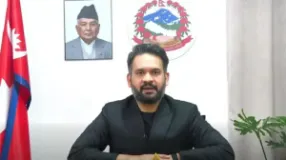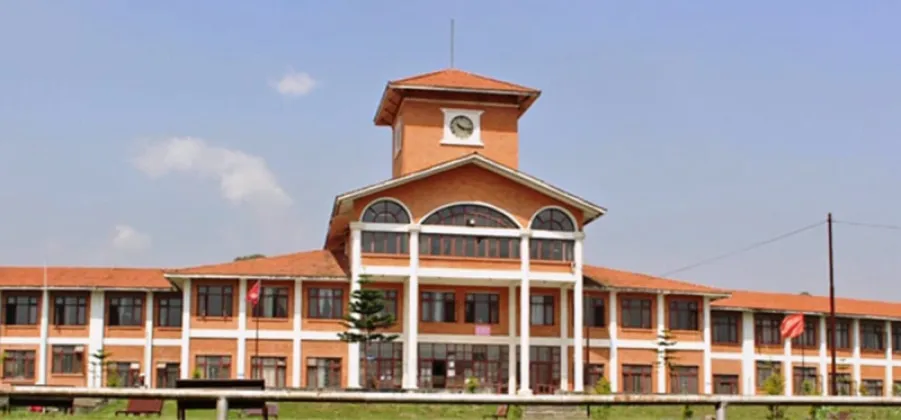
Tribhuvan University has reclaimed more than 705 ropani of its land within the Kathmandu Valley that had long been occupied by various bodies, associations and individuals, Minister for Education and Sports Sasmit Pokharel has said. The recovery was carried out over a period of six months and followed active efforts by the Ministry of Education and Sports together with the university itself, as reported by Nagarik News and Ratopati. The scale of the recovery, and the relatively short time in which it was achieved, has already drawn attention to a campaign that appears to have shifted the equation on one of the country's most persistent cases of institutional land encroachment.
A six-month push to take back university land
According to the minister, the land had been in the hands of a wide range of occupants, including formal bodies, associations and private individuals. That mix of occupants points to how deeply entrenched the problem had become, with university property gradually absorbed by parties who held no legitimate claim to it. Pokharel said the land was recovered following active efforts by the Ministry of Education and Sports and Tribhuvan University, indicating a coordinated push by both the government body responsible for education and the institution that owned the land, rather than a single act of enforcement.
The recovery at a glance
- Land recovered: More than 705 ropani, or roughly 36 hectares, of university land inside the Kathmandu Valley
- Former occupants: Various bodies, associations and individuals who had long occupied the plots
- Time frame: The reclamation was completed over a period of six months
- Key actors: The Ministry of Education and Sports and the Tribhuvan University administration
The six-month timeline is notable. Land disputes involving public institutions in Nepal frequently drag on for years, sometimes decades, weighed down by legal claims, political protection and administrative inertia. That one of the country's largest public landholders could recover more than 700 ropani within a single half-year window is precisely what has made the announcement stand out, and it is the question Nepali media are now asking: how was it made possible in six months?
Why the scale matters
Seven hundred and five ropani is a substantial holding by any measure. Converted, it amounts to roughly 36 hectares of land in a densely built valley where open and public space has been shrinking under years of urban growth. For a single institution to recover that much ground, in the middle of the country's most valuable real estate market, gives a sense of both the scale of the original encroachment and the significance of getting it back.
Tribhuvan University, Nepal's oldest and largest higher education institution, has long been associated with the problem of encroachment on its land. Its campus holdings across the valley have been regarded as vulnerable to occupation by outside parties, and successive university administrations have struggled to bring occupied plots back under institutional control. Against that backdrop, the recovery of more than 705 ropani represents a striking reversal of that trend, achieved within a period of months rather than years.
What the reclaimed land means for the university
For Tribhuvan University, the recovery is more than a symbolic win. Land is among the university's most valuable physical assets, and returning hundreds of ropani to its control opens up possibilities that had long been closed off. Recovered plots can in principle be brought back into institutional use, whether for teaching facilities, student services or future expansion, with those decisions now resting with the university administration.
The case also carries weight well beyond the university's own boundaries. Public institutions across Nepal, from campuses to schools, have watched valuable land registered in their names slip into the hands of private occupants over the years, often with little recourse. A case in which the ministry responsible and the institution itself worked in tandem, and delivered measurable results within six months, offers an example that other institutions may now be pressed to replicate.
Attention now turns to what comes next
The minister's announcement, as reported, focused on the recovery itself rather than the steps that follow. That leaves open questions about the future of the reclaimed land: how the university will formally secure and manage the plots, how the ground will be used, and how it will be protected against fresh encroachment, which has historically been the harder part of the task.
For now, the headline facts are established. More than 705 ropani of public university land, occupied for years by bodies, associations and individuals across the Kathmandu Valley, is back under the control of Tribhuvan University. The Ministry of Education and Sports and the university are presenting the outcome as the result of deliberate, active effort sustained over six months. Whether the recovery proves durable, and whether it signals the beginning of a broader effort to reclaim institutional land elsewhere in the valley, will be watched closely in the months ahead.