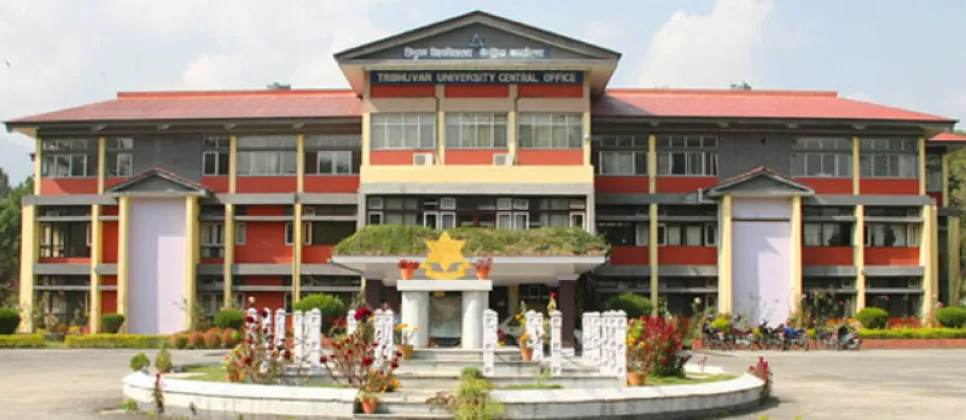
Tribhuvan University has reclaimed 705 ropanis of land in the Kathmandu Valley that legally belonged to the institution but had long been occupied by various institutions, organisations and individuals. Minister for Education and Sports Sasmit Pokharel said the land was recovered through the coordinated efforts of the Ministry of Education, with the recovery reported on November 4, 2026. The announcement marks the return of a substantial tract of institutional land to the ownership of Nepal's oldest and largest university, ending a long spell in which the property's legal owner and its actual occupiers were two very different sets of parties.
A Long-Occupied Holding Returns to the University
The land in question is legally registered in the name of Tribhuvan University, but for a long period it had been held on the ground by a range of parties, including institutions, organisations and individuals. While the paperwork of ownership remained with the university, day-to-day control of the plots had effectively passed to the occupants, placing part of the institution's landholding beyond its direct use even as its title remained unchallenged on record.
In terms of scale, the recovery is considerable. The ropani, the traditional unit of land measurement still widely used in Nepal, is equivalent to roughly 508.7 square metres. On that basis, the 705 ropanis reclaimed amount to approximately 35.9 hectares, or close to 89 acres. In the Kathmandu Valley, where open land is scarce and property values are among the highest in the country, a holding of this size carries significant weight both for the university's own future needs and for the wider question of how public property is safeguarded.
The Recovery at a Glance
- Land area: 705 ropanis, approximately 35.9 hectares or nearly 89 acres
- Location: Kathmandu Valley
- Legal ownership: Tribhuvan University
- Previous status: long occupied by various institutions, organisations and individuals
- Recovery process: coordinated efforts led by the Ministry of Education
- Announcement: Minister for Education and Sports Sasmit Pokharel, reported on November 4, 2026
Minister Credits Coordinated Government Effort
According to Minister Pokharel, the recovery was not the achievement of a single office but the outcome of coordinated work, with the Ministry of Education playing the central role in bringing the land back under the university's control. By presenting the operation in these terms, the minister has framed the protection of university land as a matter of government responsibility, carried through the ministry he leads, rather than an internal concern of the university alone.
The announcement, as reported by Khabarhub, highlighted the headline figure of 705 ropanis recovered. It did not set out a plot-by-plot breakdown of the reclaimed land, nor did it name the individual institutions, organisations or individuals who had occupied it. What it made clear is the essential outcome: land that had been outside the university's effective control for a long time is now back in the hands of its rightful owner.
University Land in a Crowded Valley
Tribhuvan University, established in 1959, is Nepal's oldest and largest university, and its main campus at Kirtipur in the Kathmandu Valley serves as the centre of the country's higher education system. Land registered in the university's name is meant to serve academic and institutional purposes, from teaching facilities to the residential and support infrastructure that a university community of its size requires.
The occupation of public and institutional land by private parties and unauthorised users has been a recurring feature of life in the Kathmandu Valley, where decades of rapid urban growth have placed intense pressure on land. Large tracts held by public institutions but not fully built upon or continuously monitored are particularly exposed to encroachment, as buildings and uses become established over time until possession on the ground stands in contrast to ownership on paper. The long occupation of the 705 ropanis now recovered fits that wider pattern, which is why its return has been presented by the government as a matter of institutional and public interest.
What the Recovery Means
For the university, the immediate significance of the recovery lies in the restoration of full control over land to which it has always held legal title. Land of this size gives the institution room to plan for its campus needs, and its return removes a long-standing gap between legal ownership and actual possession.
For the government, the recovery stands as an example of coordinated administrative action in defence of institutional property. By crediting the Ministry of Education's coordinated efforts, Minister Pokharel has positioned the operation as evidence that land registered to public institutions can be brought back even after years of occupation. The announcement of November 4, 2026 thus closes one chapter in the story of the university's landholding in the valley, while underlining the broader task of protecting public and institutional property across the country.