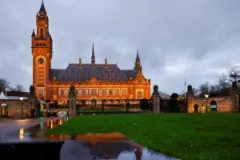
The International Court of Justice (ICJ), the United Nations' top court, will deliver a historic ruling on November 19 on whether the crackdown on Rohingya Muslims in Myanmar amounts to genocide. The verdict will come in a case filed by Gambia in 2019, which accuses Myanmar of violating the 1948 Genocide Convention through its treatment of the Rohingya minority. The forthcoming judgment is set to formally answer one of the most consequential legal questions of recent years: whether the actions taken against the Rohingya Muslims constitute genocide under international law.
A Historic Ruling From the United Nations' Top Court
The ICJ, often referred to as the World Court, is the principal judicial organ of the United Nations. Seated in The Hague, the Netherlands, it settles legal disputes between states in accordance with international law, and its judgments are binding on the states involved in a case.
The court is scheduled to read its verdict in the Rohingya genocide case on November 19. The ruling, described in reports of the announcement as historic, directly concerns the treatment of Rohingya Muslims in Myanmar.
The question before the judges is a stark one: whether the crackdown on the Rohingya Muslims in Myanmar amounts to genocide. Because the accusation is anchored in the 1948 Genocide Convention, the verdict will be measured against the treaty that is widely regarded as the cornerstone of the international legal framework for preventing and punishing the crime of genocide.
Gambia's Case Against Myanmar
The case was filed by Gambia in 2019, when the West African nation brought its application against Myanmar before the United Nations' highest judicial body. In its filing, Gambia accused Myanmar of violating the 1948 Genocide Convention, placing the treatment of the Rohingya Muslims at the centre of a formal legal dispute between two states.
At the heart of Gambia's complaint is the crackdown on Rohingya Muslims in Myanmar. The case alleges that Myanmar breached the Genocide Convention through that crackdown, and it is this central allegation that the court's November 19 ruling is set to address.
The case has remained before the ICJ since Gambia first filed it in 2019, and the forthcoming verdict marks the next major step in the proceedings. When the judges deliver their decision on November 19, they will be ruling on the very question Gambia put to the court more than five years ago: whether Myanmar's actions against the Rohingya amount to genocide.
The 1948 Genocide Convention at the Centre of the Dispute
The legal foundation of Gambia's case is the 1948 Genocide Convention. Adopted in the aftermath of the Second World War and the Holocaust, the convention defines genocide and commits the states that have joined it to prevent and punish the crime. Under the treaty, genocide is defined as acts committed with the intent to destroy, in whole or in part, a national, ethnical, racial or religious group.
Gambia's case against Myanmar rests on the allegation that the crackdown on the Rohingya Muslims violated this convention. The ICJ's ruling on November 19 will determine whether the court finds that the treatment of the Rohingya in Myanmar meets the threshold set out in the 1948 treaty.
A judgment on this question carries particular weight because genocide is recognized as one of the gravest crimes under international law, and because the case has been pursued through the formal state-to-state mechanism that the Genocide Convention provides.
What the November 19 Verdict Will Decide
The forthcoming judgment concerns the treatment of Rohingya Muslims in Myanmar. In essence, the ICJ will state whether the crackdown on the Rohingya amounts to genocide, answering the accusation Gambia levelled against Myanmar when it filed the case in 2019.
Key facts at a glance:
- Court: the International Court of Justice (ICJ), the United Nations' top court
- Ruling date: November 19
- Case filed by: Gambia
- Year of filing: 2019
- Accusation: Myanmar's violation of the 1948 Genocide Convention
- Subject: the treatment of Rohingya Muslims in Myanmar and whether the crackdown against them amounts to genocide
The verdict, as reported by RatoPati, will be delivered on November 19, bringing the court's consideration of a case that began in 2019 to a decisive moment. For the Rohingya community and for the broader effort to hold states accountable for the gravest international crimes, the ICJ's ruling will stand as a formal judgment on whether the crackdown in Myanmar constitutes genocide under the 1948 Genocide Convention.