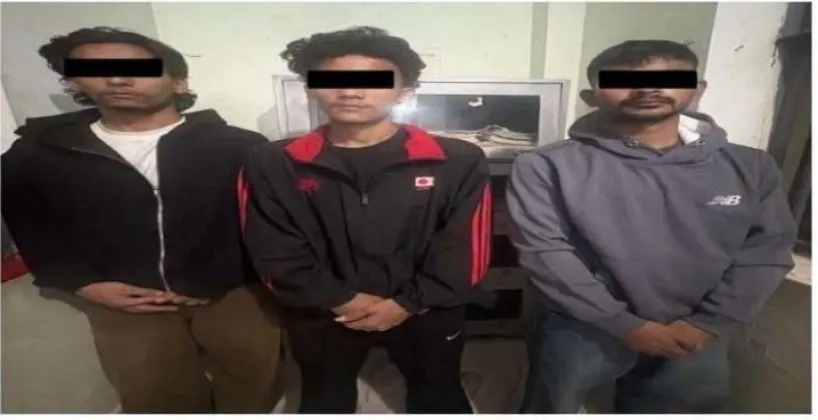
Three young men have been arrested on charges of misbehaving with and physically assaulting a woman passenger inside a public bus, in an incident that has once again drawn attention to the safety of women travelling on Nepal's public transport. According to a report published by Nepal Samaya, the woman was subjected to indecent behaviour during her journey, and the situation escalated into a physical assault. Police took the three suspects into custody following the incident. Authorities have so far not disclosed the bus route, the identities of the accused, or the exact time and place where the episode took place.
Harassment and assault inside a moving bus
The incident unfolded while the woman was travelling as a passenger on a public bus. The three young men allegedly engaged in indecent behaviour toward her during the journey, and the confrontation went on to involve physical assault, according to the report. The fact that the harassment occurred inside a crowded public vehicle, in the presence of other travellers, has made the case particularly troubling for readers following the story.
Details of precisely how the episode began, how the woman responded, and whether other passengers or the bus crew intervened have not been made public. Nepali Samaya's reporting confirms only the core sequence of events: misbehaviour toward the woman, indecent conduct during the ride, and a physical assault before police became involved. The condition of the woman after the incident has also not been disclosed, and no statement from her or from her family has been reported so far.
Police take the three suspects into custody
Police acted after learning of the incident and placed all three suspects under arrest. The three are currently in custody as the case moves through the early stages of the legal process. Investigators have not released the names, ages or addresses of the accused, describing them only as young men or youths.
Withholding such details at this stage is not unusual in cases involving allegations of sexual misbehaviour, where the privacy of the victim is a central concern and where releasing identifying information about suspects before charges are formally established can complicate proceedings. What remains unclear, however, is basic information that the public would typically expect in such a case:
- The route and operator of the bus on which the incident occurred
- The location and time of the arrest
- The specific charges that will be filed against the three men
- Whether the suspects were known to the victim before the journey
Further details are expected to emerge as the investigation progresses and the case is forwarded for legal action. Updates will likely be published as police confirm the charges and any court proceedings begin.
A persistent problem on public transport
Although the full circumstances of this case have yet to be clarified, the incident fits a pattern that women's rights campaigners in Nepal have flagged repeatedly. Harassment of women passengers, ranging from verbal misbehaviour and indecent remarks to unwanted physical contact, remains a widely reported problem on buses and other public vehicles, and it continues to affect the confidence with which women travel for work, study and daily errands.
Advocates have long argued that harassment on public transport cannot be treated as a minor nuisance, pointing out that it restricts women's mobility and discourages them from using public services. Calls for strict action against offenders, greater vigilance by drivers and conductors, and sustained public awareness campaigns have grown louder with each reported case. Incidents in which victims are also physically assaulted underline how quickly harassment can escalate, and why campaigners insist that bystanders and transport staff have a responsibility to intervene and support victims rather than remain silent.
What happens next in the case
Under Nepal's criminal law, both indecent behaviour toward women and physical assault are punishable offences, and investigators are expected to record the victim's statement and gather evidence before forwarding the case for action against the three suspects. The woman's testimony will be central to establishing the sequence of events inside the bus, and the charges ultimately filed will depend on what the investigation establishes about the conduct of the three accused.
For now, the arrest of the three young men represents the first concrete step in holding the perpetrators accountable. Women who face misbehaviour or assault on public vehicles can lodge complaints at their nearest police station, and rights groups continue to stress that timely reporting is essential both for the victim's access to justice and for preventing repeat offences by those accused.
As details about the bus route, the identities of the accused and the outcome of the investigation are confirmed, a clearer picture of the incident is expected to emerge. Until then, the case stands as a fresh reminder that the safety of women on public transport remains an unresolved challenge, and that prompt police action in response to such complaints will continue to be closely watched by the public. Nepal Samaya is expected to carry further updates as more information is released.