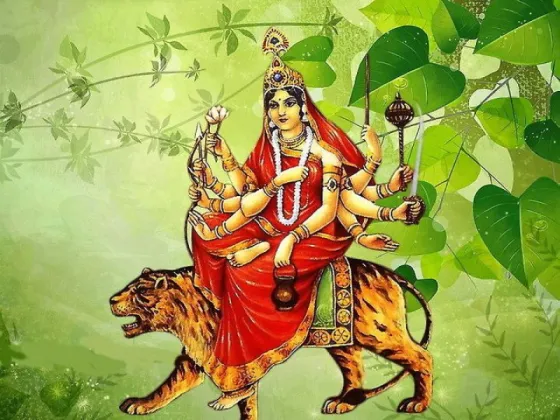
Hindus across Nepal are worshipping Goddess Chandraghanta on the third day of Shardiya Navaratri, which is observed as part of Bada Dashain. From early morning, devotees have been performing rituals at Shakti Peeths, Dashain houses and prayer rooms throughout the country, honouring the goddess as the third form of Navadurga. Religious tradition links her name to a bell shaped like a crescent moon, which she is said to hold, and her worship is believed to bestow strength upon devotees.
Worship on the third day
The day’s observance centres on Chandraghanta, the form of the goddess associated with the third day of Navaratri. Devotees are marking the occasion through ritual worship in places of religious devotion as well as in their homes. The observance is taking place at Shakti Peeths and Dashain houses, and in prayer rooms across Nepal, reflecting how the day is being marked in both shared religious settings and household spaces.
The rituals began early in the morning, according to reports of the observance. Across the country, worshippers are honouring the goddess as Navaratri proceeds through its days and forms of Navadurga. The focus on Chandraghanta gives the third day its distinct religious identity within the festival, with devotees directing their worship to this particular form of the goddess.
The meaning of Chandraghanta
According to mythological and religious texts, the goddess is named Chandraghanta because she holds a bell shaped like a crescent moon. The name therefore connects the crescent-moon form of the bell with the goddess worshipped on this day. This association is central to the traditional account of Chandraghanta and distinguishes her identity among the forms of Navadurga.
Her worship is believed to bestow strength upon devotees. That belief gives the day’s rituals significance for those taking part, as worshippers honour Chandraghanta with the expectation of receiving strength through her blessings. The observance is rooted in religious tradition, with the goddess’s form, name and perceived blessing shaping the meaning attached to the day.
Part of Bada Dashain
Shardiya Navaratri is being observed under Bada Dashain, placing the worship of Chandraghanta within Nepal’s wider Dashain period. On this third day, the attention given to the goddess is part of the sequence of Navaratri observances, in which a different form of Navadurga is honoured each day. Devotees are continuing that sequence through rituals at religious sites and in their own places of worship.
The observance is taking place across Nepal rather than at a single location. Shakti Peeths, Dashain houses and prayer rooms are among the settings where worshippers are carrying out rituals from the morning. Together, these sites show the range of places in which the day’s devotion is being expressed, while the common focus remains the worship of Chandraghanta, the third form of Navadurga.
As the third day of Shardiya Navaratri, the occasion brings together the traditional account of the crescent-shaped bell and the belief that the goddess’s worship bestows strength. Devotees across the country are honouring Chandraghanta through rituals as Bada Dashain continues. The day’s observance combines a specific form of Navadurga, a story associated with her name and a widely held religious belief about the benefit of her worship.