The Tharu community celebrates Dashain with traditions that are distinctly its own, according to explainers published by Nepal Views and Pradesh Khabar, with the report also carried by Global Aawaj. From Saptami through to the day of Tika, the community follows a sequence of rituals that includes wearing a white tika, offering dhikri and receiving tika from the Guruwa and village elders. The festivities are further brightened by the Sakhiya dance, a performance the reports describe as a reflection of the community's original customs, underscoring how the Tharu mark one of Nepal's biggest festivals on their own cultural terms.
A festival observed in its own rhythm
The explainers trace the course of the Tharu Dashain from Saptami, moving through the days of the festival to Tika day itself. Rather than a single moment of celebration, the observance unfolds across this important stretch of the Dashain calendar, with rituals marking each stage along the way. Nepal Views and Pradesh Khabar both present this as a festival observed on the community's own terms, shaped by customs handed down within the Tharu community rather than practices adopted from elsewhere.
The coverage makes clear that the days from Saptami to Tika are filled with observances that give the festival a character different from the way Dashain is commonly understood across the country. Each element described in the reports, from the tika on the forehead to the dance performed during the celebrations, belongs to the community's own cultural vocabulary. Taken together, the reports offer readers a picture of a Dashain that runs parallel to the wider festivities while following its own distinctive script.
The white tika at the centre of the celebration
Among the features the reports single out, the white tika stands out most visibly. The explainer published by Nepal Views places the white tika in its very headline as a defining feature of the community's Dashain, and Pradesh Khabar similarly highlights it among the rituals observed from Saptami to Tika day. In a festival season when the tika is the most recognisable symbol of the celebration, the Tharu practice of wearing a white tika gives their observance an immediately distinctive identity.
The reports present the white tika not as an incidental variation but as one of the hallmarks of the community's Dashain. It is the detail through which the explainers introduce the wider set of traditions, signalling to readers that the Tharu celebration carries its own symbolism and its own way of marking the auspicious days of the festival.
Dhikri offerings and blessings from the Guruwa
Alongside the white tika, the reports describe the offering of dhikri as part of the festival rituals. Dhikri, a traditional Tharu festive delicacy, is offered during the celebrations, forming an integral part of the observances that run from Saptami to Tika day. Its place in the ritual calendar, as highlighted by the explainers, shows how the community's festival practices are tied to its own culinary and cultural heritage.
Equally distinctive is the practice of receiving tika from the Guruwa and village elders. The Guruwa, the community's traditional spiritual figure, occupies a central position in the celebration, and the reports highlight the act of receiving tika from the Guruwa and the elders as a defining ritual of the Tharu Dashain. The practice, as presented in the coverage, binds the festival to the community's own social and spiritual structure, with blessings flowing from figures who hold respected places in village life.
The key elements of the Tharu Dashain, as documented in the reports, can be summarised as follows:
- White tika: worn by community members during the festival, setting the Tharu observance apart
- Dhikri offering: a traditional delicacy offered as part of the festival rituals
- Tika from the Guruwa and elders: blessings received from the community's traditional spiritual figure and village elders
- Sakhiya dance: a performance reflecting the community's original customs
Sakhiya dance: original customs in motion
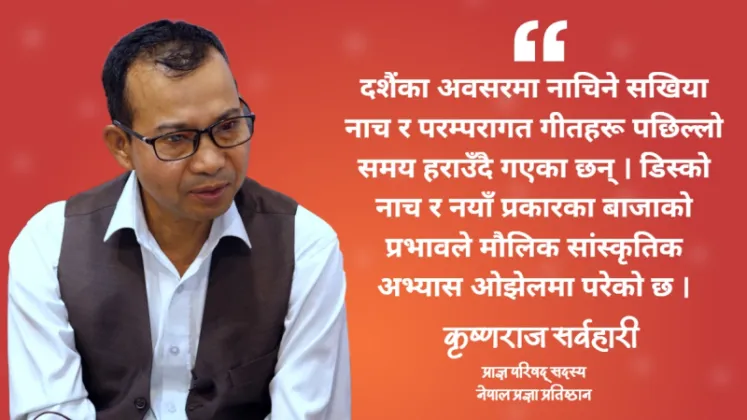
No account of the Tharu Dashain would be complete without the Sakhiya dance. The reports describe the dance as a reflection of the community's original customs, and Nepal Views speaks directly of the splendour of the Sakhiya dance as part of the celebration. Performed during the Dashain festivities, the dance brings the community's heritage to life in movement and celebration, giving the festival a cultural vibrancy that the explainers present as one of its defining attractions.
The dance, as framed by the coverage, is more than entertainment. It is a living display of the customs the community has preserved, performed at the very time of year when families and villages come together to mark the festival. In doing so, it reinforces the same thread that runs through the white tika, the dhikri offering and the blessings of the Guruwa: a Dashain celebrated through the community's own traditions.
Keeping original traditions alive
The explainers published by Nepal Views and Pradesh Khabar, and carried by Global Aawaj, collectively document how the Tharu community's Dashain differs in its rituals even as it coincides with the festival celebrated across the country. The white tika, the offering of dhikri, the tika received from the Guruwa and village elders, and the Sakhiya dance together form a portrait of a community celebrating in accordance with its own heritage.
What emerges most clearly from the coverage is that these are not customs of the past but practices observed each year from Saptami to Tika day. By walking readers through the sequence of rituals and the place of the Sakhiya dance within the festivities, the reports serve as a record of traditions that continue to define how the Tharu community experiences Dashain, and a reminder of the diversity of ways in which the festival is celebrated across Nepal.