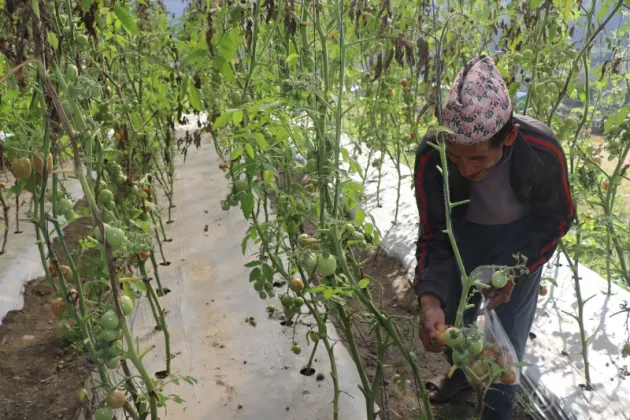
Tej Bahadur Baniya of Singa, Beni Municipality-4 in Myagdi district, once earned his living through hard manual labour with little hope of a better future. Today, he stands as a commercial and leading vegetable farmer in his area, a transformation that has unfolded over three decades of persistent effort in agriculture.
His story, widely reported by Nepali media, has come to symbolize the message that economic self-reliance can be achieved through local labour and enterprise. For farmers and youth across the country who believe that prosperity requires going abroad or abandoning the land, Baniya's journey offers a striking counterexample rooted in his own village.
A Turning Point in Lumle
The turning point in Baniya's life came in 2052 BS, when he took agricultural training in Lumle. That training opened his eyes to the commercial possibilities of farming and set him on a path he has followed ever since. What began as an opportunity to learn soon grew into a lifelong commitment to vegetable farming.
Armed with the skills and knowledge gained from the Lumle training, Baniya returned to Singa and began applying what he had learned to his own land. Over the years, he steadily expanded his farming activities, moving from subsistence cultivation toward commercial vegetable production.
From Labourer to Leading Farmer
Before embracing agriculture, Baniya worked as a manual labourer, a livelihood that offered meagre and uncertain earnings. The shift to vegetable farming changed not only his income but also his standing in the community. He is now regarded as a leading farmer in Beni Municipality, someone whose success speaks for itself in a district known for its agricultural potential.
His three-decade journey has not been without the challenges typical of farming in Nepal's hill districts, but his persistence has paid off. Through consistent effort, he has demonstrated that the land he once worked only to survive on could become the foundation of genuine prosperity.
A Message for the Nation
According to reports, Baniya's transformation conveys a broader message: economic self-reliance is possible through local labour and enterprise. In a country where thousands of young people leave each year for foreign employment, stories like his highlight the opportunities that remain in Nepal's villages for those willing to invest their sweat in the soil.
Baniya's example shows that agricultural training, when combined with determination, can change the trajectory of an individual life and, by extension, of a whole community. His rise from daily wage labour to successful commercial farming stands as a testament to what disciplined, long-term commitment to agriculture can achieve.
Inspiration for Local Farmers
For fellow farmers in Myagdi and beyond, Baniya's experience serves as practical inspiration. It demonstrates that farming need not remain a subsistence activity but can be developed into a business that sustains a family and earns respect in society.
As Myagdi continues to promote vegetable farming as a key agricultural enterprise, farmers like Tej Bahadur Baniya represent the face of that effort. His three-decade journey from manual labour to commercial success remains a powerful reminder that the road to self-reliance often begins at home, with the resources and determination already at hand.
Source: Ratopati, Khabarhub, Nagarik News