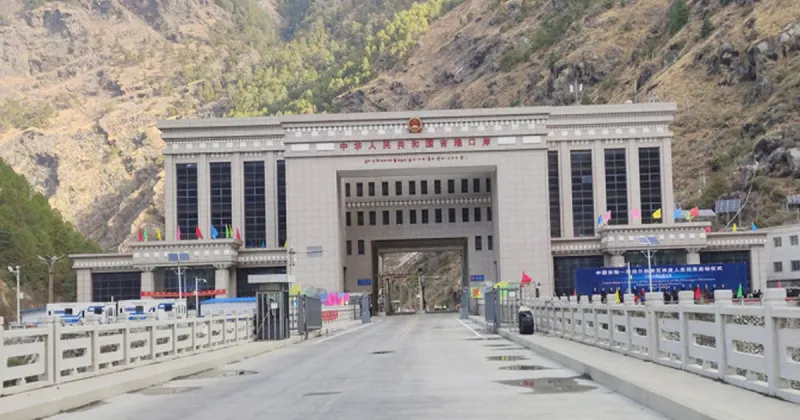
The Tatopani border crossing between Nepal and China will open for three days, according to reports from Nepali news outlets, in a decision expected to ease trade and the movement of people through one of the country's key northern transit points. The announcement, carried by Thaha Khabar and Nepal Views, confirms a limited reopening of the crossing, but the reports did not specify the exact dates or the operational arrangements that will apply during the window. Even so, the news is likely to be watched closely by traders, transporters and travelers who depend on the route, as well as by the Nepali diaspora whose interests are also said to be linked to the decision.
A limited reopening at a key northern gateway
The Tatopani crossing is a key transit point between Nepal and China, and its operation has a direct bearing on the flow of goods and people between the two countries. According to the reports, the three-day opening is expected to ease trade and movement through the crossing, offering relief to those who rely on the route for commerce and travel. For a crossing of this importance, even a short resumption of operations can make a practical difference, giving businesses and travelers an opportunity to use the northern route during days when it would otherwise remain out of reach.
The limited duration also indicates that the crossing will operate under managed conditions rather than a permanent schedule. That reality places a premium on preparation. Traders and transporters will need clear information on when the crossing opens and what procedures will apply if they are to make full use of the window. With the reports stopping short of confirming dates, stakeholders can for now only prepare in general terms while they await a timetable that spells out the three days and the rules that will govern them.
Infrastructure and economic concerns behind the decision
The reports link the decision to infrastructure and economic concerns, a combination that underlines the practical challenges of running a border crossing of this kind. The condition of infrastructure at and around a crossing shapes how smoothly trucks, goods and passengers can pass through, and any reopening must account for whether facilities on the ground are ready to handle the traffic that arrives. By tying the decision to infrastructure, the reports point to the planning and groundwork that determine whether a three-day opening can translate into genuine relief for trade and movement.
The economic dimension is equally significant. Border crossings support traders, transporters, workers and the wider businesses that depend on cross-border activity, and the effects of their operation extend well beyond the customs point to markets on both sides. The expectation that the opening will ease trade reflects that reality, and it explains why the decision is being read as an economic measure as much as an administrative one. For communities whose livelihoods are tied to the crossing, the three days represent a chance for constrained activity to move again, however briefly.
Diaspora interests woven into the decision
Alongside infrastructure and economics, the reports note that the decision is connected to the interests of the diaspora. For Nepalis living and working outside the country, transit points such as Tatopani are more than trade infrastructure: they are practical links through which people maintain contact with family, manage travel and sustain economic ties. Factoring the diaspora into the decision signals that the opening is meant to serve not only commercial traffic but also the broader community of Nepalis whose lives and livelihoods depend on routes that cross the border.
That breadth of purpose raises the stakes for how the window is managed. Traders will look to move goods, travelers to cross conveniently, and diaspora members to maintain the connections that rely on a functioning crossing. Balancing those interests within three days is a demanding task, and the reports suggest the decision was made with that balance in mind rather than as a measure aimed at a single group.
Details still awaited
While the decision to open the crossing for three days is clear, several practical questions remain unanswered in the reports. Key among them:
- the exact dates on which the crossing will open
- the daily operating hours during the three-day window
- the categories of goods and travelers that will be permitted to cross
- the customs and immigration arrangements that will apply
- whether the opening could be extended beyond the announced period
Until an official timetable is published, traders, transporters and travelers will have little choice but to plan around the uncertainty. The reports confirm only that the crossing will open for three days and that the decision is tied to infrastructure and economic concerns, including the interests of the diaspora. For a transit point of this importance, the details that follow the announcement will decide whether the reopening delivers the easing of trade and movement that it is expected to bring.
The reports on the decision can be read in full via Thaha Khabar and Nepal Views.