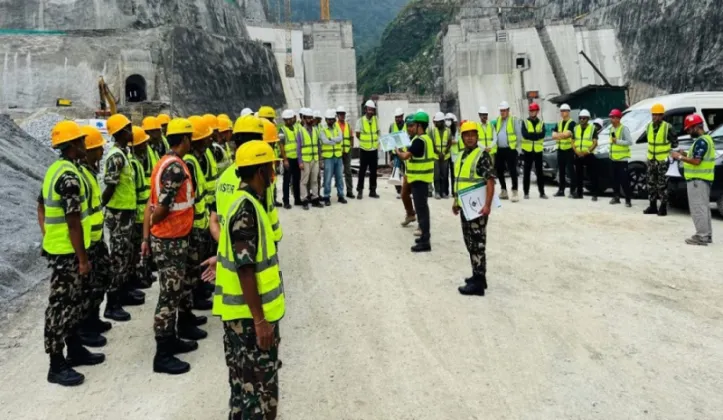
The Tanahu Hydropower Project conducted a disaster simulation drill at its main dam construction site to reduce potential risks and strengthen rescue and emergency response preparedness. The exercise covered Package-1, which includes the headworks, and Package-2, which includes the main tunnel, powerhouse and other structures. It was carried out under the project’s River Safety Management Plan and Emergency Response Sub-Plan.
Exercise Covers Key Construction Packages
The simulation involved work areas across two major project packages. Package-1 covers the headworks, while Package-2 encompasses the main tunnel, powerhouse and other structures. Including both packages placed the drill within the wider construction site rather than limiting it to a single work area.
The project said the exercise was intended to protect personnel and improve preparedness at the construction site. Construction activities involving several major structures require arrangements for responding to possible emergencies. The drill provided an opportunity to practise the rescue and response measures set out in the project’s plans.
Preparedness Under Project Safety Plans
The exercise was conducted under two documents: the River Safety Management Plan and the Emergency Response Sub-Plan. These plans formed the stated framework for the simulation, linking the drill to the project’s arrangements for managing river-related safety and responding to emergencies.
The project’s stated objectives were to reduce potential disaster risks and ensure effective rescue and emergency response. The exercise also focused on strengthening preparedness among personnel at the work site. By conducting a simulation, the project tested readiness in a practical setting, although the available information does not detail specific simulated hazards, response timings or outcomes.
Focus on Personnel and Emergency Response
Protecting personnel was a central aim of the drill. The project’s construction site includes the headworks, tunnel, powerhouse and other structures across the two packages involved. The exercise was designed to reinforce readiness for rescue and emergency action at those work areas, in keeping with the project’s stated plans.
The drill forms part of the project’s approach to preparing for potential incidents during construction. Its emphasis was on reducing risks and improving the ability to respond effectively, rather than reporting a disaster or emergency that had occurred. No further details about the scenario used, the number of participants or any specific response measures were provided in the available report.