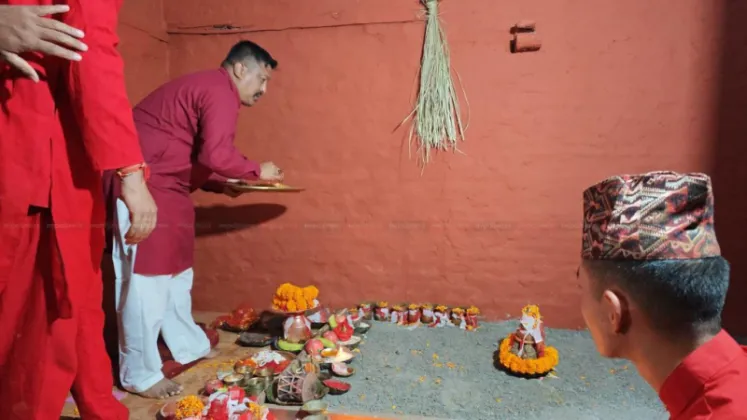
Bada Dashain, Nepal’s great festival, began on Sunday, October 11, with Ghatasthapana rituals across the country. At the Dashain Ghar in Hanuman Dhoka, Kathmandu, jamara was placed following Vedic rites, while households observed the first day by installing the diyo, kalash and Ganesh. The traditional sowing of barley, maize, wheat and other grains after worship marks the beginning of the process of growing jamara for the festival.
Ghatasthapana at Hanuman Dhoka
The observance at Hanuman Dhoka took place at the Dashain Ghar, where jamara was placed as Bada Dashain opened. The ritual was conducted according to Vedic practice on Ghatasthapana, the first day of the festival. The ceremony brought together the worship and sowing associated with the day: grains are sown after worship so that jamara can grow.
Barley, maize and wheat are among the grains used in the traditional sowing, alongside other grains. Their placement after worship is a central part of the Ghatasthapana observance described at the Dashain Ghar. The ritual therefore begins with both worship and the planting of grains, setting in motion the growth of jamara as the festival gets underway.
The Hanuman Dhoka ceremony was one part of a wider national observance. Bada Dashain began on Sunday, and Ghatasthapana was marked not only at the historic Dashain Ghar in Kathmandu but also in homes across Nepal. The day’s observances share the installation of sacred items and the sowing of grains, though households conduct their own rituals at home.
Households mark the first day
Nepalis observed Ghatasthapana at home by installing a diyo, kalash and Ganesh. These installations formed part of the household observance as the festival began. Alongside them, the tradition of sowing grains after worship connects home rituals with the jamara placed at the Dashain Ghar.
The grains named in the tradition include:
- Barley
- Maize
- Wheat
- Other grains
They are sown after worship to grow jamara. This practice is observed at the start of Bada Dashain, on the same occasion as Ghatasthapana. The ritual at Hanuman Dhoka and the observances in homes thus shared the day’s central elements: worship, the installation of ritual items and the sowing of grains.
Festival begins with shared observances
The start of Bada Dashain on Sunday made Ghatasthapana the first occasion of this year’s festival. At Hanuman Dhoka, the placement of jamara followed Vedic rituals inside the Dashain Ghar. In households, people marked the day with the diyo, kalash and Ganesh and followed the tradition of sowing grains after worship.
The two settings reflect how the opening observance was carried out both at a designated Dashain Ghar in Kathmandu and in homes around the country. In each case, Ghatasthapana involved ritual preparations at the start of the festival and the planting of grains for jamara to grow. Bada Dashain has now begun, with the first day’s observances underway across Nepal.