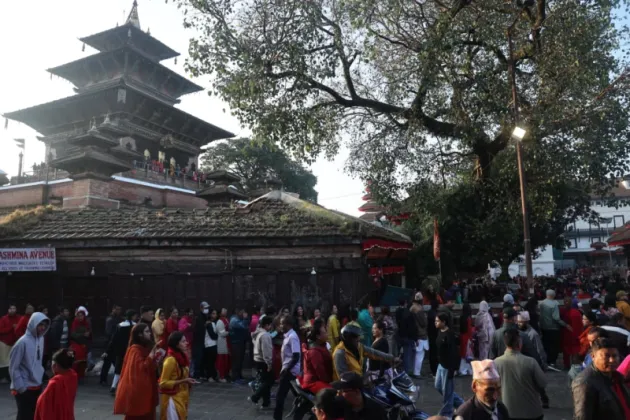
The Taleju Temple, the towering pagoda shrine that presides over Kathmandu Durbar Square and opens its doors to the public for just one day each year, drew large crowds of devotees who gathered to offer prayers and receive darshan, according to reports published by Nepal Views and Nepal Samaya on October 20, 2026. Photographs released by Nepal Views captured the crowds that turned out at the historic temple, while Nepal Samaya presented readers with interesting facts about the shrine and its once-a-year tradition. Together, the coverage underlined the deep religious and cultural significance that the annual opening holds for devotees in the capital.
A Rare Day of Darshan
For 364 days of the year, the Taleju Temple remains closed to the general public, with access restricted to the temple's designated priests. On the single day it opens, devotees from across Kathmandu and beyond make their way to the temple for a chance to glimpse and worship the presiding goddess, an opportunity regarded as especially auspicious precisely because it is so rare.
Nepal Views published a series of photographs showing the devotees who flocked to the temple on the day, offering a visual record of the crowds that assembled at the centuries-old shrine. The images documented a scene of devotion at one of the capital's most revered sites, where worshippers gathered to pay their respects to Goddess Taleju Bhawani.
Nepal Samaya, for its part, marked the occasion with a feature presenting interesting facts about the temple that opens once a year, helping readers understand why this single day on the religious calendar draws such sustained public attention.
A Shrine at the Heart of the Malla Era
The Taleju Temple is one of the most prominent monuments within Kathmandu Durbar Square, the former royal palace complex at the heart of the Nepali capital. Built in the sixteenth century during the reign of King Mahendra Malla, the temple is dedicated to Goddess Taleju Bhawani, who is revered as the tutelary deity of the Malla kings who once ruled the Kathmandu Valley.
Key features of the temple include:
- A multi-tiered pagoda design that makes it the tallest temple in Kathmandu Durbar Square.
- Its elevated position on a high plinth, which sets it apart from the surrounding monuments of the square.
- Its status as the shrine of the family deity of the Malla dynasty, a connection that shaped the religious life of the royal court for centuries.
The temple stands as a defining landmark of the Durbar Square area, which is recognised as part of the Kathmandu Valley's UNESCO World Heritage listing. Its scale and prominence reflect the central place Taleju Bhawani occupied in the faith of the Malla rulers, who regarded the goddess as the protector of their kingdom.
Why the Doors Open Only Once a Year
The temple's single annual opening is tied to the Bada Dashain festival, the biggest celebration in the Nepali Hindu calendar. The doors of the Taleju Temple are traditionally thrown open to the public on the day of Mahanawami, the ninth day of the ten-day festival, when devotees are permitted to enter the temple grounds and worship the goddess directly.
The tradition is rooted in the belief that Taleju Bhawani is a powerful and protective deity whose blessings are most accessible on this day. Local lore also links the goddess to the living goddess Kumari of Kathmandu, who is revered as an incarnation of Taleju Bhawani, a connection that adds another layer of meaning to the temple's place in the capital's religious life. In keeping with long-standing practice, the temple also traditionally receives a ceremonial visit from the country's head of state on the day of the opening.
A Living Tradition in the Capital
Beyond its religious role, the annual opening of the Taleju Temple has become a fixture of Kathmandu's cultural calendar, drawing together devotees and visitors in the historic quarter of the old city. For many worshippers, the day represents the only opportunity of the year to offer prayers at a shrine that is otherwise off-limits, lending the occasion an intensity that is visible in the crowds captured in the photographs published by Nepal Views.
The reporting by Nepal Views and Nepal Samaya highlights how the once-a-year opening continues to command wide public interest, underscoring the temple's enduring religious and cultural significance. As the photographs and features published on October 20, 2026 make clear, the Taleju Temple's single day of open doors remains one of the most keenly awaited moments of the Dashain season for devotees in Kathmandu.