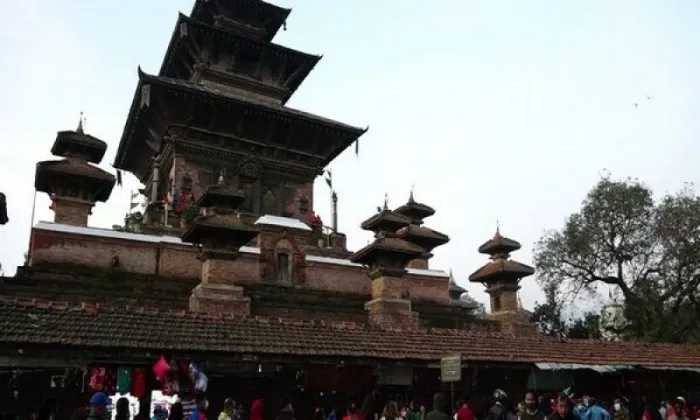
The Taleju Bhawani Temple at Hanuman Dhoka Durbar Square in Kathmandu opened its doors to devotees on Tuesday, October 20, on the occasion of Mahanawami, one of the most significant days of the Dashain festival. The temple, located within the UNESCO World Heritage-listed palace square in the heart of the capital, is traditionally opened to the public only once a year, making the Mahanawami opening one of the most anticipated religious events on the Kathmandu calendar. According to Khabarhub, devotees were permitted to offer prayers from 5 am to 6 pm, giving worshippers a full day to pay homage to the goddess in a shrine that remains closed to them for the rest of the year.
A Once-a-Year Opening at the Capital's Most Exclusive Shrine
The Taleju Bhawani Temple stands apart from most places of worship in the Kathmandu Valley because its gates remain shut to the general public throughout the year. Only on Mahanawami are devotees allowed to enter the temple premises and offer prayers directly to the presiding deity. For the faithful of the capital and beyond, the single-day opening is therefore a rare and cherished opportunity to worship at one of the valley's most revered shrines.
Key Details at a Glance
- Location: Hanuman Dhoka Durbar Square, Kathmandu, a UNESCO World Heritage site
- Occasion: Mahanawami, the ninth day of the Dashain festival
- Date of opening: Tuesday, October 20
- Hours for devotees: 5 am to 6 pm
- Public access: Traditionally granted only once a year
The extended hours, running from early morning until evening, allow devotees ample time to queue, offer flowers and prayers, and receive blessings from the goddess. The annual opening blends religious observance with a deep sense of occasion, as crowds gather within the historic square to mark a ritual that has been observed for generations.
Seat of the Malla Kings' Patron Goddess
The temple's exclusivity is rooted in centuries of history. Taleju Bhawani is regarded as the tutelary goddess of the Malla kings who once ruled Kathmandu, and the temple dedicated to her was built in 1564 by King Mahendra Malla. Rising from a multi-tiered pedestal, the temple is widely noted as the tallest structure in Durbar Square, at roughly 35 meters, and remains one of the finest examples of the valley's traditional temple architecture.
According to long-standing tradition, the goddess holds a special place in the religious life of the capital. The living goddess Kumari of Kathmandu is widely believed to be a manifestation of Taleju Bhawani, a connection that adds to the mystique surrounding the temple and helps explain why access to the shrine is so carefully restricted. The custom of opening the doors only on Mahanawami preserves the sanctity of the temple while allowing the public a symbolic communion with the deity once every year.
Mahanawami and the Spirit of Dashain
Mahanawami falls on the ninth day of Dashain, Nepal's largest Hindu festival, which is celebrated over fifteen days and culminates in Vijaya Dashami. The festival honors the goddess Durga and commemorates her victory over the demon Mahishasura, a triumph of good over evil that lies at the heart of the celebrations observed across the country.
On Mahanawami, devotees worship Durga with special rituals and offerings, and many households perform puja of tools, vehicles and implements that sustain their livelihoods. The opening of the Taleju Bhawani Temple on this particular day underscores the religious weight of the occasion, tying the capital's royal heritage directly to the devotion that defines the festival. For worshippers, entering the temple on Mahanawami is considered especially auspicious, and the once-a-year access reinforces the day's stature within the Dashain calendar.
Devotion and Heritage in the Heart of Kathmandu
Hanuman Dhoka Durbar Square, where the temple stands, is one of the seven monument zones of the Kathmandu Valley inscribed on the UNESCO World Heritage List in 1979. The square served as the royal palace complex of the Malla and later Shah kings, and its name derives from the stone image of the god Hanuman that guards the palace gate. Its palaces, courtyards and pagoda temples form the historic core of the capital and remain a focal point of both worship and cultural life.
The annual opening of the Taleju Bhawani Temple draws not only the faithful but also admirers of Newari architecture and heritage, who receive a rare chance to view one of the square's most important monuments from within. For a single day each year, the shrine at the center of Kathmandu permits the public into its sacred space, a practice that links present-day devotees with more than four centuries of continuous worship at the seat of the valley's patron goddess.