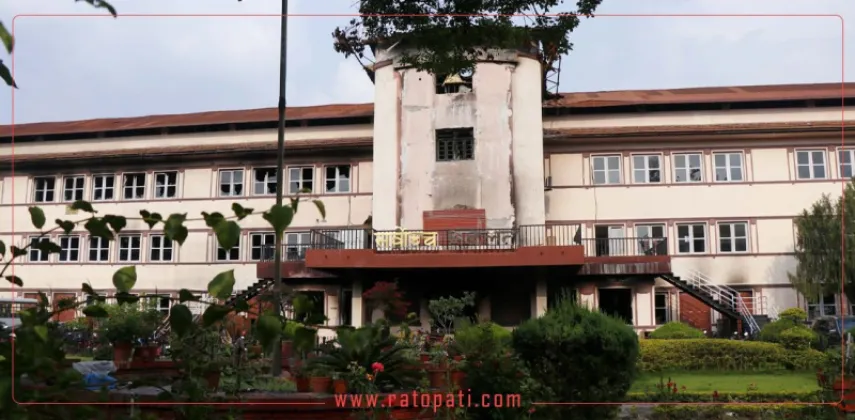
Kathmandu - The Supreme Court on Friday ordered the government to produce the original files behind the decisions that allowed Green Army Nepal Pvt. Ltd., a private company, to use uniforms and rank insignia similar to those of the country's security agencies. The order was issued by a bench that included Justice Tek Prasad Dhungana and another justice. It directs that the original records held by the Ministry of Defence, the Ministry of Home Affairs and other government bodies be submitted before the court, which has been examining how a private organisation came to receive approvals for symbols and a structure that have been compared to those of the Nepali Army.
The order: original files to be produced
Rather than rule immediately on the legality of the approvals, the bench chose to secure the primary evidence first. According to reports by RatoPati and Pradesh Khabar, the court is examining decisions taken by various government bodies, including the Ministry of Defence and the Ministry of Home Affairs, that granted the organisation permission to use uniforms and rank insignia resembling those of the security forces.
The demand for original files, as opposed to copies or written explanations, is significant. It allows the bench to trace the full decision-making trail: which office initiated the approvals, who signed them, under what legal provisions, and what reasoning was recorded at each stage. Courts commonly order the production of original records when the validity of an administrative decision is in question and the outcome may depend on the precise content of the files. By securing the actual documents, the Supreme Court has ensured that its examination will rest on the authoritative record rather than on second-hand accounts.
A private company with a military-style profile
At the centre of the case is Green Army Nepal Pvt. Ltd., an organisation that has been accused of operating a structure resembling the Nepali Army. The approvals under scrutiny permitted the company to use uniforms and rank insignia similar to those worn by members of the security agencies. The organisation's very name, which incorporates the word "Army", has added to the attention the case has received, since uniforms and rank insignia are among the most visible markers through which the state distinguishes its security institutions from everything else.
What has made the matter more sensitive is that the permissions did not flow from a single decision. The approvals were granted through decisions of various government bodies, including two ministries at the heart of the security establishment. It is this layered chain of approvals that the court now intends to examine in detail, and the original files are expected to show how the permissions accumulated across different authorities.
The decisions under examination
Among the bodies whose decisions the court is scrutinising are the Ministry of Defence, which is responsible for the Nepali Army, and the Ministry of Home Affairs, which oversees the police and other security agencies. The Friday order means these ministries, along with the other government bodies involved, must now place before the bench the actual files relating to the approval granted to the company.
The examination is expected to focus on whether any legal framework permitted a private company to be allowed uniforms and insignia of the kind normally associated with the security forces, and whether the decisions followed due process. With the files in hand, the bench will also be able to determine whether the approvals were considered carefully or granted without adequate scrutiny, questions that go directly to the legality of the entire arrangement.
Why it matters and what comes next
The accusation that Green Army Nepal Pvt. Ltd. operates a structure resembling the Nepali Army lies at the heart of the concern. Security uniforms and insignia identify the wearer as an agent of the state. A private company authorised to use symbols similar to those of the army and other security agencies risks blurring that line, creating potential confusion among the public about who its members are and what authority they carry. The case therefore touches not only on administrative procedure but on the boundary between the state's security institutions and the private sphere.
The order also signals that the judiciary is prepared to examine closely how the executive exercised its discretion in a matter involving the security establishment. If the examination finds that the approvals lacked a proper legal basis, the decisions could be set aside; if the files show that due process was followed, the approvals may stand. Either way, the original records will now form the foundation for whatever the bench concludes.
The immediate next steps in the case are clear:
- The original files of the relevant decisions must be produced before the Supreme Court.
- The bench, which included Justice Tek Prasad Dhungana, will continue examining the approvals granted to Green Army Nepal Pvt. Ltd.
- The ministries and other government bodies involved are expected to comply with the production order as the proceedings advance.
Further hearings will follow once the files are submitted, and the direction the case takes will become clearer once the bench has had the opportunity to study the records in full.