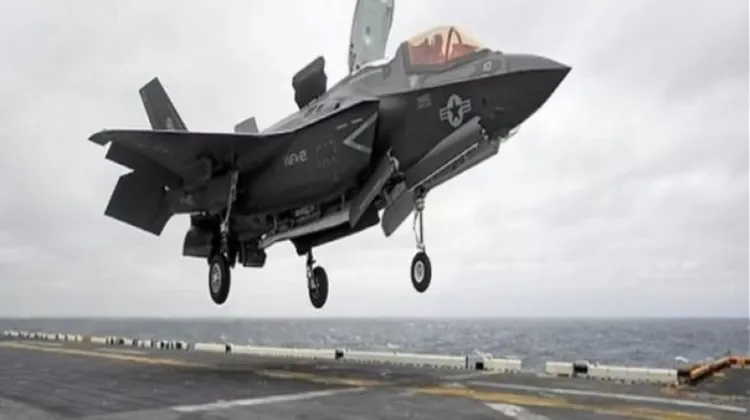
South Korea scrambled fighter jets on Tuesday to drive away Russian military aircraft that had entered its air defence identification zone, the South Korean military said. The Russian aircraft entered the zone in the sea area between the Korean Peninsula and Japan, prompting an immediate response from Seoul's armed forces.
The South Korean military deployed the jets to escort the intruding aircraft out of the zone, ensuring that the Russian planes did not stray further into the area. No clashes or unusual incidents were reported, and the situation was resolved with the aircraft being steered away.
A Recurring Point of Friction
Air defence identification zones, or ADIZs, are areas extending beyond a country's territorial airspace in which foreign aircraft are expected to identify themselves to national air authorities. While such zones are not sovereign territory under international law, entries by foreign military aircraft without prior notification are routinely treated as provocative and are typically met with scrambles by fighter jets.
The sea area between the Korean Peninsula and Japan, where Tuesday's incident took place, has long been a sensitive corridor for military aviation in Northeast Asia. Russian and Chinese military aircraft frequently transit waters near Korean and Japanese airspace, and such movements regularly trigger alert responses from the countries in the region.
Seoul's Swift Response
According to South Korean authorities, the deployment of fighter jets was carried out as a standard protective measure once the Russian aircraft were detected inside the zone. The jets escorted the intruding aircraft away, a procedure designed to monitor the foreign planes closely while ensuring they do not approach sensitive areas or stray into national airspace.
Tuesday's episode underscores the heightened vigilance of the South Korean military along its maritime approaches. The country maintains a policy of scrambling aircraft whenever unidentified or undeclared foreign military planes enter its air defence identification zone, a practice it has carried out repeatedly in recent years in response to Russian and Chinese flights.
Regional Military Activity in Focus
Incidents of this kind highlight the broader pattern of military activity in the skies and waters around the Korean Peninsula. With tensions on the Korean Peninsula remaining high and military exercises and patrol activity frequent among regional powers, encounters between alert aircraft and foreign military planes have become a recurring feature of Northeast Asian security.
While Tuesday's encounter ended without escalation, it serves as a reminder of how quickly such incidents can unfold. Air defence identification zone violations rarely lead to direct confrontation, but each scramble carries inherent risk, as aircraft from different militaries operate in close proximity in contested international airspace.
South Korea has not indicated any further escalation in connection with the incident. The military's swift escort of the Russian aircraft out of the zone reflects the standard operating procedure it follows to safeguard its airspace and maintain security along its maritime borders.
Continued Monitoring
The South Korean military continues to monitor activity in the sea area between the Korean Peninsula and Japan closely. Officials stressed that any future entry of foreign military aircraft into the country's air defence identification zone without prior notice would be met with a similar response.
For now, Tuesday's scramble stands as the latest example of the ongoing aerial chess game in Northeast Asia, where Russian military flights near Korean airspace continue to test the readiness of the region's air defences. The escort of the Russian planes away from the zone ended the episode without further incident, but the underlying pattern of military aviation activity in the region is expected to persist.