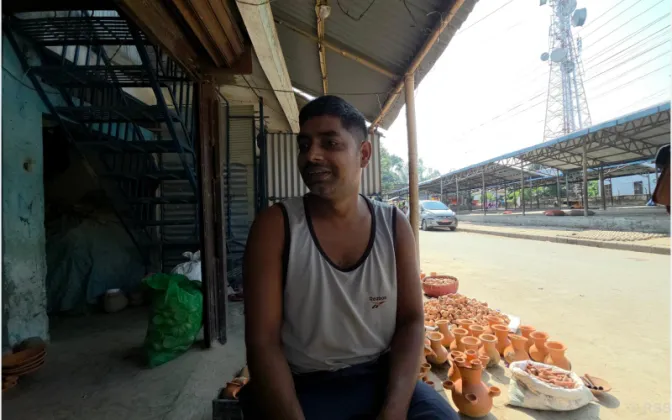
Shriram Pandit, a resident of Inaruwa Municipality-2, Bihibare, in Sunsari district, has continued the age-old profession of pottery that has been passed down through generations of his family. Even as plastic utensils increasingly replace traditional clayware in both villages and cities, Pandit has not abandoned the craft inherited from his forefathers.
Holding on to a Dying Craft
Pandit shapes clay pots and vessels entirely by hand, a skill that has remained in his family for generations. According to reports by Rastriya Samachar Samiti, which were carried by Rato Pati, Nagarik News, and Pradesh Khabar, he makes pottery with the aim of preserving the traditional occupation of his ancestors.
The use of plastic utensils has grown rapidly in villages and cities alike, posing a serious challenge to the traditional pottery trade across the country. Many families who once depended on making clay pots have shifted to other occupations as demand for earthenware has declined. Against this backdrop, Pandit's persistence stands out as a rare example of commitment to a hereditary craft.
Pottery in Nepal's Cultural Tradition
Pottery has long held an important place in Nepali households and religious life. Clay pots, lamps, and vessels are still used in festivals, rituals, and ceremonies, giving the craft a cultural significance that goes beyond its everyday utility. Artisans like Pandit keep this heritage alive at a time when mass-produced plastic goods have flooded the market.
In the eastern Terai region, where Inaruwa lies, pottery was once a common source of livelihood for many families. The profession, typically passed from father to son, has seen a steady decline as younger generations opt for other work and consumers turn to cheaper, more durable plastic alternatives.
A Silent Struggle for Survival
Pandit's decision to continue working with clay despite shrinking demand highlights the struggle of traditional artisans across Nepal. Reports note that he has remained devoted to the craft not for large profits but to keep the profession of his forefathers from disappearing.
The reports on his work were published by multiple national and provincial outlets, including Nagarik News and Pradesh Khabar, reflecting wider interest in the fate of Nepal's traditional crafts.
The Way Forward
As plastic products continue to dominate the market, the future of pottery in places like Inaruwa depends on artisans willing to endure the hardship of a declining trade. Shriram Pandit's daily labor at the wheel serves as a reminder of the value of preserving ancestral skills, and of the cultural loss that would follow should such crafts fade away entirely. His story adds to the ongoing conversation about how traditional occupations in Nepal can be sustained in a changing economy.