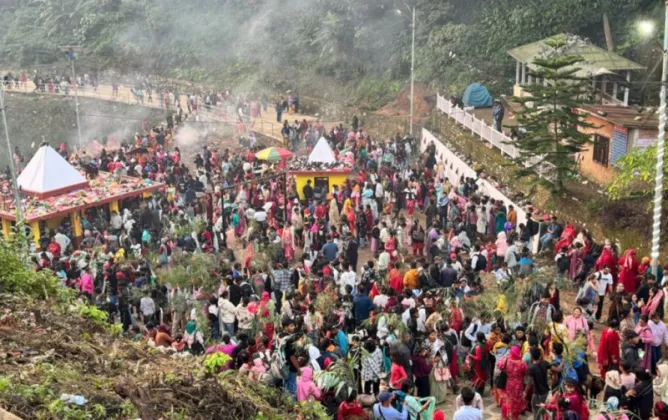
The five-day Satyawati fair, held at Satyawati Lake in Tinau Rural Municipality-4, Koldanda, Palpa, has concluded with an estimated 100,000 pilgrims taking part this year. The fair ran from Kartik Shukla Ekadashi to Purnima, drawing devotees from various districts across Nepal as well as from neighbouring India.
A Fair Unlike Any Other
What sets the Satyawati fair apart from other religious gatherings in Nepal is its distinctive worship practice. Devotees believe that Satyawati Bajyai, the deity revered at the lake, is hard of hearing, and so pilgrims do not pray in silence. Instead, they shout loudly across the water to call out to the goddess, a tradition that gives the fair its reputation as one of the noisiest religious events in the country.
According to local belief, calling out to the 'deaf' Satyawati Bajyai ensures that one's wishes are fulfilled. Pilgrims make their pleas aloud, seeking boons ranging from good health and prosperity to the fulfilment of personal vows.
Midnight Offerings and Rituals
The rituals at the fair go beyond shouting. Devotees also make special bamboo offerings at midnight, a practice believed to be central to receiving the goddess's blessings.
The timing of the fair, coinciding with the auspicious Kartik full moon period, adds to its spiritual significance. The five-day span from Ekadashi to Purnima is considered a particularly sacred window for worship, drawing pilgrims who time their visits around these holy dates.
Devotees from Nepal and India
This year's fair saw a strong turnout, with around 100,000 pilgrims visiting the lake over the five days. Attendees came from districts across Nepal, and the fair also attracted devotees from India, underlining its appeal beyond the local region.
The Satyawati fair has grown into one of Palpa's most significant religious events, combining scenic lake surroundings with centuries-old traditions that continue to draw large crowds year after year.