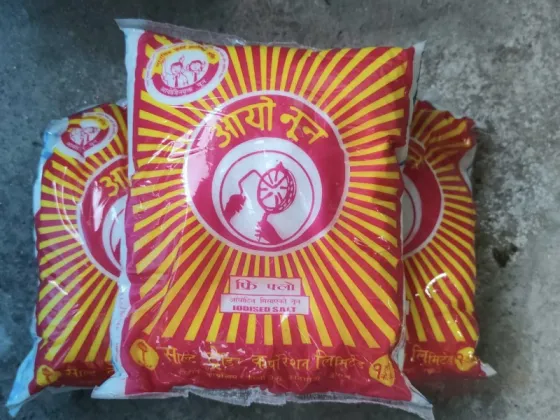
In the remote northern villages of Chumanubri Rural Municipality in Gorkha, edible salt is selling for as much as Rs 200 per kilogram, while the same commodity costs between Rs 30 and Rs 35 per kilo in the market, according to recent reports in Nepali media. Residents of these far-flung settlements say they have no choice but to pay the inflated rate because the villages remain cut off from road access, and the high cost of transporting goods across that unconnected stretch is loaded onto the price of everything that reaches them, salt included. The reports, published by Nepal Press, Nagarik News and Rato Pati, also mention Salt Trading Corporation, which supplies edible salt across Nepal, in connection with the price.
A Six-Fold Gap Between the Village and the Market
The arithmetic laid out in the reports is stark. In market areas, where goods arrive along established supply routes, a kilogram of edible salt sells for Rs 30 to Rs 35. In the northern villages of Chumanubri Rural Municipality, the price climbs to as much as Rs 200 per kilo, roughly six times the market rate for one of the most basic items in any household kitchen.
- Up to Rs 200 per kilo: the price of edible salt in the remote northern villages of Chumanubri Rural Municipality, Gorkha
- Rs 30 to Rs 35 per kilo: the price of the same salt in the market
- Lack of road access and high transportation costs: the two factors residents cite for the price difference
Because salt is used in virtually every meal, the gap is felt in every kitchen. At Rs 200 per kilo, a household pays for a single kilogram of salt what it would pay for nearly six kilograms at market rates. And the reports make clear that salt is not an isolated case: residents say daily essentials in general, including salt, are sold at expensive prices in the villages, which means the entire basket of everyday goods costs far more in Chumanubri than it does in road-connected areas.
No Roads, Heavy Costs
Residents trace the inflated prices directly to geography and infrastructure. With no road reaching the villages, everything consumed there must be brought in from elsewhere, and every stage of that journey adds to the cost. Transportation charges accumulate along the way, and by the time an item as ordinary as a kilo of salt finally arrives in the villages, its price has multiplied several times over.
The pattern described by residents is self-reinforcing. Goods are expensive because transport is expensive, and transport remains expensive because no road connects the settlements to the district's market centres. For families in Chumanubri, the practical result is that they are forced to buy daily essentials at rates far beyond those paid elsewhere in the country, through no choice of their own. The price tag on a kilo of salt, in this sense, is less a reflection of the commodity's value than of the distance and difficulty involved in getting it there.
The National Supplier Enters the Picture
Salt Trading Corporation, which supplies edible salt across Nepal, is mentioned in the reports in connection with the Rs 200 per kilo price. Its involvement highlights the central tension of the story: salt may move through a single nationwide supply network, but the price printed on a packet in a market town bears little resemblance to what residents in a roadless mountain village ultimately pay.
The Chumanubri case illustrates that for Nepal's most remote settlements, the final cost of even a centrally supplied commodity is determined less by the supply chain itself than by the price of moving goods across the last, unconnected stretch. Until that stretch is bridged, the difference between Rs 35 in the market and Rs 200 in the village remains the price of isolation, paid by the people who live at the end of it.
What the Price Tag Says About Chumanubri
Chumanubri Rural Municipality lies in the northern belt of Gorkha district, among the most remote parts of the hill region, and the Rs 200 kilo of salt reported this week is a blunt measure of what that remoteness costs in everyday life. A basic commodity that the rest of the country buys for the price of a bus ticket becomes, in these villages, one of the more significant items in a household's regular spending.
For now, residents say they continue to buy salt and other daily essentials at the only prices available to them. Their complaint, as carried in the reports, is a straightforward one: as long as the villages remain beyond the reach of roads, the cost of transporting basic goods will keep landing on their kitchen tables, one expensive kilo at a time. Whether the gap between Rs 30 and Rs 200 narrows will depend not on the market price of salt, but on whether the road finally arrives.