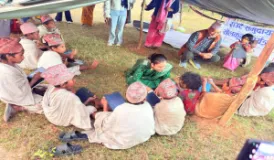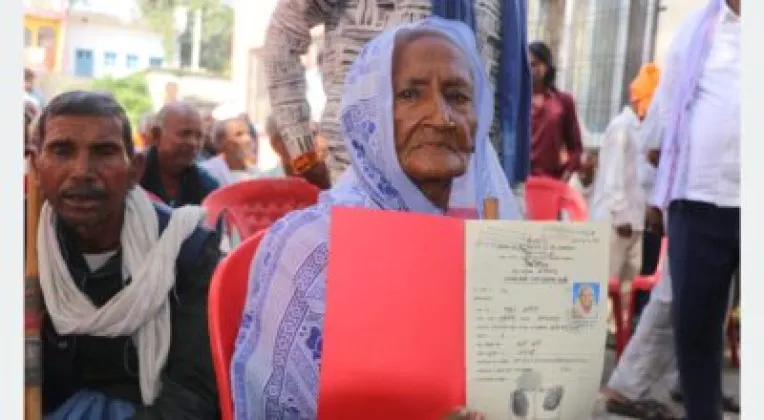
A total of 261 families of Krishnanagar Municipality in Kapilvastu district have received land ownership certificates, popularly known as Lalpurja, for their village block land, bringing to an end a wait that had stretched on for years. The certificates were handed over to landowners of Wards 1, 7 and 9 at a programme held at Ward No. 9 of the municipality on Friday. The distribution was jointly organised by Krishnanagar Municipality and the Survey Office, Taulihawa, and covered families who had long sought formal recognition of the land they occupy and cultivate.
A long-awaited handover
The event, hosted within Ward No. 9 of Krishnanagar Municipality, brought the district's land administration machinery directly to the community's doorstep. Staff of the Survey Office, Taulihawa, worked alongside the municipality to distribute the certificates to the 261 beneficiary families from Wards 1, 7 and 9 during the course of the programme.
For the recipients, the handover marked the moment their long-pending claim over village block land was converted into a legally recognised ownership record. Until such documents are issued, families may live on and farm land for years, even generations, without holding paper proof of their rights, a situation that leaves them exposed to disputes and limits what they can do with the property. The certificates distributed on Friday formally place the land in the names of the identified owners, in line with the records maintained through the survey process.
The wait, as described in reports of the programme, was a prolonged one, and the distribution was therefore received as a significant milestone for the three wards concerned. As covered by Khabarhub and RatoPati, the families received what are commonly referred to as red certificates, the standard red-coloured ownership documents issued in Nepal after land has been surveyed and registered.
Why the Lalpurja matters
The Lalpurja is the definitive legal record of land ownership in Nepal, and its importance for a household is difficult to overstate. A registered certificate transforms land from a contested or informal holding into a documented asset. Concretely, ownership certificates allow families to:
- Prove ownership of their plots before authorities, courts and neighbouring landholders
- Buy, sell or transfer land through formal channels at land revenue offices
- Use land as collateral when seeking loans from banks and financial institutions
- Settle inheritance and partition among family members with clear legal footing
- Claim compensation or services when development projects, utility connections or local programmes affect their land
For families who have farmed village block land without papers, holding a Lalpurja also brings a measure of security that informal occupation can never provide. Disputes over boundaries and possession, which are common where records are unclear, become far easier to resolve when a government-issued certificate exists.
Village block land: the background
Large tracts of land in the Tarai, including in Kapilvastu district, have historically been recorded as village block land rather than as individually registered parcels. In such cases, the land exists in bulk under a block classification, and the people living on and cultivating it often lack certificates issued in their own names. Converting this land into properly registered holdings requires survey and measurement, the preparation of ownership records, and the eventual issuance of Lalpurja to the recognised landholders.
That process falls to the Survey Office, and in Kapilvastu the relevant office sits in Taulihawa, the district headquarters. The joint programme in Krishnanagar was the mechanism through which the survey office and the municipality completed this step for the landowners of Wards 1, 7 and 9. By organising the handover locally, the two bodies enabled the 261 families to receive their documents within their own ward rather than through a distant, piecemeal process.
What it means for Kapilvastu households
Kapilvastu, a Tarai district in Lumbini Province with an economy closely tied to agriculture, treats land as the central asset of most rural households. Formal ownership papers therefore carry consequences well beyond the filing cabinet. A certified plot can be leveraged for credit, passed on cleanly to the next generation, or brought into local planning processes with the owner's rights clearly on record. For the 261 families of Krishnanagar, the certificates issued on Friday convert years of de facto possession into de jure ownership.
The programme also illustrates the practical role local governments can play in land administration. By pairing municipal organisation with the technical work of the Survey Office, Taulihawa, Krishnanagar Municipality was able to deliver a service that individual households often struggle to access on their own, particularly after a long administrative wait.
With the handover completed at Ward No. 9 on Friday, the 261 families of Wards 1, 7 and 9 now hold the Lalpurja for their village block land, and the documents stand as the first formal, state-recognised confirmation of ownership many of them have ever possessed.