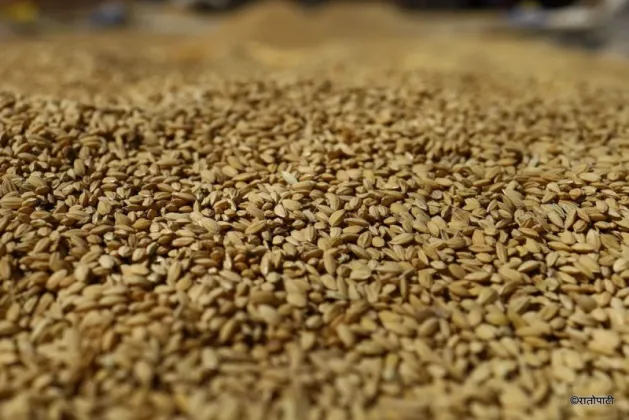
Sakar Agriculture Cooperative Limited, based in Raptisonari Rural Municipality-6 of Banke district, will purchase 10,000 quintals of paddy directly from farmers in the village this year, in a move designed to give local growers a guaranteed market and a fair return on their harvest. Chief Manager Jamansingh Wali said the cooperative has already begun buying paddy of all varieties produced by farmers, with the assurance of a fair price placed at the centre of the procurement campaign. The announcement, reported by Rato Pati and Khabarhub, positions a village-level cooperative as a direct buyer of the Terai's staple crop at a moment when many smallholders struggle to find dependable buyers after harvest.
Procurement Underway for All Paddy Varieties
According to Chief Manager Wali, the cooperative has started purchasing paddy of all varieties produced by farmers, rather than limiting itself to a single grade or strain. That openness matters in villages where individual households cultivate different types of paddy depending on their land, seed availability and irrigation, and it spares growers from having to hunt for a separate buyer for each variety they bring to the market.
Equally significant is where the buying is taking place. By purchasing paddy in the village itself, the cooperative removes the need for farmers to load their harvest onto vehicles and carry it to trading centres further afield. Transport costs, handling losses and the uncertainty of finding a buyer on arrival are among the most persistent burdens on small paddy growers, and village-level procurement addresses all three at once.
The volume involved is substantial for a rural, ward-level buyer. A target of 10,000 quintals equates to roughly 1,000 metric tonnes of paddy, given that one quintal equals 100 kilograms. For a single cooperative operating within one rural municipality, committing to purchase on that scale represents a meaningful vote of confidence in the productive capacity of farmers in Raptisonari.
Fair Price as the Guiding Principle
Wali stressed that the cooperative is ensuring a fair price for the paddy it buys. The emphasis responds to one of the oldest problems in Nepal's grain markets: when large quantities of paddy reach trading points at the same time after harvest, prices tend to soften, and growers who need cash urgently are often compelled to accept the first offer they receive. A buyer that commits in advance to fair pricing gives farmers a measure of certainty at exactly the moment they are most exposed.
Fair-price procurement also changes the arithmetic for the season ahead. When farmers know before planting and harvesting that their crop will find a buyer at a reasonable rate, they are more likely to invest in their fields, maintain production levels and remain engaged in farming rather than drifting away from it.
Encouraging Farmers and Securing Their Market
The cooperative has framed the initiative around two explicit goals: encouraging local farmers and securing a market for their produce. In rural Banke, where agriculture remains the backbone of household incomes, uncertainty over sales is a quiet but powerful disincentive. Growers who cannot be sure of selling their paddy, or who expect to be paid poorly for it, have little reason to expand cultivation or improve their practices.
A guaranteed buyer at the village level works in the opposite direction. It tells farmers that the paddy they grow has a home, that they will not have to negotiate from a position of weakness, and that the value of their labour will be reflected in the price they receive. For a rural municipality ward seeking to keep its agricultural economy vibrant, that reassurance can be as valuable as the purchases themselves.
The approach also keeps more of the crop's value within the community. When paddy is sold to intermediaries who transport it elsewhere, the margins earned along the way leave the village. When a local cooperative buys the grain directly, the transaction, and the economic activity surrounding it, stays rooted in Raptisonari.
A Cooperative Answer to a Familiar Problem
Cooperatives hold a recognised place in Nepal's economy alongside the public and private sectors, and agricultural cooperatives have increasingly taken on procurement and marketing roles that individual smallholders cannot perform alone. Paddy is the country's principal food crop and the mainstay of farming across the Terai plains, including Banke district in Lumbini Province, so local-level interventions in the paddy trade carry weight well beyond a single harvest.
For farmers in Raptisonari, the practical benefits of the arrangement are straightforward:
- A confirmed local buyer removes the pressure to transport paddy to distant markets in search of purchasers.
- Acceptance of all varieties means no grower is turned away because of the type of paddy they farm.
- The fair-price commitment protects households from distress sales in the days immediately after harvest.
- Village-level purchase reduces the share of the crop's final value lost to middlemen and transport.
What the Target Means for Raptisonari
Much will now depend on how the procurement drive progresses through the season, and on whether the cooperative reaches its 10,000-quintal target. Meeting it would demonstrate that a village-based institution can organise purchasing on a scale usually associated with larger traders, and would give the farmers of Raptisonari a dependable outlet for future harvests as well. Falling short would still leave the current season's growers with an active buyer that did not exist before.
For now, the message from the cooperative's leadership is unambiguous. Paddy grown in Raptisonari has a buyer, the buyer has come to the village, and it has committed to paying farmers fairly for what they produce. In a crop market where growers have long borne the risks of price and place, that simple arrangement is the news that matters this season.