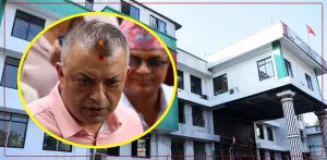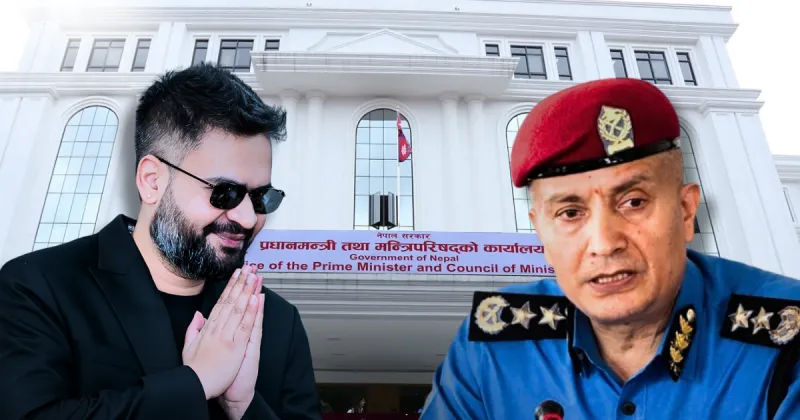
Rastriya Prajatantra Party (RPP) lawmaker Gyanendra Shahi has criticised the government's decision to remove Inspector General of Police (IGP) Dan Bahadur Karki from his post, calling the move an extreme abuse of state power. The government removed Karki and appointed Manoj Kumar K.C. as the new Inspector General of Police, and the dismissed police chief has said he will fight the cabinet's decision in court. What began as an executive decision over the country's top police post has therefore turned into a two-front controversy, drawing sharp political criticism even as it heads toward a judicial test.
Shahi: An extreme abuse of state power
Shahi's criticism of the government was blunt. Taking action against the Inspector General of Police based on personal interests, he said, is an extreme abuse of state power.
The RPP lawmaker drew a careful distinction between accountability and what he sees as the government's handling of the matter. If the IGP had committed a crime, Shahi argued, he should be punished and jailed according to the law. In his view, the proper course for dealing with any wrongdoing by the police chief is the legal process, not removal from the post through a decision he characterised as driven by personal interests.
By framing his objection this way, Shahi sought to position his party as a defender of lawful procedure rather than of any individual. His comments nonetheless amount to a direct charge against the government: that it has wielded the powers of the state against the country's senior-most police officer for reasons that, in his assessment, fall outside the law.
Karki removed, Manoj Kumar K.C. appointed
At the centre of the dispute is the government's decision to remove Karki from the post of Inspector General of Police and to appoint Manoj Kumar K.C. in his place. The change at the top of the police organisation was carried out through a cabinet decision, which Karki has since said he will contest in court.
Key developments in the case so far:
- The government removed Inspector General of Police Dan Bahadur Karki from his post.
- Manoj Kumar K.C. has been appointed as the new Inspector General of Police.
- Karki has announced that he will fight the cabinet's decision in court.
- RPP lawmaker Gyanendra Shahi has described the action as an extreme abuse of state power, saying that if the IGP had committed a crime he should be punished and jailed under the law.
The post of IGP is the highest office in the country's police service, and decisions about who holds it are closely watched both inside the force and across the political spectrum. The cabinet's choice to remove an incumbent and install a replacement has therefore drawn attention far beyond the usual churn of administrative appointments, particularly with the legality of the move already set to be examined in court.
Karki prepares to fight the decision in court
Karki has made clear that he does not intend to accept his removal quietly. According to Nagarik News, the removed Inspector General of Police will go to court against the government's decision, meaning the cabinet's move will now face judicial scrutiny.
The decision to litigate changes the character of the dispute. Questions over the legality of removing a serving Inspector General of Police, and of appointing a successor in his place, will be placed before the courts rather than left solely to political debate. The government will be required to defend the decision it took at the cabinet level, and the case could ultimately determine whether Karki's removal stands.
For K.C., the challenge creates a delicate start to his tenure. The legitimacy of his appointment is now tied to the outcome of the legal battle mounted by his predecessor, even as he formally occupies the post.
Political and legal stakes
The standoff over the police chief's post has quickly taken on a political dimension. Shahi's statement, carried by Nepal Press, represents a pointed charge from a sitting lawmaker that the government abused state power in dealing with the IGP. His insistence that any wrongdoing should be addressed through punishment and jail under the law signals that the criticism will focus on procedure as much as on the decision itself. The development has been reported across Nepali media, including Global Aawaj.
At the same time, the government's action remains in force. Manoj Kumar K.C. is the new Inspector General of Police, and Karki has left the post he held. What remains unresolved is the legality of how that change was carried out.
With Karki heading to court and lawmakers such as Shahi sharpening the political debate, the dispute over the removal of Dan Bahadur Karki is set to remain a prominent issue. The coming legal proceedings will test both the government's authority over the police institution and the boundaries of how that authority may lawfully be used, while Shahi's remarks ensure the decision will continue to face scrutiny in the political arena as well.