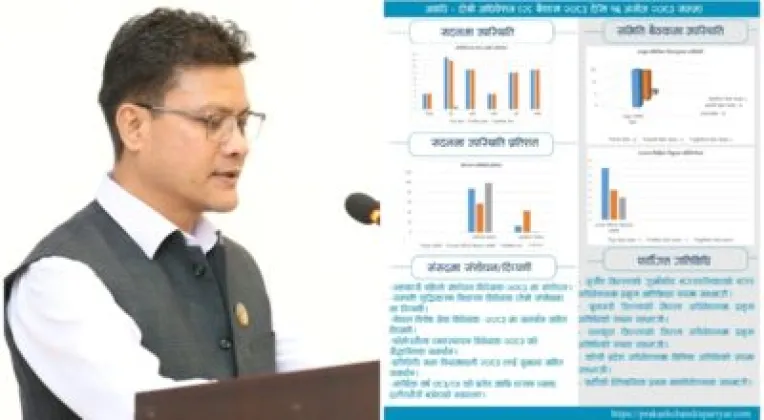
The report card of Prakash Chandra Pariyar, parliamentary party whip of the Rastriya Swatantra Party (RSP), covering his work during the second session of Nepal’s House of Representatives, has been made public. It records his raising issues including social justice, good governance, Dalit rights, climate justice, press freedom, education, health and public accountability, as well as his participation in the drafting and amendment of bills.
Issues raised in Parliament
The report card presents Pariyar’s parliamentary work through a range of concerns he brought before the House. The issues span social and political rights, public services, environmental concerns and the conduct of public institutions. Together, they show the breadth of subjects identified in the assessment of his work during the session.
Social justice and Dalit rights feature among the issues listed. Their inclusion points to Pariyar’s attention to questions of equality and the rights of communities in parliamentary discussion. The report card also notes good governance and public accountability, placing the conduct and responsibilities of public institutions among the matters he raised.
The list extends beyond governance and rights. Climate justice, press freedom, education and health are also identified as areas of concern. The report card does not present these topics as separate from wider public interests; rather, it records them as part of the issues Pariyar addressed in Parliament during the session.
Role in lawmaking
Alongside his interventions on public concerns, the report card notes Pariyar’s participation in the process of drafting and amending bills. This places legislative work among the activities covered by the assessment, in addition to the issues he raised in parliamentary debate.
The information made public does not identify the specific bills involved or set out the details of particular amendments. It does, however, record his participation in both drafting and amendment processes. Those activities form part of Parliament’s work on legislation and are distinct from raising broader policy and public-interest issues in the House.
The report card therefore describes two strands of Pariyar’s parliamentary activity: addressing concerns across a range of subjects and taking part in legislative processes. It does not, in the information available, provide a numerical breakdown of speeches, interventions or bills. Its stated highlights are the subjects he raised and his involvement in bill drafting and amendment.
A broad set of public concerns
The themes recorded in the report card connect several areas of public life. Social justice, Dalit rights and press freedom relate to rights and inclusion, while education and health concern public services. Climate justice adds an environmental dimension, and good governance and public accountability focus attention on how public responsibilities are carried out.
By making the report card public, Pariyar’s work during the second session is being presented through these stated areas of parliamentary engagement. The document covers both the issues he raised and his participation in legislative work, offering a summary of the areas associated with his role in the House during that session. No further details about the timing of its release, the individual parliamentary interventions or the bills involved were provided in the available information.