The villages of Lamjung no longer turn red ahead of Dashain the way they once did. According to reports published on 18 October 2026 by Nagarik News, Ratopati and Khabarhub, only a few homes in the district are still coated in the traditional red clay and kamero, the ochre mixture that generations of families applied to their walls and floors before the festival. The custom, which once turned entire settlements colourful and lively as Dashain approached, has now nearly disappeared, displaced by cement plaster and modern paints.
A Ritual That Once Painted Whole Villages Red
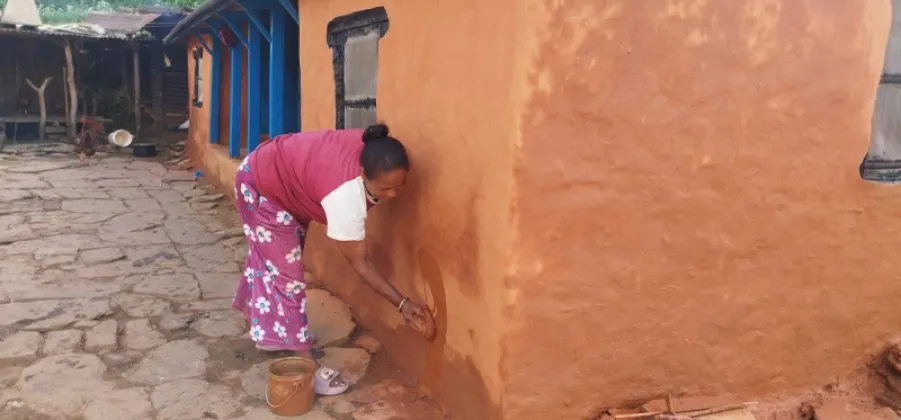
For generations, preparing for Dashain in Nepal's hill districts meant preparing the house itself. In Lamjung, the days before the festival followed a familiar pattern: families gathered red soil, prepared kamero and coated their walls and floors in warm shades of red and ochre. The work was renewed year after year, so that every festival arrived with homes looking freshly finished.
The effect across a settlement was striking. As the reports describe, villagers once watched their villages turn colourful and lively as the festival approached, with one painted home joining the next until whole settlements carried the same festive glow. Because the material was earth and the labour came from the households themselves, the look of Dashain was something every family could produce, regardless of means.
The tradition belonged to the wider rhythm of Dashain, Nepal's biggest festival, when families clean and decorate their homes, welcome relatives back to the village and celebrate with worship and feasting. A freshly coated house was part of that welcome, a visible signal that the festival was near. This is why the coverage in Nagarik News, Ratopati and Khabarhub treats the practice not merely as a building habit but as a culture of its own, the red soil and kamero culture of Dashain.
Cement Plaster and Modern Paints Replace Red Clay and Ochre
What has undone the tradition, the reports agree, is the spread of cement plaster and modern paints. As more houses in the district are finished with cement, the mud and clay surfaces on which red soil and kamero were once applied are disappearing, and paints sold in the market have taken over the job of making a home look new for the festival.
The change is no longer a matter of individual choice here and there. Only a few homes in Lamjung still carry the traditional coating this Dashain, the reports note, a sharp contrast with the past, when the practice defined the appearance of entire villages ahead of the festival. The coverage characterises the red soil and ochre culture as disappearing alongside the excitement of Dashain that it once helped to express.
The tradition, as described in the reports, followed a small annual cycle:
- Collecting red soil in the days before the festival
- Preparing kamero, the ochre mixture used as a coating
- Applying the mixture to walls and floors ahead of Dashain
- Repeating the work every year so that homes looked fresh for the occasion
A Seasonal Marker Slipping Away
Kamero has long been part of festival life across Nepal's hill communities. The ochre pigment, mixed into a paste and applied by hand, gave walls and floors a rich red finish for festivals and auspicious occasions, and in Lamjung it was inseparable from the approach of Dashain. Its near disappearance in the district is therefore more than a change in building materials. It removes a seasonal marker, a way of seeing, house by house, that the year's biggest festival was only days away.
For this Dashain, the picture documented on 18 October 2026 is of a practice surviving only in pockets: scattered homes in the old red coating, set among others finished in cement and paint. The reports present the trend as a near-complete retreat, with the custom that once signalled the festival's arrival now reduced to a handful of households.
What remains is a quiet contrast between two eras of the same festival. The sound and activity of Dashain continue in Lamjung's villages, but the visual signature that accompanied them for generations, the settlements glowing red and ochre in the days before Ghatasthapana and the festival days that follow, is largely gone. Unless the habit of coating homes with red clay and ochre revives, a distinctive piece of Nepal's Dashain heritage will live on mainly in the few painted houses that still keep it alive and in the memories of those who once applied it every autumn.