The red and ochre glow that once announced the arrival of Dashain in Lamjung is fast disappearing. The generations-old custom of coating village house walls with red clay and ochre ahead of the festival has all but vanished, and only a few homes still carry the traditional finish this Dashain. According to reports published on 18 October 2026 by Nagarik News, Ratopati and Khabarhub, the wall-painting culture of Lamjung district, Nepal, has faded as cement plaster and modern paints spread through the villages.
A district once dressed for Dashain
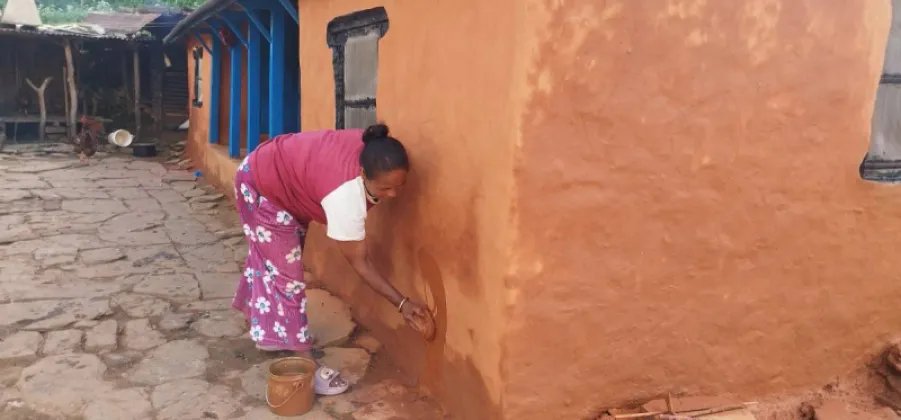
For generations, the approach of Dashain in Lamjung could be read on the walls of village homes. In the days before the festival, families coated their houses with red soil and ochre, known locally as kamero, and the work transformed entire settlements. Villages turned colourful and lively as the festival drew near, the reports note, with home after home sharing the same festive finish.
The image the coverage evokes is of villages where every household took part. As Dashain approached, the red clay and ochre coating spread from home to home until the whole settlement wore the festival's colours, an annual transformation that made the season unmistakable in the district.
The coating was an established part of preparing for Dashain, applied ahead of the festival as households readied themselves for the celebrations. The reports describe it as a culture tied closely to the excitement of Dashain itself, one that defined how Lamjung's villages looked during the festival period.
The tradition at a glance
- House walls were coated with red clay in the run-up to Dashain
- Ochre, known locally as kamero, was used alongside the red soil
- Entire settlements turned colourful and lively as the festival approached
- The practice was a familiar part of festival preparations across Lamjung's villages
- This Dashain, only a few homes are painted in the old style
Cement and modern paints take over
The reports identify the spread of cement plaster and modern paints as the main force behind the decline. As houses are built or renovated with cemented walls and finished with modern paints, the red clay and ochre that once covered them have been pushed aside. What was once a common ritual before Dashain has become an exception, and the traditional coating now appears on only a handful of homes in the district.
According to the coverage, these materials have replaced the traditional practice outright rather than simply reducing it, leaving the custom on the verge of disappearance as this year's festival arrives. The red soil and kamero that families once gathered for their walls have found no place in the newer style of construction.
The change has also altered the look of the festival season itself. Where settlements once appeared uniformly red and ochre in the days before Dashain, the festival now arrives in villages that look much as they do throughout the rest of the year. The reports describe the custom as having nearly disappeared, with the old colours surviving only in scattered homes.
Then and now:
- Then: walls coated with red clay and kamero before Dashain, with settlements turning colourful and lively
- Now: cement plaster and modern paints dominate, and only a few homes carry the traditional finish
A culture fading with the festival
The tone of the coverage captures what has been lost. Nagarik News described the story as the disappearance of the red soil and kamero culture along with the excitement of Dashain, while Ratopati and Khabarhub carried similar accounts of the tradition fading in Lamjung. All three reports, published on 18 October 2026, point to the same picture: a festival once painted onto the walls of the district's homes is now barely visible there.
This Dashain, the handful of traditionally painted homes stand out against the cemented and painted houses around them. The contrast illustrates how far the custom has receded in the villages where it was once universal.
For the district, the shift means that the image of villages painted in red clay and ochre for Dashain, once so common that it defined the season, is now close to vanishing altogether. The reports make clear that the change is driven by materials as much as by habits, as cement plaster and modern paints have left little room for red clay and kamero on Lamjung's walls.
As this year's festival is celebrated, the few remaining painted walls serve as the last visible traces of a custom that once coloured village life across Lamjung. For now, its continuation rests with the handful of households that still coat their homes in the old style, even as the settlements around them take on the uniform finish of cement and modern paint.