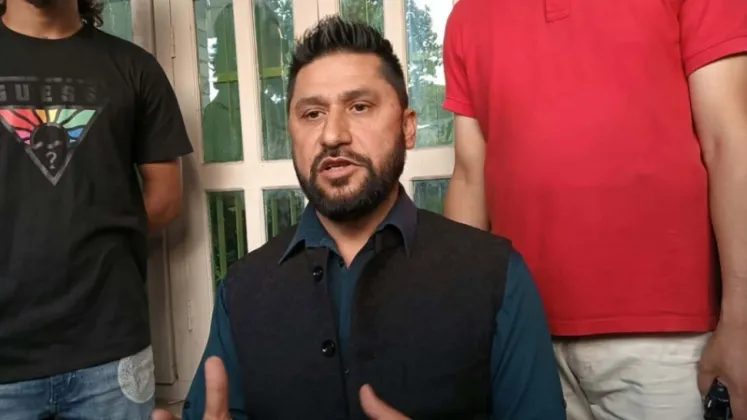
Rastriya Swatantra Party (RSP) chairman Ravi Lamichhane has said that the Government of Nepal itself must justify its decision to change the Inspector General of Police (IGP), making clear that his party does not consider it its job to simply agree with every decision the administration takes. In remarks reported by Setopati, Nagarik News and Nepal Press on November 5, 2026, Lamichhane said that when the government takes steps it deems necessary, the responsibility to justify those steps lies with the government, and he expects it will do so.
Not the Party's Job to Simply Agree
Speaking in response to the government's decision to change the country's top police post, Lamichhane drew a clear line between his party's role and the government's obligations. According to the reports published on November 5, he said it is not the RSP's job to simply agree with every government decision. The statement signals that the party will not serve as a rubber stamp for the administration, and that it intends to weigh government actions against the explanations offered for them rather than endorsing them out of hand.
His Position in Brief
As reported by the three outlets, Lamichhane's remarks rest on three core ideas:
- The RSP does not regard itself as obliged to agree with every decision the government makes.
- When the government takes steps it deems necessary, the duty to justify those steps rests with the government itself.
- Lamichhane expects the government will indeed provide that justification.
The formulation is notable for what it omits as much as for what it contains. Lamichhane did not announce the RSP's support for or opposition to the IGP change in the remarks carried by the outlets. Instead, he framed the discussion around process and accountability: the government acted, and the government must now explain why. That approach keeps the party's own verdict pending while placing on record its expectation that a justification will come.
Government Must Confirm the Validity of the Move
The framing was echoed in the headlines of the outlets that carried his response. Nagarik News published the story under the headline "Government should confirm the validity of the IGP case, Ravi Lamichhane," while Nepal Press reported his response on the IGP reshuffle with the message that the government will confirm the justification. Setopati also carried the remarks, indicating that his response received broad coverage across Nepali media on the same day.
The consistent thread running through the reports is that Lamichhane placed the burden of explanation squarely on the government. In his telling, a government that believes a step is necessary should be prepared to defend that belief publicly. By saying he expects the justification to be confirmed, he effectively put the administration on notice that its reasoning is being awaited and, implicitly, that it will be examined once offered.
Why the IGP Decision Is Under Scrutiny
Changes at the top of the police force are closely watched in Nepal's politics. The post of Inspector General of Police is the senior-most position in the Nepal Police, and any decision to change the leadership of the force naturally draws attention from political parties, the media and the public alike. Against that backdrop, Lamichhane's comments reflect a demand that consequential decisions affecting key state institutions be accompanied by a public justification rather than taken on trust alone.
The remarks also offer an indication of how the RSP intends to approach the issue. Rather than declaring a position in advance, the party chairman signalled that the government's own explanation will be the starting point for any judgment. That approach places the emphasis on transparency and on the government's willingness to account for its choices, particularly in matters that touch the leadership of institutions responsible for public order and security.
A Challenge to the Government, Not a Verdict From the RSP
For Lamichhane, the logic underlying his statement appears straightforward: a step the government deems necessary may well be defensible, but defensibility is something to be demonstrated, not assumed. His remarks effectively challenge the government to make its case before the public, a challenge he said he expects it to meet.
Whether the government responds with the justification Lamichhane anticipates remains to be seen. What is clear from his November 5 remarks is that the RSP has chosen the terrain on which the debate over the IGP change will be fought: not whether the party simply agrees with the government, but whether the government can satisfactorily explain itself.