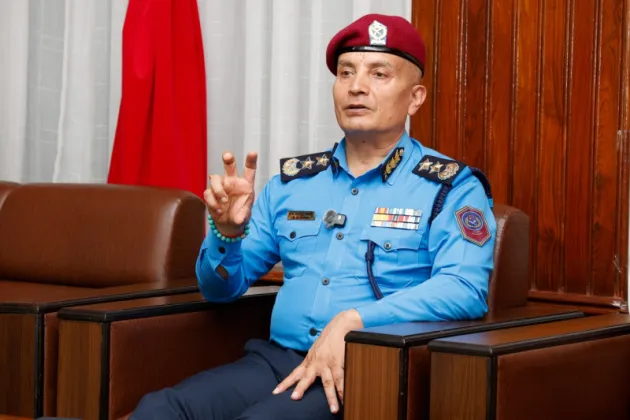
Kathmandu - A last-minute legal challenge by Dan Bahadur Karki ran into trouble on Thursday when a writ petition claiming that he was illegally removed from the post of Inspector General of Police could not be registered at the Supreme Court. According to reports, Supreme Court staff turned away Karki's lawyers when they arrived at the court to file the document, leaving the petition unregistered as the country prepared to begin the extended Tihar holiday. Because the festival break begins the day after Friday, the timing of the failed registration carries real consequences: even if the petition is accepted on Friday, its preliminary hearing can take place only after Tihar, pushing any judicial scrutiny of Karki's claim beyond the festival season.
Lawyers Turned Away at the Filing Counter
The setback came at the very first step of the judicial process. Karki's lawyers approached the Supreme Court on Thursday seeking to register the writ petition, which asserts that his removal from the post of Inspector General of Police was unlawful. Instead of accepting the filing, court staff turned the lawyers away, according to a report by Rajdhani Daily.
The reported account does not explain why the staff declined to accept the petition, nor does it indicate whether any formal objection was raised against the document itself. What is clear is the outcome: as of Thursday, the petition had not been entered in the court's records, and without registration, no bench can be assigned to examine it.
Key Points at a Glance
- Karki's writ petition claims he was illegally removed from the post of Inspector General of Police.
- The petition could not be registered at the Supreme Court on Thursday.
- Supreme Court staff turned away Karki's lawyers, according to reports.
- If the petition is registered on Friday, its preliminary hearing will take place only after Tihar, as the holiday begins the following day.
A Narrow Window Before Tihar
Timing is now the central complication in the case. Friday stands as the last working day before the Tihar holiday begins the next day, and courts across the country close for the festival period. In practical terms, that leaves only a single day for the petition to be registered if Karki's legal team hopes to set the process in motion before the break.
Even in that best-case scenario, the petition will not receive a quick audience. If it is registered on Friday, the preliminary hearing will take place only after Tihar. A preliminary hearing is the initial stage at which a bench examines a freshly filed petition and decides whether it deserves further proceedings; until that hearing takes place, the petition remains, in effect, at the courtroom door.
The festival context matters for litigants across Nepal. Tihar, the festival of lights, is among the country's most widely celebrated holidays, and government offices, including the judiciary, remain shut for an extended stretch. Courts do handle particularly urgent matters even during such periods, but routine filings and hearings generally wait until offices reopen, often against a backlog of pending work. Karki's petition now sits squarely within that reality, its first hearing deferred to a date after the celebrations conclude.
The Claim at the Heart of the Petition
At the center of the filing is Karki's contention that his removal from the post of Inspector General of Police was illegal. The Inspector General of Police is the senior-most position in the country's police organization, and disputes over the top job carry significant weight both within the force and in the public eye.
A writ petition is a formal request to the Supreme Court to exercise its broad corrective powers when a person claims that a state authority has acted unlawfully. If the court takes up such a petition, it can examine the legality of the decision in question and, where it finds an act to be without legal basis, issue appropriate orders. The preliminary hearing is the threshold stage in that process: only after a bench gives the petition its first reading does the case move toward fuller arguments and, potentially, a decision.
That is precisely why registration matters so much in this instance. A petition that exists only in the hands of lawyers has no legal life; the clock on judicial review starts only once the document is lodged with the court. Thursday's turn-away, whatever its cause, stopped that clock before it could start.
What Happens Next
Attention now shifts to Friday. Karki's legal team can be expected to make a fresh attempt to register the petition on the court's final working day before the holiday. If they succeed, the case will enter the queue for a preliminary hearing that can be scheduled only after Tihar. If they fail again, the petition's fate, and any eventual ruling on whether Karki's removal was lawful, will remain unresolved until the courts reopen after the festival.
For now, the record stands as the reports describe it: a writ petition claiming an illegal removal from the post of Inspector General of Police, a set of lawyers turned away at the Supreme Court, and a hearing that, at the earliest, lies beyond the festival of lights.