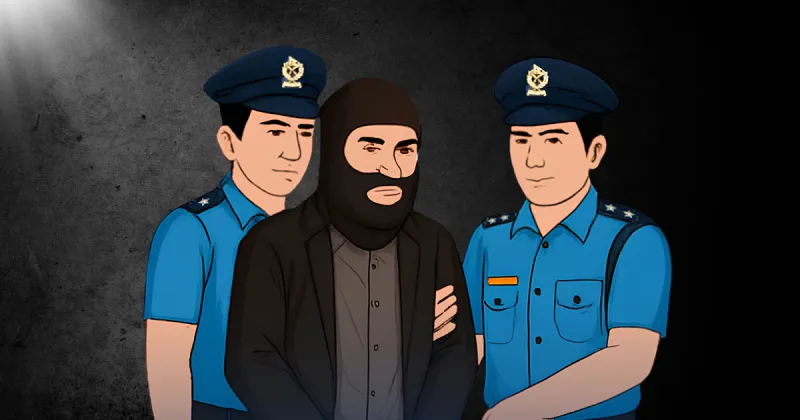
Nepali police have shot and arrested a man accused of cheating people in dollar exchange transactions and looting them, in an incident reported by Nepali media on November 5 and 6, 2026. According to a report published by Nagarik News, the suspect sustained injuries after police opened fire while taking him into custody. The arrest followed allegations that he had defrauded members of the public through foreign currency deals and had been involved in robbery. The initial report did not disclose the suspect's name, the precise location of the operation, or the extent of his injuries.
Suspect Accused of Cheating People in Dollar Deals
The man is accused of cheating people in dollar exchange transactions, the basis on which police moved against him. Fraud linked to foreign currency is a recurring problem in Nepal, and such scams tend to follow a familiar pattern. A fraudster approaches a victim, often someone holding dollars or looking to buy them, and offers a rate noticeably better than what banks or licensed counters provide. Once the victim hands over cash or valuables, the fraudster either disappears, hands over counterfeit notes, or switches the currency during the exchange. Nepal Police have repeatedly cautioned the public against conducting currency deals outside formal channels precisely because such transactions leave victims with little recourse once money changes hands.
In this case, the allegations extended beyond cheating alone. The report noted that the arrest was made after the suspect was allegedly involved in the fraud as well as in looting, meaning he faces accusations of both deceiving victims through exchange deals and directly robbing them. That combination of cheating followed by robbery is among the more serious categories of financial crime that police in Nepal investigate, and it typically leads to multiple charges being filed against a single accused.
Arrest Made After Police Open Fire
The defining element of the case is the manner of the arrest. Rather than detaining the suspect without incident, police shot him and then took him into custody. The report did not spell out the sequence of events that led to the firing, such as whether the suspect attempted to flee or posed a threat to officers or others. The use of firearms during an arrest generally indicates that officers judged the situation to have escalated beyond what routine methods could control, but independent confirmation of the circumstances was not available in the initial reporting.
Under Nepali legal procedure, a person who is arrested must generally be produced before a court within twenty-four hours of the arrest, excluding the time required for travel. When a suspect is wounded during police action, standard practice is for officers to first arrange medical treatment, after which the legal process resumes once the individual is fit. Police have not publicly confirmed how these steps will apply in this case, nor have they announced when the suspect is expected to appear before judicial authorities. Further details, including the recovery of any currency, weapons, or other evidence, are likely to emerge as the investigation progresses.
Nepal's Tight Rules on Foreign Currency
The case touches on a heavily regulated corner of Nepal's financial system. Under the Foreign Exchange (Regulation) Act, 2019 BS, the authority to buy and sell foreign currency rests with Nepal Rastra Bank, the country's central bank, which licenses commercial banks and a limited number of authorized counters and money changers. Any individual or business dealing in dollars outside this licensed framework is operating illegally. The central bank has warned in the past that informal dollar transactions not only expose ordinary people to fraud but can also feed larger problems such as unrecorded capital flows, which is why unauthorized dealing attracts penalties separate from any criminal charges for cheating.
For the public, authorities and consumer advocates generally recommend a few basic precautions when handling foreign currency:
- Deal only with banks or money changers licensed by Nepal Rastra Bank.
- Insist on an official receipt for every currency transaction.
- Check the day's official exchange rate before agreeing to any deal.
- Treat offers of dollars at unusually cheap rates as a warning sign.
- Report suspected fraud to the nearest police station or to the central bank.
Investigation Underway
As of the latest reports published on November 5 and 6, 2026, the investigation was at an early stage. If the allegations are established, the suspect could face charges of cheating and robbery under the National Penal Code, 2017, alongside penalties under foreign exchange law for any unauthorized currency dealings. Police have not said how many complainants are involved, how much money or property was taken from victims, or whether any accomplices are being sought. Those questions, along with the circumstances of the shooting itself, remain open pending further updates from investigators.
The full Nagarik News report can be read here. For now, the case stands as a reminder of the risks people run when they trade foreign currency outside the banking system, and of the potential consequences for those who cheat and rob them.