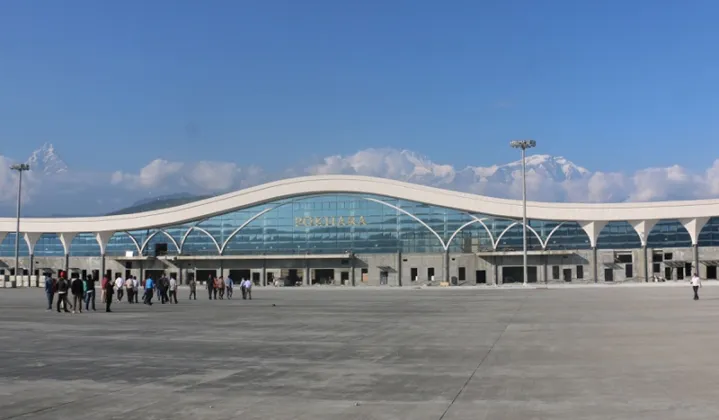
Flights on the Pokhara–Dubai route have carried a total of 13,474 passengers in the past two months, according to figures reported on November 25, 2026. The numbers reflect the steady flow of travellers between Pokhara and Dubai since the service began, and they underline the route's growing importance for travel between Nepal and the United Arab Emirates.
The route links Nepal's tourism hub of Pokhara directly with Dubai, one of the world's busiest international aviation hubs. Passenger demand has remained consistent over the two-month period, giving the service a stable start and reinforcing its role as a key international connection from Pokhara.
A Direct Link From Pokhara to the Gulf
Before the launch of the Pokhara–Dubai service, travellers heading to the United Arab Emirates largely depended on flights departing from the Kathmandu Valley. The new route allows passengers from Pokhara and the surrounding districts to board international flights from their own city, cutting down on the time, cost and inconvenience of travelling to Kathmandu first.
For migrant workers, business travellers and tourists alike, the availability of an international departure point in Pokhara represents a significant change in how people in western Nepal plan their journeys abroad. The steady passenger numbers recorded over the past two months suggest that many travellers have already made the shift to using their home city as an international gateway.
- Pokhara serves as the main tourism and commercial centre of western Nepal, drawing visitors from across the country and abroad.
- Dubai is a major destination for Nepali workers and a popular transit point for onward travel to Europe, Africa and other destinations.
- Direct flights between the two cities reduce the need for road travel to Kathmandu before boarding an international flight.
Steady Demand in the First Two Months
The reported total of 13,474 passengers over the past two months averages out to hundreds of travellers each day using the route. Aviation observers note that consistent demand in the early months of a new international route is often seen as a sign of sustainability, since many new services struggle to fill seats before word spreads and booking patterns settle.
The figures, published on November 25, 2026, highlight the growing use of the route for travel between Nepal and the United Arab Emirates. Nepal has long-standing economic and personal ties with the Gulf states, and the UAE in particular is home to a large Nepali community of workers and residents. A direct connection from Pokhara gives those travellers a more convenient option for both outbound and return journeys.
For the tourism sector, the route also opens the possibility of bringing more international visitors directly into Pokhara, the gateway to the Annapurna region and one of Nepal's most popular destinations. Visitors arriving from Dubai and beyond can begin their holidays in the lakeside city without first transiting through Kathmandu.
What the Numbers Mean for the Route
Sustained passenger traffic in the first two months of operations is likely to be watched closely by airlines, tourism entrepreneurs and local authorities in Pokhara. Strong load factors on an international route can support the case for continued or expanded services, while weak demand often leads to reduced schedules.
The Pokhara region has invested heavily in international air connectivity in recent years, with the city's international airport serving as the centrepiece of efforts to bring foreign tourists and business travellers directly to western Nepal. The Dubai route is among the most prominent of the international connections operated from the city, and the latest passenger figures provide a measure of how the investment is translating into actual travel.
- The 13,474 passengers recorded in two months reflect consistent demand rather than a short-lived surge.
- The route strengthens people-to-people and economic links between Nepal and the United Arab Emirates.
- Direct international departures from Pokhara reduce reliance on Kathmandu for overseas travel.
As the service moves beyond its early months, attention will turn to whether the steady demand seen so far can be maintained through different travel seasons. For now, the two-month passenger count of 13,474 stands as an early indicator that the Pokhara–Dubai connection has found a meaningful place in the travel plans of people moving between Nepal and the UAE.
For further coverage, reports are available from Nepal Lead and Thaha Khabar.