Prime Minister Balendra Shah has directed Nepal's security agencies to strengthen coordination among themselves after receiving a high-level briefing on the country's law and order and overall security situation. The briefing was held at the Office of the Prime Minister and Council of Ministers at Singha Durbar in Kathmandu, where the heads of the Nepal Army, the Nepal Police and the Armed Police Force briefed the Prime Minister directly on citizen safety, festive-season security arrangements and the broader management of peace and security, according to a report by My Republica. The meeting placed the government's security priorities on record and closed with a clear instruction to the forces to work more closely together.
Security chiefs brief the Prime Minister at Singha Durbar
The session brought together the leaders of Nepal's three principal security organizations for a direct exchange with the head of government. Those present included:
- Chief of the Army Staff Ashok Raj Sigdel, the head of the Nepal Army
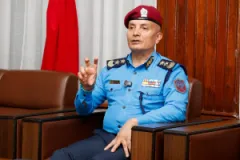
- Nepal Police Inspector General Manoj KC, who commands the country's main civilian law enforcement body
- Armed Police Force Inspector General Narayan Datta Paudel, who leads the paramilitary force deployed alongside the police
During the briefing, the three chiefs presented a picture of the security situation as seen from their respective organizations. The subjects on the table ranged from the day-to-day safety of citizens to preparations for the festive season and the overall management of peace and security nationwide. By summoning all three chiefs to Singha Durbar at the same time, the Prime Minister's office ensured that the government received a consolidated readout rather than piecemeal updates arriving through separate channels.
Briefings of this kind allow the head of government to hear directly from the commanders of the forces on the ground, to question the assessments presented and to issue instructions in real time. They also serve to place the political leadership's expectations squarely before the agencies tasked with carrying them out.
Directive on coordination among the forces
The key takeaway from the meeting was Prime Minister Shah's instruction that the agencies strengthen coordination among themselves. Nepal's security architecture distributes responsibilities across three distinct forces. The Nepal Army is the senior military institution charged with defending the nation and can also be called upon to support internal security when required. The Nepal Police handles ordinary law enforcement, crime prevention and investigation across the country. The Armed Police Force, organized as a paramilitary body, is tasked with maintaining law and order and frequently works shoulder to shoulder with the police on the ground.
Because the mandates of the three forces overlap in practice, particularly during periods of heightened public activity, coordination is essential to prevent gaps in intelligence sharing, deployment planning and emergency response. A directive from the Prime Minister to tighten that coordination is a reminder that the government expects the forces to operate as a single security system rather than as separate units pursuing parallel agendas.
For the agencies, the instruction carries practical weight. Joint planning, shared information and synchronized deployments reduce duplication of effort and help ensure that manpower and resources reach the places where they are most needed, whether that is a crowded market, a highway junction or a large public gathering.
Festive-season security under review
A significant element of the briefing concerned security arrangements for the festive season. Nepal's festival calendar brings predictable surges in movement and crowds: families travel to their home districts in large numbers, bazaars and shopping areas fill up, and temples, fairgrounds and community events draw dense gatherings. These patterns place additional demands on security agencies, which must scale up patrolling, traffic management and crowd control precisely when their routine workload is also at its peak.
That the chiefs briefed the Prime Minister specifically on festive-season preparations signals the government's focus on ensuring that the celebrations pass off peacefully and that citizens can travel, shop and gather without fear. Reviewing these arrangements at the political level also allows shortcomings to be identified early and additional attention to be directed at vulnerable locations before problems arise, rather than after the fact.
Citizen safety and public confidence
The briefing also placed citizen safety at the center of the discussion. For the public, the test of security coordination is not abstract: it is measured in how safe people feel in their neighborhoods, on the roads, in public transport and in crowded public spaces. A Prime Ministerial directive on coordination therefore speaks directly to the everyday experience of citizens, urging the forces to close the gaps that people notice most, from slow emergency response to unchecked petty crime.
Security reviews of this nature are an established part of governance, giving the head of government a periodic window into the security landscape and an opportunity to align the priorities of the uniformed services with those of the country's leadership. In this instance, the meeting gave Prime Minister Shah a consolidated assessment from all three forces at once, along with the chance to set expectations for the period ahead.
With the directive now issued, the responsibility rests with the Nepal Army, the Nepal Police and the Armed Police Force to translate it into closer joint working, tighter information sharing and seamless deployments, particularly as the festive season approaches and the pressure on their resources grows.