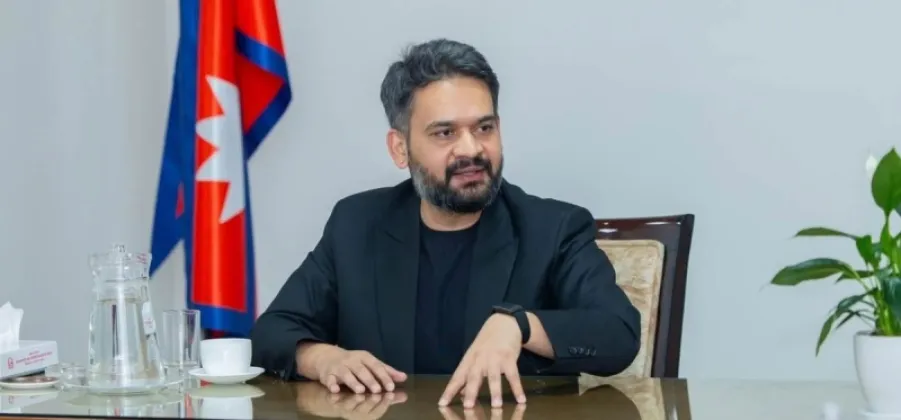
Prime Minister Balendra Shah has called on all sides to move beyond rhetoric and implement a zero-tolerance policy against gender-based violence in actual practice, stressing that victims must be protected, impunity must end, and access to justice must be guaranteed. The call came in a message issued on the occasion of the start of the 16 Days of Activism against Gender-Based Violence.
In his message, the Prime Minister described gender-based violence as a serious violation of human rights and identified it as a major challenge in the effort to build an equitable society. He underlined that declarations and policies alone are not enough, and that the commitment to zero tolerance must be reflected in concrete action on the ground.
A Call for Practical Implementation
Shah's message placed particular emphasis on the gap between policy commitments and their enforcement. By calling for the zero-tolerance policy to be implemented "in practice," he pointed to the persistent problem of gender-based violence surviving despite legal prohibitions and official campaigns. He urged all sides - the state machinery, institutions and society at large - to take responsibility for ensuring that victims receive protection and that perpetrators do not escape accountability.
Ending impunity was a central theme of the Prime Minister's message. He stressed that survivors of gender-based violence must have real access to justice, noting that without accountability, policies against such violence remain ineffective. The protection of victims, he indicated, must be treated as a priority rather than an afterthought.
Digital Violence as an Emerging Challenge
Beyond physical and traditional forms of abuse, the Prime Minister drew attention to a newer dimension of the problem. He said violence carried out through digital media has become an added challenge in the changing context, acknowledging that technology has opened new avenues for harassment and abuse, particularly targeting women and girls.
This recognition of digital violence reflects how the nature of gender-based harm is evolving. Online platforms can extend abuse beyond physical spaces, making it harder for victims to escape harassment and for authorities to hold offenders accountable. By naming this shift, the Prime Minister signalled that the fight against gender-based violence must adapt to new realities and not remain confined to conventional forms of abuse.
Framing Violence as a Human Rights Violation
A significant aspect of Shah's message was the framing of gender-based violence not merely as a law-and-order issue or a social problem, but as a serious violation of human rights. This framing places the issue within the broader framework of the state's obligations to protect the fundamental rights and dignity of all citizens.
The Prime Minister also connected the issue to the larger goal of building an equitable society. He described gender-based violence as a major challenge to that goal, arguing that a society in which one section of the population lives under the threat of violence cannot be considered fair or equal. Eliminating such violence, in this view, is a precondition for genuine social equality rather than a separate or secondary concern.
The 16 Days of Activism Campaign
The message was issued to mark the beginning of the 16 Days of Activism against Gender-Based Violence, a global annual campaign that runs from 25 November, the International Day for the Elimination of Violence against Women, through 10 December, Human Rights Day. The campaign is observed in Nepal and around the world each year as a period of intensified advocacy, awareness-raising and calls for government action against violence targeting women and girls.
The timing of the Prime Minister's message situates it within this broader campaign, which serves as a recurring moment for governments and civil society to take stock of progress and shortfalls in the fight against gender-based violence. Such annual occasions typically draw attention to the persistence of violence against women despite years of legal reform and awareness campaigns.
Expectations Ahead
With his message, the Prime Minister has set out a clear expectation for all stakeholders: that the zero-tolerance position adopted against gender-based violence must translate into protection for victims, an end to impunity and meaningful access to justice. He has also highlighted the growing threat of digitally mediated violence, urging that responses evolve alongside changing circumstances.
Whether these commitments lead to concrete measures will depend on the actions of the institutions responsible for implementing policy, enforcing the law and supporting survivors. For now, the message marks the formal start of Nepal's observance of the 16 Days of Activism, with the Prime Minister's words placing the burden of action squarely on all sides of society.
Read the original reports: