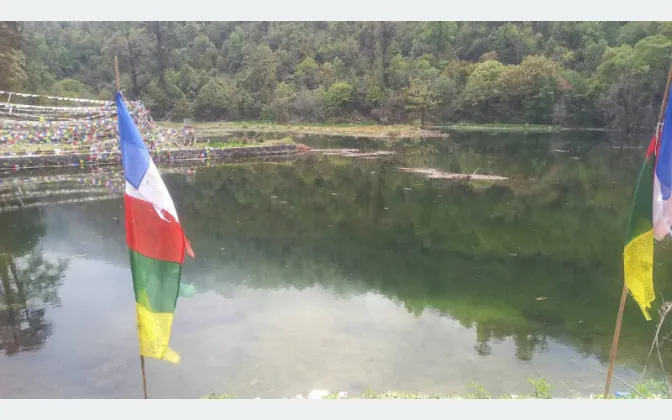
Parvati Kund, a tranquil pilgrimage pond perched at an altitude of 2,550 metres at the top of Gatlang village in Aamachhodingmo Rural Municipality-3 of Rasuwa district, remains one of Nepal's most overlooked sacred destinations, held back by a persistent lack of publicity and infrastructure despite its considerable religious and scenic value. Recent reports in the Nepali media describe the site as a shared centre of faith for Hindu and Buddhist devotees, a place where spiritual reverence merges with the living Tamang culture of the surrounding villages and the natural beauty of the high landscape. As Ratopati puts it in its headline, this Himalayan pilgrimage site is still "awaiting the light of publicity", a concern echoed in Khabarhub's reporting on the site's quiet neglect.
A Shared Centre of Faith
At the heart of Parvati Kund's significance is its dual religious identity. Reports describe it as a centre of faith shared by Hindu and Buddhist devotees, a characteristic that reflects the deep intertwining of the two traditions across Nepal's hill and mountain communities. For Hindus, a kund - a sacred pond or pool - is traditionally associated with prayer, purity and offering, making such water bodies natural focal points for pilgrimage. For Buddhist devotees as well, the site holds enduring spiritual meaning, and its religious life is closely interwoven with the Tamang culture of the area.
Across Nepal, numerous shrines, lakes and ponds are venerated jointly by followers of both faiths, and such shared sites often serve as common ground where different communities come together in devotion. Parvati Kund belongs to this tradition, and it is precisely this blend of beliefs, combined with the cultural texture of the Tamang settlements around it, that the reports identify as the site's defining character. Its value, however, is not confined to religion alone - the reports describe it equally as a place of natural beauty, giving it a rare combination of spiritual and scenic appeal.
Where Culture and Nature Converge
The kund lies at the top of Gatlang, within ward number 3 of Aamachhodingmo Rural Municipality in Rasuwa. Its altitude of 2,550 metres places it well above the surrounding settlements, giving the site a quiet, elevated setting that reports describe as rich in natural beauty. The journey to the site takes visitors through the landscape of the rural municipality, where the Tamang culture of the region remains a visible and living presence.
According to the reports, it is this combination that sets Parvati Kund apart: a sacred water body revered by two faiths, set amid scenery of striking natural charm and framed by the traditions of the Tamang community. Sites of this kind, where culture and nature reinforce one another, are increasingly sought after by travellers in Nepal, which makes the current state of Parvati Kund all the more striking - the ingredients for a significant destination are present, yet the site itself remains largely unknown beyond its immediate vicinity.
Overshadowed by Publicity and Infrastructure Gaps
Despite its religious importance and scenic setting, the area remains overshadowed, and the reports point to two principal reasons for this:
- Lack of publicity - the site has not been promoted, leaving potential pilgrims and travellers outside the local area largely unaware that it exists.
- Lack of infrastructure - the absence of supporting facilities means that even those who do make their way to the kund find little in place to accommodate them.
Together, these gaps create a cycle that is difficult to break. Without publicity, there is little demand from visitors; without infrastructure, there is little capacity to host the visitors who might come. The result, as the reports make clear, is that a site of genuine religious and natural value continues to languish in obscurity, its potential unrealised year after year. For a country that has built much of its tourism identity on exactly this blend of faith, culture and landscape, the neglect of Parvati Kund stands out as a missed opportunity at the local level.
The Road Ahead
The message from the reporting is straightforward: Parvati Kund awaits both promotion and infrastructure. Greater publicity would introduce the site to pilgrims and travellers further afield, while basic physical development would allow it to actually receive and serve them. Attention from the local rural municipality, which governs the area where the kund sits, would be a natural starting point for such efforts, given that the site falls squarely within its tourism and cultural assets.
If promoted and developed, the site could serve simultaneously as a pilgrimage destination for Hindu and Buddhist devotees and as a point of interest for visitors drawn by the natural beauty of the area and the Tamang culture of its villages. For now, however, Parvati Kund remains what the reports describe it to be - a place of faith and beauty known largely to those who live around it, waiting for the publicity and investment that would allow a far wider audience to discover it.