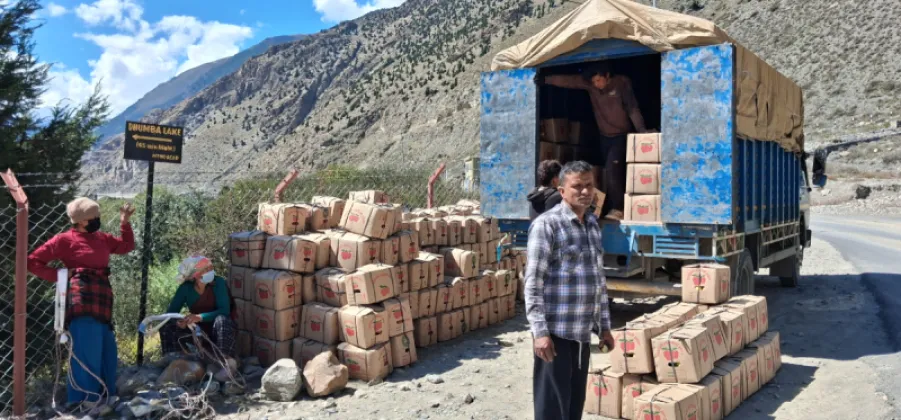
As of mid-October 2026, only 30 percent of the apples produced in Mustang district had been exported outside the district, leaving the remaining 70 percent still awaiting movement beyond Mustang. The slow pace of exports is the main concern highlighted in reports by Nagarik News and Thaha Khabar.
Most of the crop is still awaiting export
The reported figure indicates that less than one-third of Mustang’s apple production had reached markets outside the district by the time of the reports. The rest of the crop had not yet been exported from Mustang. Both outlets focus on this gap between the share already sent out and the larger amount still waiting to move.
The reports describe exports beyond the district, rather than providing a figure for sales to international markets. They do not state how many tonnes or how much total production the 30 percent represents. The available information also does not specify how much of the remaining crop had been sold within Mustang, or whether any portion was being held for other reasons.
Slow export pace remains the central concern
The key issue reported is the limited progress in moving Mustang apples outside the district by mid-October. With 70 percent of production still awaiting export at that point, the reported total shows that most of the crop had yet to make that journey. The reports do not provide a later update indicating whether the pace changed after mid-October.
Neither report, as reflected in the available information, identifies a specific cause for the slow movement or gives a forecast for when the outstanding apples might be exported. They also do not detail the transport arrangements, prices, destinations, or the number of growers involved. Without those details, the reported percentage establishes the scale of the delay but does not explain what is holding back shipments.
For now, the central measure is the contrast between the 30 percent already exported outside Mustang and the 70 percent still awaiting export. Further information on shipment progress would be needed to show whether the remaining crop subsequently reached markets beyond the district.