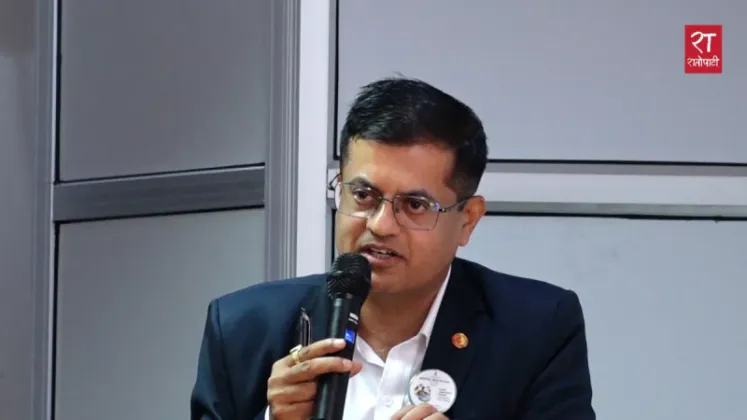
Acting Director General of the Department of Health Services Dr. Krishna Prasad Poudel says 80 percent of Nepalis who need mental health treatment are unable to access it, leaving only 20 percent receiving the care they seek, according to reports from Kathmandu. Experts say mental health problems are rising alongside social, economic and disaster-related issues, while effective services have not expanded at the same pace.
A large gap between need and treatment
The figures shared by Poudel point to a substantial divide between people who need mental health care and those who are able to obtain it. In the account reported from Kathmandu, four out of every five people in need are described as unable to access treatment. The remaining one in five receives the care they seek.
The figures highlight access as a central part of Nepal’s mental health challenge. The concern is not limited to the existence of mental health problems: it also includes whether people can reach effective services when they need support. The available reports do not provide further details about how the figures were calculated, which groups were assessed, or what types of treatment were included. The 80 percent and 20 percent figures should therefore be understood as the estimate attributed to Poudel, rather than as a breakdown by region, age group or condition.
The reported gap also underscores the difference between a need for care and the ability to receive it. A person may seek help yet remain among those who cannot access the treatment they need. The reports do not specify the reasons individuals are unable to obtain care, so the figures alone do not establish whether the barriers are related to service availability, affordability, location or other factors.
Rising concerns and services under pressure
Experts cited in the reports say mental health problems are increasing in Nepal in connection with a range of pressures, including social and economic issues and disasters. These concerns point to a broad set of circumstances accompanying the reported rise, rather than to a single cause. The reports do not identify particular events, conditions or communities as responsible for the increase.
At the same time, experts say effective services have not kept pace with the growing need. That mismatch raises concern about the ability of existing mental health support to reach people seeking treatment. The reports do not describe the number or distribution of services, provide a measure of their capacity, or list specific changes already underway. They do, however, present the treatment-access gap and the slow pace of service response as connected concerns.
Poudel’s estimate and the experts’ assessment together frame the issue in two parts: the number of people who are unable to receive needed treatment, and the difficulty of expanding effective support as mental health needs rise. The available reporting offers no further figures on service coverage or on how the 20 percent receiving care are distributed. It also does not give a timetable for addressing the shortfall.
The reports from Kathmandu bring attention to the scale of unmet need in Nepal and to the pressure on mental health services. With 80 percent of people who need treatment reportedly unable to access it, the figures underscore the distance between seeking care and receiving it. Experts’ warning that services have not kept pace with rising social, economic and disaster-related pressures adds urgency to the question of how support can reach more people, while the reports leave the specific barriers and planned responses unspecified.