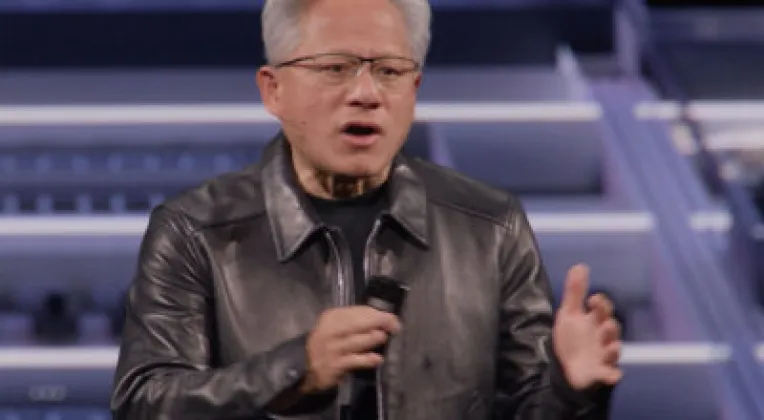
Nvidia has reinstated Jensen Huang as its president and chief executive officer with immediate effect, following a unanimous decision by the company's board of directors. The announcement ends a period of uncertainty at the top of one of the world's most valuable technology companies and restores Huang, the chipmaker's longtime leader, to the position he previously held.
The board said it had engaged in discussions with Huang directly and had also sought input from senior officials within the United States government before arriving at its final determination. According to the company, those consultations led the board to conclude that Huang's return to the helm of Nvidia posed no national security risk, clearing the principal obstacle that had surrounded the review of his status.
Board Review and Government Input
The reinstatement followed a formal review process undertaken by Nvidia's board of directors. In its decision, the board emphasized the unanimity of its members, signalling a unified corporate position on bringing Huang back to lead the company. The board's deliberations included both direct talks with Huang and the unusual step of consulting with senior US government officials, whose input was weighed as part of the national security assessment that accompanied the review.
The articles covering the decision also reference Harvey C. in connection with the board's review, though the precise nature of that involvement was not detailed in the available reporting.
The decision to reinstate Huang with immediate effect means that Nvidia's leadership transition, if it can be called that, was resolved swiftly. The board framed the outcome as one that removes any lingering concerns, stating plainly that the review concluded there was no national security risk attached to Huang's return as president and CEO.
Presidential Endorsement
The move came shortly after a high-profile public intervention from the White House. US President Donald Trump publicly backed Huang's comeback in a post on Truth Social, saying he hoped the board would rehire the longtime chief executive. Trump's message placed additional public and political weight behind Huang's return, adding a layer of political attention to what was otherwise a corporate governance matter.
The convergence of the board's unanimous vote, the input from senior government officials, and the president's public endorsement appears to have been decisive. With all three elements aligned, Nvidia moved to restore Huang to the company's top job without delay, effective immediately upon the announcement.
What Comes Next
With Huang reinstated as both president and chief executive officer, Nvidia's leadership structure returns to its familiar configuration, with the company's co-founder once again directing strategy at a moment when demand for its chips remains a central storyline in global technology and international trade.
The company's statement did not outline the specific events that had led to Huang's removal from the role or the full scope of the board's concerns, beyond confirming that a review was conducted and that senior US government officials were consulted during the process. What the board made clear, however, was the conclusion: that Huang's leadership of Nvidia poses no national security risk, and that on that basis, he was unanimously rehired.
For Nvidia's investors, employees, and partners, the immediate effect of the decision is continuity. The man who built the company into the dominant supplier of the processors powering artificial intelligence worldwide is back at the helm, and the corporate and political questions surrounding his return have, at least for now, been formally resolved.