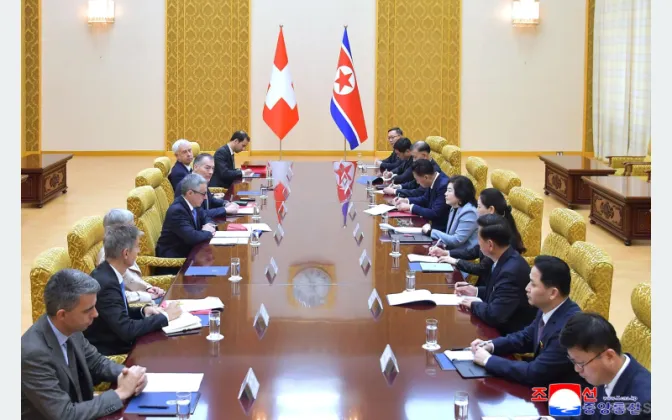
North Korea has ordered Silvain Astier, the head of Switzerland's diplomatic office in Pyongyang, to leave the country within 48 hours, an unprecedented expulsion that marks a sharp escalation in diplomatic tensions between the two historically close partners. The directive was reported by North Korea's state media on Tuesday, according to international news coverage carried by Nepali outlets including Ratopati, Gorkhapatra and Nagarik News.
The expulsion follows Switzerland's imposition of sanctions targeting North Korean child camps, a move that evidently angered Pyongyang enough to sever the presence of its principal Swiss interlocutor. North Korea's state media announced the order, framing the decision as a response to the Swiss sanctions regime.
A Rare Escalation With a Long-Standing Partner
Switzerland has long occupied a unique position in relations with North Korea. The two countries have maintained diplomatic ties for decades, and Switzerland has historically served as a trusted intermediary in sensitive matters involving Pyongyang, including hosting negotiations and maintaining a diplomatic presence in the North Korean capital when many Western missions have closed or scaled back.
The decision to order Astier out of the country within such a compressed timeframe underscores how seriously Pyongyang has taken the Swiss sanctions on its child camps. The 48-hour deadline leaves the head of the diplomatic office almost no time for an orderly departure, a signal widely interpreted as a deliberate display of displeasure rather than a routine diplomatic step.
The Trigger: Sanctions on Child Camps
At the heart of the dispute is Switzerland's decision to impose sanctions on North Korean child camps. While details of the specific measures were not elaborated in the reported accounts, the targeting of institutions associated with children represents an unusual and pointed choice of sanctions focus, touching directly on institutions central to the North Korean state's education and indoctrination systems.
State media reports indicate that the expulsion order was issued on Tuesday, directly linking the diplomatic expulsion to the sanctions decision. The swift response suggests that North Korea viewed the Swiss measures not merely as policy disagreement but as an unfriendly act warranting a forceful retaliation.
What Comes Next for Swiss-North Korean Ties
The expulsion of Astier, as the head of the diplomatic office rather than a lower-ranking staffer, raises questions about the future functioning of Switzerland's representation in Pyongyang and, by extension, about the broader channel of communication that Switzerland has long provided between North Korea and the West.
-
Compressed timeline: The 48-hour departure order is unusually abrupt for diplomatic expulsions, which typically allow seven or more days.
-
High-ranking target: Expelling the head of the diplomatic office affects the senior-most Swiss representative in the country.
-
Direct causation: State media explicitly tied the order to Switzerland's sanctions on North Korean child camps.
-
State media confirmation: The announcement came through North Korea's official media channels on Tuesday, indicating an intentional public signaling of the rift.
Broader Context
The episode adds a new wrinkle to the complicated landscape of international diplomacy surrounding North Korea. With many countries having no resident diplomatic presence in Pyongyang, Switzerland's continued operation of a diplomatic office has been one of the few sustained Western footholds in the country. Its now-compromised status could further isolate North Korea from conventional diplomatic engagement.
The sanctions imposed by Switzerland against North Korean child camps reflect a broader international pattern of applying pressure on Pyongyang through targeted measures tied to human rights and security concerns. North Korea has consistently reacted sharply to such measures, and the expulsion of the Swiss diplomat is the latest example of Pyongyang's willingness to disrupt diplomatic channels in retaliation.
As of the reporting, there has been no indication of a formal public response from Switzerland regarding the expulsion order or any potential reciprocal measures. The situation remains fluid, and observers will be watching closely to see whether the diplomatic rupture proves temporary or marks a more lasting deterioration in one of North Korea's longest-standing Western diplomatic relationships.
For further details, readers can consult the original coverage from Ratopati, Gorkhapatra Online and Nagarik News.