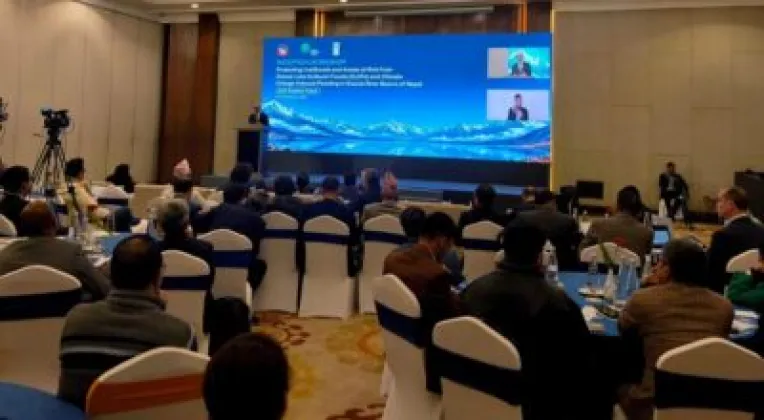
Nepal is preparing to launch the 'GLOF Sanjivani Project', a $49.94 million climate resilience initiative designed to protect communities in the Himalayan region that face growing threats from glacial lake outburst floods (GLOFs). The project, announced with support from international and domestic financiers, will directly address the danger posed by unstable glacial lakes by lowering water levels in four high-risk lakes, reducing the likelihood of catastrophic downstream flooding.
Funding Structure Backed by Green Climate Fund
The financing package for the GLOF Sanjivani Project combines international climate funding with national and institutional contributions. The single largest share comes from a $36.16 million grant from the Green Climate Fund (GCF), one of the world's leading channels for climate adaptation finance in developing countries.
- Green Climate Fund: $36.16 million grant
- Government of Nepal: $11.32 million in co-financing
- UNDP: $2.14 million
- Private sector: additional contributions
The Government of Nepal's $11.32 million co-financing commitment signals the state's recognition of GLOF risk as a national priority. The United Nations Development Programme's $2.14 million contribution will support project implementation, while private sector participation rounds out the funding mix, reflecting a broad-based approach to climate resilience financing.
Lowering Water Levels in Four Glacial Lakes
At the core of the project is a concrete risk-reduction measure: lowering the water levels of four glacial lakes that have been identified as dangerous to downstream populations. Glacial lakes form as glaciers melt and retreat, and when the natural dams of ice and moraine that hold them back fail, the resulting outburst floods can surge down valleys with devastating force, destroying homes, bridges, trails, hydropower infrastructure and farmland.
By reducing the volume of water held in these four lakes, the project aims to lower the destructive potential of any sudden breach. This type of intervention is considered one of the most direct ways to reduce GLOF risk in high mountain environments, where the impacts of climate change are advancing faster than in most other regions of the world.
Protecting Climate-Affected Himalayan Communities
The stated aim of the GLOF Sanjivani Project is to protect climate-affected Himalayan communities who live under the constant shadow of glacial flood risk. Settlements in high mountain valleys often sit directly on the paths that GLOF floodwaters would take, and communities there typically have limited resources and infrastructure to withstand or recover from such disasters.
The project's name, 'Sanjivani', suggests restoration and renewed life for vulnerable populations. Beyond the physical lake intervention, the initiative represents an investment in the safety and long-term stability of mountain communities whose way of life is increasingly disrupted by the consequences of a warming climate.
Why GLOF Risk Is a Growing Concern in Nepal
Nepal's Himalayan region holds numerous glacial lakes, and as global temperatures rise, glaciers are retreating and melting at an accelerating pace, causing many lakes to expand. Larger lakes held back by weaker natural barriers create conditions in which outburst floods become more likely and more destructive.
A GLOF event can occur with little warning, sending millions of cubic metres of water, debris and sediment downstream. For Nepal, where mountain rivers sustain hydropower projects, agriculture and tourism economies, the stakes extend well beyond the immediate mountain settlements to communities and infrastructure far downstream.
A Model for Climate Adaptation Finance
The GLOF Sanjivani Project also stands out for how it is financed. By combining a major Green Climate Fund grant with government co-financing, UNDP support and private sector contributions, Nepal is demonstrating a blended financing model that other climate-vulnerable countries may look to as they seek funding for their own adaptation priorities.
For Nepal, one of the countries most exposed to climate change impacts despite contributing relatively little to global emissions, access to international climate finance is seen as essential. The GCF grant of $36.16 million represents a significant investment in the country's adaptation agenda and underscores the global recognition that mountain communities need dedicated support to survive the accelerating changes in their environment.
What Comes Next
With the financing arrangement in place and the selection of four lakes for water level reduction, the project is set to move into implementation. The success of the GLOF Sanjivani Project will be measured in the reduced vulnerability of Himalayan communities and in the prevention of potential disasters that could otherwise claim lives and livelihoods in some of the most fragile environments on Earth.
As the project unfolds, it is expected to become a landmark example of how targeted, well-funded interventions can confront one of the most visible and dangerous consequences of climate change in the Hindu Kush Himalayan region. The initiative marks a significant step forward in Nepal's broader efforts to build resilience against climate-driven disasters and to safeguard the people who live at the front lines of a warming planet.