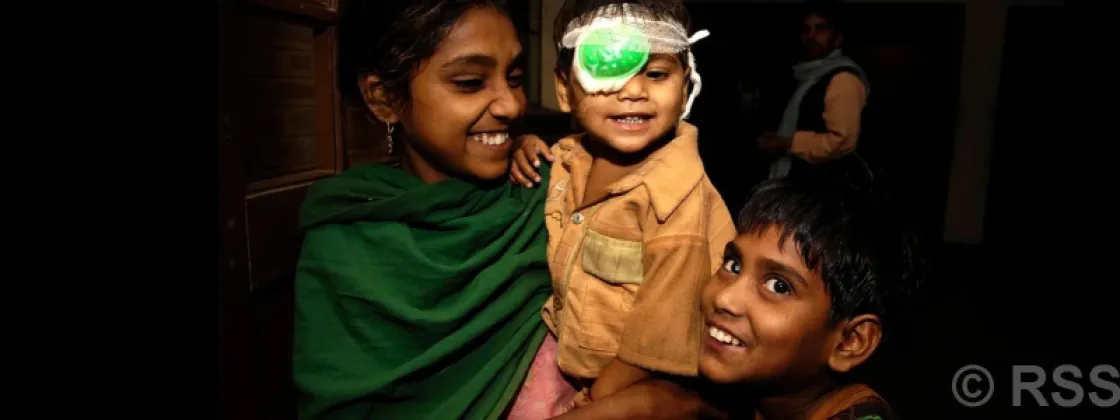
Nepal's eye care services have earned more than 1.5 billion rupees in foreign currency in a single year, driven by a growing number of foreign patients seeking treatment at the country's eye hospitals. The earnings, reported by RatoPati, Nagarik News and Khabarhub, mark a significant milestone for a health sector long associated with humanitarian service and highlight a new stream of foreign exchange for the national economy. According to the reports, the combination of quality treatment and comparatively low cost has positioned Nepal as an increasingly attractive destination for affordable health services, strengthening the country's health tourism potential.
Foreign patients drive a new stream of foreign exchange
The headline figure of more than 1.5 billion rupees represents foreign currency that entered Nepal through eye treatment over the course of one year. The inflow reflects a steady rise in the number of foreign patients choosing Nepali eye hospitals for their care, a trend documented across the Nepali media reports. What makes the achievement particularly notable is its source: eye care has traditionally been viewed in Nepal as a service delivered largely for social benefit, with little expectation that it would contribute meaningfully to the country's foreign currency position.
Nagarik News captured this dual character in its coverage, describing Nepal's eye health service as "a new basis for earning foreign exchange along with humanitarian services." In other words, the same institutions that have long provided sight-restoring treatment to ordinary Nepalis are now also generating measurable economic returns, as patients from beyond the country's borders pay for their care. The reports indicate that this reflects growing demand rather than a one-off occurrence, with the number of foreign patients seeking treatment at Nepali eye hospitals rising over the year.
A vast network behind the numbers
Behind the foreign currency earnings lies an extensive service infrastructure. The Nepal Netra Jyoti Sangh network operates 28 eye hospitals and 226 eye treatment centres across the country, extending eye care services well beyond a handful of urban facilities. Key features of the network and its performance include:
- Earnings of more than 1.5 billion rupees in foreign currency within a single year
- 28 eye hospitals operated nationwide under the Nepal Netra Jyoti Sangh network
- 226 eye treatment centres delivering services across the country
- Quality care provided at comparatively low cost, drawing patients from abroad
The breadth of this network matters for two reasons. First, it allows eye care to reach communities in different parts of the country, ensuring that treatment is not confined to the capital or major cities. Second, it gives the sector the physical capacity to handle large patient volumes, including the growing number of foreign patients whose treatment has translated into the reported foreign exchange earnings. A network of this scale, offering consistent services across dozens of facilities, provides the foundation on which the sector's expanding reputation rests.
Affordable, quality care as a competitive strength
Central to the sector's appeal is the balance it strikes between cost and quality. The reports emphasise that Nepali eye hospitals offer quality care at comparatively low cost, a combination that has proven persuasive for foreign patients weighing where to seek treatment. The opportunity to receive dependable eye care without the higher price tags often attached to private health services elsewhere has made Nepal a practical choice, and the spending by these patients has flowed into the country as foreign currency.
This cost-quality equation is also what has positioned Nepal as an attractive destination for affordable health services more broadly. While the reported earnings relate specifically to eye treatment, the reports frame the achievement as evidence of the country's wider health tourism potential: the demonstrated ability of Nepali health institutions to draw patients from abroad and deliver services that meet their expectations. In a field where trust is earned through results, the increasing number of foreign patients arriving for treatment stands as an endorsement of the standards being maintained across the network.
Strengthening Nepal's health tourism potential
The more than 1.5 billion rupees earned in a single year strengthens the case for health tourism as a meaningful contributor to Nepal's economy. Rather than relying solely on conventional attractions, the country is demonstrating that its hospitals can themselves draw visitors and generate foreign exchange. For the eye care sector, these earnings arrive on top of its core humanitarian mission, reinforcing rather than replacing the services it provides to the Nepali public.
The reports present the achievement as a strengthening of the country's health tourism potential, with affordable and quality treatment emerging as a genuine draw for foreign patients. With a network of 28 eye hospitals and 226 treatment centres already in place, the infrastructure underpinning that potential is substantial. For now, the message from the year's earnings is clear: Nepal's eye care services are delivering value in two ways at once, restoring sight for patients at home and abroad while bringing in foreign exchange that benefits the wider economy.