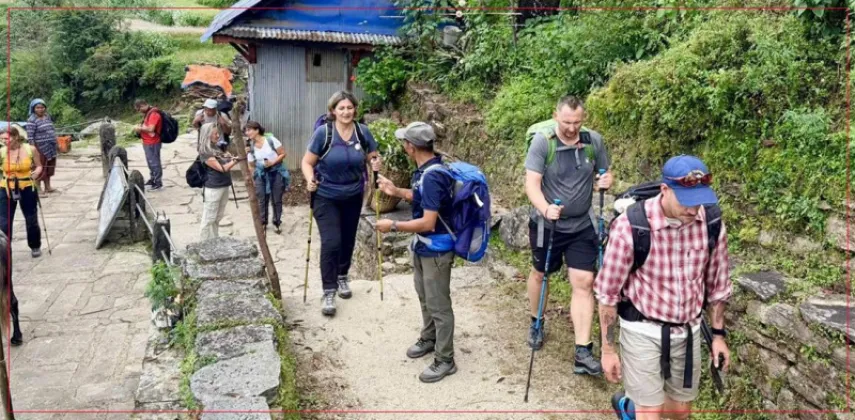
The Nepal-India Cross Border Tourism Connect 2026 is scheduled to take place in Chitwan from October 26 to 28, corresponding to Kartik 9 to 11 in the Nepali calendar, according to a report published by RatoPati. The three-day event is being organized as a cross-border tourism initiative designed to bring Nepal and India together on a shared platform, with the central objective of expanding the tourism partnership between the two neighbouring countries. With the dates now fixed, the Chitwan gathering is positioned as a focal point for dialogue and collaboration between the tourism sectors of both nations.
A Platform to Expand Bilateral Cooperation
The stated purpose of the Nepal-India Cross Border Tourism Connect 2026 is to widen the scope of cooperation between the tourism industries of the two countries. By staging the event in Nepal and framing it explicitly as a cross-border initiative, the organizers are seeking to move the bilateral tourism conversation onto a structured, event-driven platform where businesses and stakeholders from both sides can engage directly with one another.
Initiatives of this kind are typically built around bringing together travel entrepreneurs, tour operators, hoteliers and tourism professionals so that they can explore joint products, shared itineraries and smoother travel arrangements across the border. While the detailed programme for the Chitwan event has yet to be announced, the announcement makes clear that the underlying aim is to bring the two countries together and give their tourism relationship fresh momentum heading into 2026.
Chitwan as the Host Destination
The choice of Chitwan as the venue carries its own significance. The district is one of Nepal's best-known tourism destinations, anchored by Chitwan National Park, a UNESCO World Heritage Site celebrated for its one-horned rhinoceros, Royal Bengal tiger, jungle safaris and the distinctive Tharu cultural experience. Sauraha, which sits on the edge of the park, has long been a favourite stop for both international visitors and domestic tourists, making the area a natural showcase for nature- and culture-based travel.
Hosting a cross-border tourism event in such a setting places the spotlight on the very products that Nepal and India could jointly market to the wider world. Chitwan also lies along Nepal's central tourism corridor, with road connections linking it to Kathmandu, Pokhara and the Terai plains, which makes it a practical meeting point for participants travelling from different directions. For a gathering dedicated to connecting tourism markets across the border, the district offers both symbolic and logistical advantages.
The Nepal-India Tourism Relationship
The event is unfolding against the backdrop of one of the closest tourism relationships in the region. India and Nepal share an open border, direct road links and regular air connections, and India has long been the largest source market for Nepal's tourism industry. Indian travellers visit Nepal throughout the year for pilgrimage, leisure, trade and family ties, with religious and cultural sites such as Lumbini, the birthplace of Gautama Buddha, and the Pashupatinath temple in Kathmandu ranking among the most popular destinations for visitors from across the border.
The flow of people works in both directions. Nepali travellers routinely cross south into India for pilgrimage, education, medical care, shopping and tourism, and the two economies are deeply intertwined through trade and travel. A dedicated tourism connect event reflects a desire to convert this everyday proximity into a stronger, better-organized partnership, one in which the two countries package their complementary attractions together rather than competing separately for the same visitors.
Timing Within the Peak Season
The scheduling of the event from Kartik 9 to 11 also deserves note. The dates fall within Nepal's autumn tourist season, traditionally the busiest period of the year for arrivals, when weather conditions are at their best for sightseeing, trekking and wildlife visits across the country. Holding the connect in Chitwan during this window means the host destination will be operating at full capacity, giving participants a clear picture of Nepal's tourism industry in action.
Looking Ahead to October
With the venue and dates confirmed, attention will now turn toward further details of the programme, the participants and the specific outcomes the event is expected to produce. As with any cross-border initiative, the value of the gathering will ultimately lie in whether the conversations held in Chitwan translate into practical cooperation between the tourism businesses and institutions of the two countries.
For now, the announcement itself signals intent. The Nepal-India Cross Border Tourism Connect 2026 is being presented as an effort to deepen a partnership that already rests on geography, history and the constant movement of people across the open border. If the Chitwan meeting builds on that foundation, it could mark another step in using tourism as a bridge between the two neighbours, with the district's national park, wildlife and culture providing the backdrop for the next chapter of that engagement.