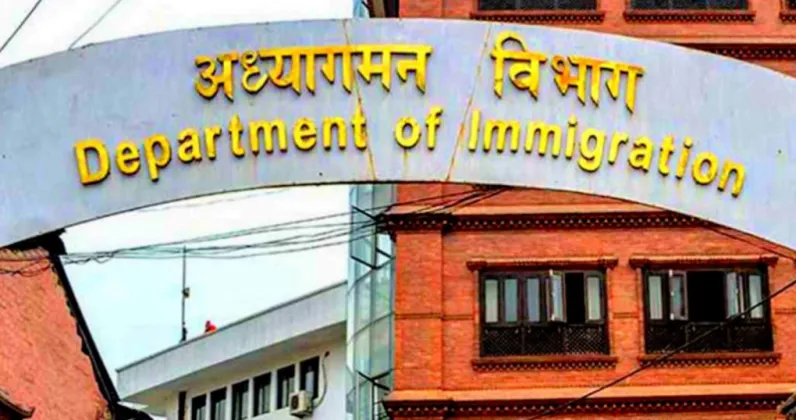
Nepal's Department of Immigration has decided to deport 10 foreign nationals, including one minor, for engaging in activities contrary to the purpose of their tourist visas, in a decision made public on Friday, November 6. Each individual has been fined 50,000 rupees for violating the country's immigration law, and all 10 have been barred from re-entering Nepal for three years. The decision was reported from Kathmandu, with the case linked to Morang district in eastern Nepal, according to Nepali media reports.
Fine, blacklist and three-year re-entry bar
The Department of Immigration, the government body that regulates the entry, stay and departure of foreign nationals in Nepal, reached the decision after concluding that the 10 individuals had carried out activities that did not match the purpose for which they had entered the country on tourist visas. The department functions under the Ministry of Home Affairs and enforces Nepal's immigration rules at border points and airports across the country, including Tribhuvan International Airport in Kathmandu, the country's main international gateway.
Under the order, each of the foreign nationals faces a fine of 50,000 rupees, taking the total penalty imposed in the case to 500,000 rupees. The department has also barred them from re-entering Nepal for three years, effectively placing all 10 on the immigration blacklist. The deportation order covers every member of the group, including one minor.
The main elements of the decision are:
- Deportation of all 10 foreign nationals, including one minor
- A fine of 50,000 rupees per person, totalling 500,000 rupees
- A three-year re-entry ban for all those deported
- A finding that their activities were contrary to the stated purpose of a tourist visa
The reports did not disclose the nationalities of those ordered deported, the specific nature of the activities they were found to have engaged in, or details about the minor's circumstances. Information about how and where the violations came to light was also not immediately available, though the case has been linked to Morang district.
What Nepal's tourist visa rules allow
A tourist visa in Nepal is issued only for leisure travel, sightseeing and visiting friends or family. Foreign nationals holding tourist visas are not permitted to take up jobs, run businesses or carry out other activities that fall outside the purpose of their entry. Engaging in such activities constitutes a violation of Nepal's immigration law, which allows the Department of Immigration to impose fines, order deportation and place offenders on its blacklist.
Nepal extends tourist visas on arrival to nationals of a large number of countries, a policy that has underpinned the growth of its tourism industry. At the same time, immigration rules make clear that a tourist visa cannot substitute for a work permit, business visa or other specific visa categories. Travelers who remain in the country for purposes other than tourism risk monetary penalties, deportation and re-entry bans of the kind now applied to the 10 individuals in this case.
Morang connection and enforcement backdrop
The case has been linked to Morang, a district in Koshi Province in the eastern Tarai plains whose headquarters, Biratnagar, is one of Nepal's largest commercial hubs. While the deportation decision was announced in Kathmandu, where the Department of Immigration is based, the reports connecting the case to Morang, including coverage in Rajdhani Daily, did not specify the exact location of the alleged violations.
Deportation and blacklisting are among the strongest actions available to Nepal's immigration authorities, generally reserved for cases in which foreign nationals are found to have misused their visa category rather than simply overstayed. A three-year re-entry bar means the deported individuals will not be eligible for fresh Nepali visas and can be refused entry at the border or airport if they attempt to return before the ban expires.
A caution for foreign visitors
The case serves as a reminder to foreign visitors that Nepal's tourist visa comes with strict conditions. Those intending to work, volunteer or conduct business in the country are required to obtain the appropriate visa category and permits before beginning such activities. Authorities have previously warned that misuse of the visa-on-arrival facility can lead to fines, deportation and multi-year bans.
For the 10 individuals now facing deportation, the consequences are clear: a fine of 50,000 rupees each, removal from the country and three years without the possibility of return. The decision also signals that the Department of Immigration continues to act against foreign nationals who enter Nepal as tourists but engage in activities their visas were never meant to cover.