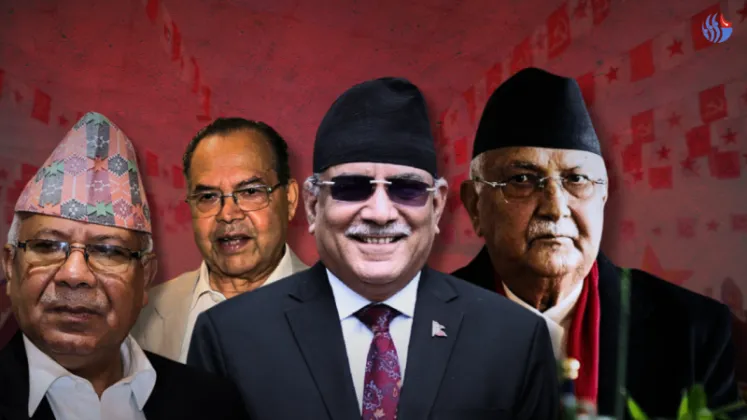
The Nepal Communist Party, known by its Nepali acronym Nekpa, has launched a two-month national awakening campaign, opening the exercise with a candid admission of its past weaknesses and an acknowledgement that leader-centric and centre-centric tendencies have grown within the party. In an appeal issued on October 24, 2026, the party announced that it will return to villages to listen directly to public criticism. The same appeal carried an equally significant declaration: Nekpa stated plainly that it will not merge with the CPN-UML, drawing a firm line on the question of its organizational future.
An appeal that begins with self-criticism
The national awakening campaign was formally announced through a party appeal published on October 24, 2026, and as reported by Nagarik News, the document is notable for the way it frames the party's own record. Rather than presenting the campaign purely as a mobilization drive, Nekpa used the appeal to admit mistakes and to accept that things had gone wrong inside the organization.
The party acknowledged that leader-centric and centre-centric tendencies had risen within its ranks. In naming these tendencies explicitly, the appeal identified the internal culture the party believes it must correct: authority gravitating toward prominent leaders on the one hand, and toward the central leadership on the other, rather than being rooted in the party's broader membership and its presence on the ground.
The admission of past weaknesses sits at the centre of the campaign's launch. According to the appeal, the party is treating self-review not as a formality but as the starting point of the two-month exercise.
The key elements of the announcement
- A two-month national awakening campaign
- An open admission of past weaknesses and mistakes
- An acknowledgement that leader-centric and centre-centric tendencies have grown within the party
- A clear statement that Nekpa will not merge with the CPN-UML
- A pledge to return to villages and listen to public criticism
Naming the internal problem
The two tendencies the party chose to highlight are significant precisely because they concern how power functions inside the organization. Leader-centric tendencies point to the concentration of influence around individuals; centre-centric tendencies point to decision-making gathering at the party's centre rather than being shared outward. By admitting that both have risen, Nekpa has effectively diagnosed the organizational drift it wants the national awakening campaign to reverse.
The framing matters for a campaign that carries the words "national awakening" in its title. The party is presenting the next two months as a period of renewal in which it examines its own conduct before taking its message and its listening exercise to the public. The appeal of October 24, 2026 serves as the founding document of that exercise, setting its duration, its spirit of self-criticism and its outward-facing commitment in a single statement.
Ruling out a merger with the UML
Among the statements in the appeal, the clarification on the merger question stands out. The party stated that it will not merge with the CPN-UML, a declaration that removes ambiguity about Nekpa's organizational direction at the very moment it is launching a national campaign. The position, as expressed in the appeal, is unambiguous: there will be no merger.
That the declaration appeared in the same document as the campaign announcement is telling. Nekpa chose to define its independent course while simultaneously asking its members and the public to join a two-month process of self-correction. The combination presents the national awakening campaign as an effort to strengthen the party as it stands, on its own organizational footing, rather than as a step toward any combination with the UML.
Taking the campaign to the villages
The third pillar of the announcement is the party's pledge to return to villages to listen to public criticism. The commitment takes the campaign beyond internal reflection and places it in direct contact with the communities the party says it wants to serve. Having admitted its mistakes in writing, Nekpa is now promising to hear, in person, what the public has to say about them.
The sequencing of the campaign reflects its stated logic: the party first acknowledges the weaknesses and tendencies it believes have held it back, then commits to going out among the people to gather criticism face to face, all within a defined two-month window. For a party acknowledging that it had drifted toward its leaders and its centre, the decision to return to the villages is the practical counterpart of its self-criticism, an attempt to ground the national awakening campaign in direct contact with the public.
With the appeal of October 24, 2026, Nekpa has set the terms of its national awakening campaign: an admission of past mistakes, a named diagnosis of leader-centric and centre-centric tendencies, a firm rejection of merger with the CPN-UML and a promise to listen to criticism in the villages. Over the coming two months, the party says, the campaign will carry that message of correction and listening across the country.