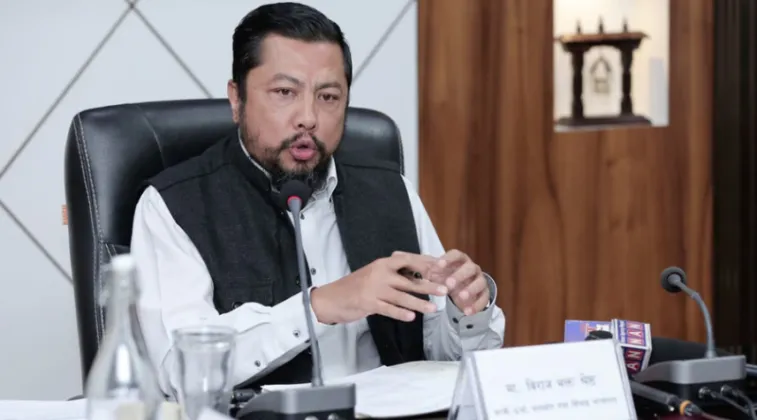
Energy Minister Biraj Bhakta Shrestha said on Wednesday in Kathmandu that Nepal and India have agreed to increase cross-border electricity transfer capacity for both imports and exports. Speaking at a press conference at the Ministry of Energy, Water Resources and Irrigation, he also said policy arrangements to allow private companies to trade electricity are in their final stage, with permits expected to be issued before Dashain.
More capacity for two-way electricity trade
The agreement covers electricity moving in both directions: Nepal importing power from India and exporting electricity to its southern neighbour. Shrestha’s announcement points to an expansion of the capacity available for cross-border transfers, although the statement provided in the reports does not specify how much capacity will be added or when the increase will take effect.
The two-way arrangement is significant to the way the countries conduct electricity trade. Import and export capacity are distinct parts of cross-border exchange, and the minister said the agreement would address both. The announcement did not provide further operational details, such as the infrastructure or procedures through which the additional transfer capacity would be made available.
The agreement also forms one part of a wider effort to develop electricity trading between the neighbouring countries. Alongside the planned capacity increase, the government is preparing to open trading activity to private-sector participants. The minister’s remarks therefore addressed both the conditions for moving electricity across the border and the policy framework for allowing more actors to trade it.
Private-sector participation nearing policy stage
Shrestha said policy arrangements that would permit private-sector participation in electricity trading are in the final stage. The proposed change would allow private companies to take part in electricity trade, rather than leaving the activity only to existing public-sector arrangements. The minister did not describe the detailed rules, eligibility requirements or the process companies would need to follow.
The planned permits are the next step identified by the minister. He said electricity trade permits would be issued to the private sector before Dashain. That deadline indicates the government’s stated timetable for moving from policy preparation to authorising private traders, though the announcement did not name companies or provide a specific date for issuing the permits.
The timing matters because permits would provide a formal route for private firms to enter the market once the policy arrangements are complete. However, the announcement did not clarify what kinds of trading activity the permits would cover, how many would be issued, or whether they would be linked to the expanded cross-border transfer capacity. Those details remain separate from the commitments described by Shrestha.
Next steps for Nepal’s electricity trade
The minister’s statement sets out two connected developments: Nepal and India have agreed to increase electricity transfer capacity in both directions, and Nepal is nearing completion of arrangements to let private businesses trade electricity. The first is a bilateral agreement on cross-border capacity; the second is a domestic policy step concerning participation in the electricity market.
For now, Shrestha’s comments provide the government’s broad direction and timetable, rather than a detailed implementation plan. The announced expansion has no stated capacity figure in the information provided, while the private-sector framework is still being finalised. The issuance of permits before Dashain is the clearest near-term milestone identified by the minister.
The developments could widen the channels through which electricity is traded between Nepal and India, while bringing private companies into the trading process. Their practical effect will depend on the details of the capacity expansion and the rules set out in the final policy arrangements. Shrestha’s announcement did not provide those details, but it confirmed that both cross-border capacity and private-sector participation are being advanced.