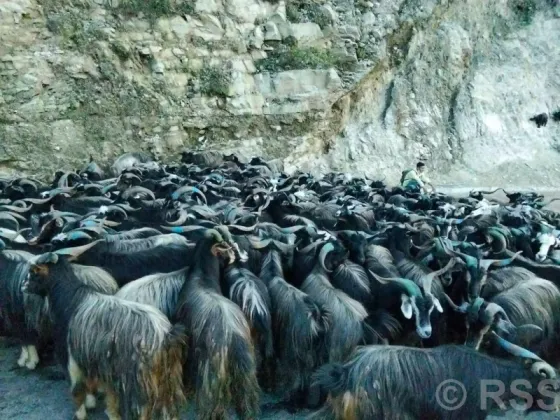
Around 14,800 sheep and goats have been brought to Pokhara for Dashain, with traders selling the animals at livestock markets in Simpani and Hemja. The animals have been sourced from Mustang, Darchula, Bajhang, Bajura and Dolpa, according to veterinarian Nabaraj Adhikari of the Pokhara Metropolitan City's animal service branch.
Livestock sourced from five districts
The largest share of the animals came from Mustang. Adhikari said 9,000 sheep and goats had arrived from the district, accounting for more than half of the total brought to Pokhara. Darchula supplied 2,000 animals, while 1,000 came from Bajhang.
The figures provided for those three districts add up to 12,000 animals. The remaining 2,800 of the reported total came from Bajura and Dolpa combined. The available breakdown does not specify how many were transported from each of those two districts.
The arrivals link Pokhara's Dashain livestock trade with several Himalayan districts. Mustang, Darchula, Bajhang, Bajura and Dolpa are all identified as sources for the animals being sold in the city. The reported total reflects the scale of the seasonal supply assembled for the festival period, while the district figures show that Mustang is the largest named source.
Markets set up in Simpani and Hemja
Traders are selling the sheep and goats at livestock markets established in Simpani of Pokhara-1 and Hemja of Pokhara-25. The two locations provide designated points in different parts of Pokhara for the Dashain-season trade. The animals are being brought to the city from the five districts for sale during the festival period.
The reported total covers animals being offered through the Pokhara markets, but no separate count was provided for Simpani and Hemja. The information also does not give a market-by-market breakdown of the animals' districts of origin. It therefore remains unclear from the figures how the 14,800 animals are divided between the two selling locations.
Seasonal supply for Dashain
Dashain is the occasion for which the animals have been brought to Pokhara, and the livestock markets are operating to sell them during the festival season. The arrival of nearly 15,000 sheep and goats gives a clear measure of the volume of animals being offered in the city. The trade draws on livestock from multiple districts rather than relying on a single source.
Adhikari's figures provide a district-level snapshot of that supply: 9,000 from Mustang, 2,000 from Darchula and 1,000 from Bajhang, with the rest from Bajura and Dolpa. The available information does not state the prices being charged, the number sold so far or how many animals remain at either market. It also does not provide details about the timing of individual consignments. The confirmed details are the overall total, the five source districts and the two locations where traders are selling the animals.