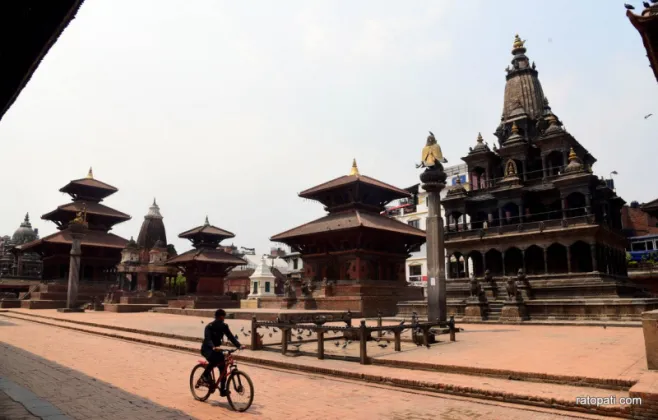
The Navadurga dance of Thecho (Thechwa) was performed at the main courtyard of Patan Museum in Lalitpur on Wednesday, after devotees carried the main deity, masks, costumes and ornaments from the deity house in Thecho to Mangal Bazaar. The dance is linked to a Licchavi-era tradition and is traditionally presented twice during Dashain, on Vijaya Dashami and Kojagrat Purnima.
Deity and ritual items brought from Thecho
Devotees carried the main deity, known as Mu Dyah, along with the masks, costumes and ornaments used for the Navadurga dance. These items were transported in baskets from the deity house in Thecho to Mangal Bazaar, where the performance took place at the Patan Museum’s main courtyard.
The procession of the ritual objects connected the deity house in Thecho with the performance venue in Lalitpur. The items carried were central to the presentation: the main deity, masks, costumes and ornaments together form the material elements associated with the Navadurga dance.
The performance brought the dance from Thecho to the historic setting of Patan Museum. The summary of the event identifies the courtyard as the venue and Mangal Bazaar as the destination for the items carried by devotees. It does not specify additional details about the duration of the performance or the number of participants.
A Dashain tradition linked to the Licchavi era
The Navadurga dance of Thecho is associated with a tradition said to date back to the Licchavi era. Its presentation is tied to the Dashain calendar, when it is traditionally shown on two occasions:
- Vijaya Dashami
- Kojagrat Purnima
Those two dates mark the customary occasions for presenting the dance during Dashain. The Wednesday performance at Patan Museum was a performance of the Thecho tradition, with the deity and related ritual items brought from the deity house before the dance.
The event combined the movement of sacred objects from Thecho with the presentation of the Navadurga dance in Mangal Bazaar. The dance’s association with an old tradition and its place in the Dashain calendar distinguish it from a performance staged without a ritual context. The reported details, however, do not identify the specific year of the tradition’s origin or describe how its presentation has changed over time.
The performance at Patan Museum thus placed a Thecho religious and cultural practice in a public courtyard in Lalitpur. Its customary appearances on Vijaya Dashami and Kojagrat Purnima remain the key occasions identified for the Navadurga dance during Dashain.