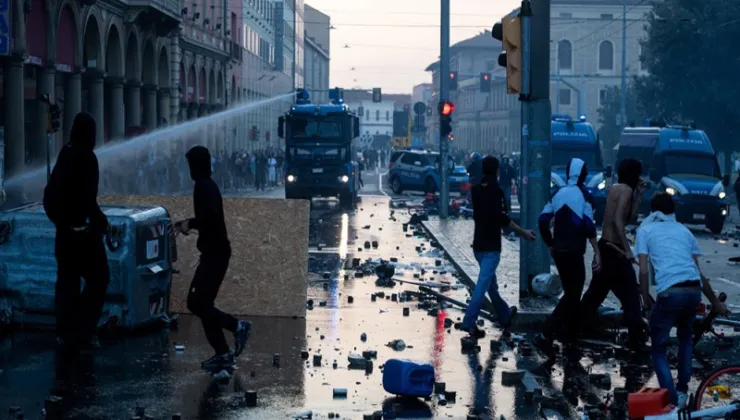
Protesters took to the streets across Italy on Saturday as nationwide demonstrations against rising prices and the energy crisis swept the country, prompting the government to tighten security in major cities. Thousands of police officers and soldiers were deployed as part of a large operation intended to prevent possible violence and clashes during the day of protest, according to a report by Global Aawaj. The demonstrations unfolded against a backdrop of growing public anger over the cost of living, an issue that has pushed household expenses and the energy emergency to the forefront of national attention.
Key Facts at a Glance
Saturday's events can be summarized in a few central points:
- Nationwide protests: Demonstrations were held across Italy on Saturday, not in a single city or region alone.
- Core grievances: The protests targeted rising prices and the energy crisis.
- Security tightened: The Italian government tightened security in major cities as the demonstrations took place.
- Thousands deployed: Thousands of police personnel and soldiers were mobilized for the operation.
- Preventive aim: The deployment was intended to prevent possible violence and clashes.
- Underlying mood: The demonstrations came amid growing public anger over the cost of living.
Together, those elements paint a picture of a country in which economic frustration has moved decisively into the streets, and in which the state has responded with a security operation of considerable scale.
A Nation Grappling with the Cost of Living
The grievances driving Saturday's mobilization center on two closely connected pressures: rising prices and the energy crisis. For the people who marched, these are not abstract policy debates but everyday realities. Energy costs shape nearly every corner of household spending, from heating and electricity to transport and the price of goods, so a prolonged energy crisis tends to translate quickly into broader cost-of-living strain. That link helps explain why the two issues stood together at the heart of the protests.
The breadth of the actions matters as much as their content. Holding demonstrations across the country on a single day signals that the frustration is widespread rather than localized. The report describes the mood among the public as one of growing anger over the cost of living, and Saturday's protests gave that anger a visible, national platform. What had been building as economic pressure in daily life was expressed, for one day at least, through coordinated action in cities across Italy.
Energy Crisis at the Center of the Anger
The energy crisis occupied a prominent place in the demands of the protesters. Rising energy prices have a compounding effect on ordinary budgets: they arrive not only in monthly bills but also in the cost of the goods and services that depend on energy to produce and deliver. When those increases combine with broader price rises, the squeeze on households intensifies. It is this combination of rising prices on one side and the energy crisis on the other that framed the nationwide demonstrations and gave them their urgency.
A Large-Scale Security Operation in Major Cities
The government's response to the protests focused firmly on prevention. As the demonstrations took place, authorities tightened security in major cities and deployed thousands of police and soldiers. The stated purpose of the operation was to prevent possible violence and clashes, a signal that officials were determined to keep the day of protest from tipping into disorder.
The scale of the deployment underlines the seriousness with which the authorities viewed the situation. Mobilizing thousands of personnel across multiple cities is a substantial undertaking, and it reflects both the anticipated crowds and the potential for tension at large gatherings. A visible security presence in major urban centers served as the most concrete expression of the government's effort to manage the demonstrations safely.
Prevention Over Reaction
Notably, the security operation was framed in preventive terms. Rather than responding to incidents after they occurred, the deployment of thousands of police officers and soldiers was designed to deter violence before it could begin. That approach speaks to the government's stated concern about possible clashes, and it placed security forces in position as the protests moved through the country's major cities. For the demonstrators, it meant that Saturday's marches proceeded under the close watch of a significant security apparatus.
What the Protests Signal for Italy
The events of Saturday highlight a country under economic strain and a public increasingly willing to voice that strain collectively. The demonstrations brought together two defining pressures of the moment, rising prices and the energy crisis, and expressed them through nationwide protest. The government, in turn, responded with tightened security in major cities and a large deployment aimed squarely at preventing violence and clashes.
For now, the central facts are clear: protests were held across Italy on Saturday against rising prices and the energy crisis; security was tightened in major cities; and thousands of police and soldiers were deployed to prevent possible violence. Behind those facts lies the deeper story of growing public anger over the cost of living, an anger that found its outlet in the streets and that is likely to remain a defining feature of Italy's public life as long as the underlying economic pressures persist.