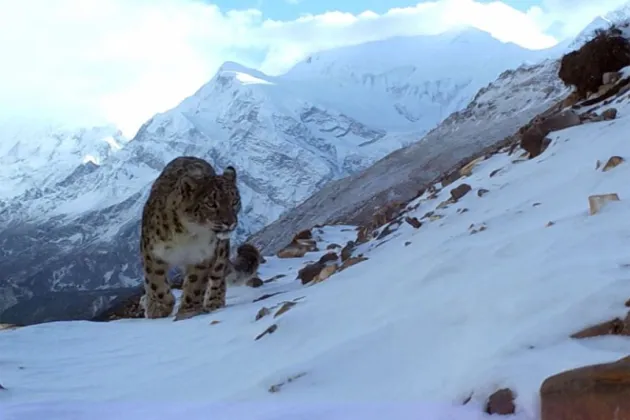
A comprehensive rangeland study and grass sampling initiative has been launched in the high-altitude pastures of Mustang district, with the aim of protecting the elusive snow leopard and its principal prey species, the blue sheep, locally known as naur. The study comes in response to growing concerns over the declining availability and quality of grass in these remote pastures, a trend that researchers attribute to the effects of climate change.
The research work is being carried out in areas that serve as critical habitat for the snow leopard, one of the world's rarest and most threatened big cats. Scientists involved in the study are assessing overall rangeland conditions and measuring the nutritional quality of grasses in the alpine meadows that sustain both the blue sheep and, in turn, the predators that depend on them.
Why the study matters
The snow leopard sits at the top of the food chain in the high Himalayan ecosystem, and its survival is closely tied to the health of the grasslands that support its prey. Blue sheep, the primary wild ungulate prey of the snow leopard in the Mustang region, depend entirely on the pastures for grazing. If grass availability and quality decline, blue sheep populations can suffer, forcing snow leopards to travel farther in search of food or, in some cases, to prey on domestic livestock, which heightens human-wildlife conflict.
According to researchers, the deterioration of these high-altitude pastures has been attributed to climate change, which is altering vegetation patterns across the Himalayas. Rising temperatures, shifting precipitation and changing snow cover are believed to be affecting the composition and productivity of grass species in the trans-Himalayan region of Mustang.
What the researchers are doing
The study involves field-level assessment of rangeland conditions across the grazing areas of Mustang, combined with systematic grass sampling. By measuring grass quality, researchers hope to build a scientific picture of how productive the pastures remain and how well they can support populations of blue sheep and other wild ungulates.
The findings are expected to inform future conservation strategies for the snow leopard and its prey. Understanding the state of the rangelands is considered a foundational step in designing measures to restore degraded grasslands and to secure the prey base on which the snow leopard depends.
Conservation context
Snow leopards are listed among the world's rarest big cats and are protected under Nepal's conservation framework. Nepal's high Himalayan landscapes, including the trans-Himalayan districts such as Mustang, are recognized as important strongholds for the species, as well as for blue sheep and other wild ungulates that form its food base.
Mustang, lying in the rain shadow of the Annapurna and Dhaulagiri ranges, features dry alpine grasslands that are particularly sensitive to environmental change. These pastures are also used by local communities for livestock grazing, making the management of rangelands a matter that touches both wildlife conservation and pastoral livelihoods.
With the launch of this rangeland study, conservation authorities and researchers in Mustang have taken a direct step toward addressing the root of the snow leopard's survival challenge: the health of the grasslands far below the ridgelines where the cats roam. The results of the grass sampling and rangeland assessment are expected to guide evidence-based interventions aimed at sustaining both the rare predator and the prey it depends upon.