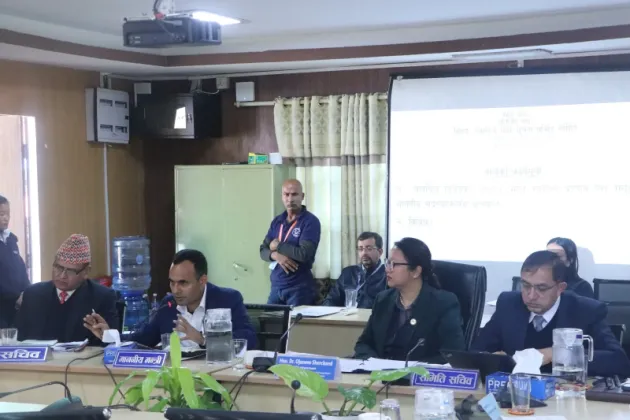
Lawmakers on Tuesday scrutinised the Cinema Bill, 2081 in detail, proposing a range of amendments and suggestions as the legislation moved through parliamentary deliberation. The discussion took place at a meeting of the Education, Health and Information Technology Committee held at the committee room in Singha Durbar, Kathmandu, under the chairmanship of committee chair Dr. Ojaswi Sherchan.
The bill, which seeks to govern the country's film sector, drew particular attention on several sensitive fronts. Members of Parliament used the session to voice demands and put forward suggestions touching on film censorship and classification, freedom of expression, the representation of gender and minority communities, the autonomy of the Film Development Board, and the division of powers among the federal, provincial and local levels of government.
Censorship and Freedom of Expression Take Centre Stage
Among the most prominent issues raised by the MPs was the question of film censorship and how the bill addresses the classification of films. Lawmakers demanded clarification of the provisions relating to censorship, a matter that has long been contentious in Nepal's film industry, where artists and producers have repeatedly called for a system that regulates content through classification rather than outright cuts or bans.
Closely linked to the censorship debate was the issue of freedom of expression. Members stressed that the legislation must strike a careful balance, ensuring that creative freedom is protected while any regulatory framework remains transparent and clearly defined. The demand for clarification on how the bill treats freedom of expression signals that MPs are unwilling to let ambiguous language pass unexamined in a law that will directly shape what Nepali audiences can see on screen.
Representation and the Film Development Board
The lawmakers also turned their attention to questions of representation within the structures the bill would create. Amendments and suggestions were proposed regarding the representation of gender and minority communities, an indication that MPs want the bodies overseeing the film sector to reflect the diversity of Nepali society rather than being dominated by any single group.
The autonomy of the Film Development Board emerged as another key point of discussion. The Board, the existing statutory body responsible for the development and regulation of the film sector, is expected to be restructured or empowered under the new legislation. MPs' focus on its autonomy suggests concern that the Board should be able to function independently and professionally, insulated from political interference, as the sector continues to grow.
Sharing Powers Among Three Tiers of Government
A further major theme of Tuesday's deliberation was the division of powers concerning cinema among the federal, provincial and local governments. Since the adoption of the federal structure, questions over which tier holds authority over activities such as film licensing, screening and regulation have remained unresolved in several sectors, and the Cinema Bill is now being tested against that framework.
Lawmakers demanded clarity on the rights of all three levels of government under the bill, proposing amendments to ensure that the division of responsibilities is unambiguous. How the final text allocates these powers is expected to have practical consequences for film production, distribution and exhibition across the country, affecting not only Kathmandu-based institutions but also provincial and local bodies that will be tasked with implementation.
Deliberation Continues
The meeting, presided over by committee chair Dr. Ojaswi Sherchan, formed part of the committee's ongoing clause-wise and thematic review of the bill. The suggestions and amendment proposals put forward by members on Tuesday are expected to be consolidated as the committee works towards finalising its recommendations before the legislation advances further in the parliamentary process.
The breadth of issues raised, from censorship and creative freedom to inclusion and federalism, underscores the significance of the Cinema Bill, 2081 for Nepal's film industry and for the broader creative economy. As deliberation continues, the committee faces the task of reconciling the competing demands of regulation, artistic liberty and the constitutional distribution of authority among the country's three tiers of government.
Source: Ratopati