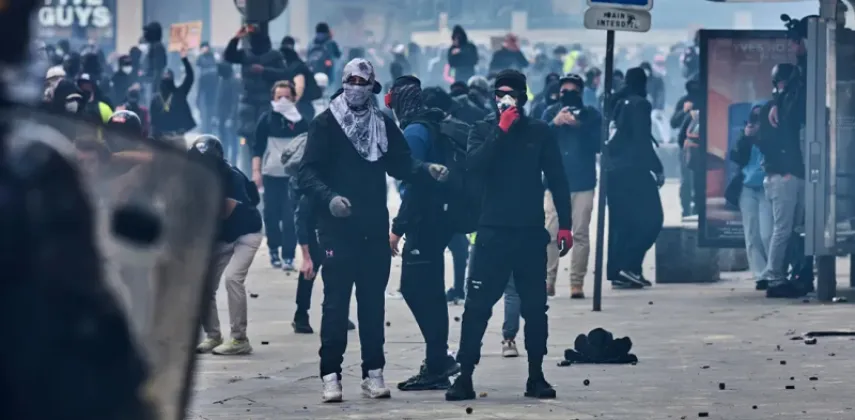
More than 575,000 people demonstrated across France on Thursday against rising prices, economic inequality and what they described as government inaction, according to figures from the French government. The demonstrations, held alongside a nationwide general strike at nearly 200 locations, drew more than 270,000 people outside the capital Paris alone. Protesters also raised concerns about low wages and reduced investment in public services, in what the government described as the largest single-day turnout since the movement began in September.
Demonstrations held across the country
The protests took place across nearly 200 locations, making Thursday’s mobilisation a nationwide event rather than a gathering centred only on Paris. More than 270,000 demonstrators were reported outside the capital, while the national total exceeded 575,000. The figures point to the breadth of participation across France, although the available information does not give a location-by-location breakdown.
The demonstrations were accompanied by a general strike, bringing together two forms of protest in a single day of action. Participants took to the streets to voice concerns about inflation and economic inequality, while the strike added pressure around wages and public services. The government’s count marked the turnout as the largest single-day mobilisation since the movement began in September.
Inflation, wages and inequality at the centre
Rising prices were among the central concerns expressed by demonstrators. The protest also addressed economic inequality and low wages, issues that participants connected to the wider pressure on household finances. The grievances described in the reports therefore extended beyond inflation alone, encompassing questions about income and how economic pressures affect people differently.
Public services were another focus. Demonstrators opposed cuts to investment in those services, making the level of public spending part of the day’s protest message. Alongside calls for better wages and concerns about the cost of living, this objection reflected a broader demand for the government to respond to economic pressures and protect public services. The available information does not specify which services were most affected or identify particular policy proposals put forward by protesters.
Largest single-day turnout since September
The government characterised Thursday’s attendance as the biggest single-day turnout since the movement began in September. That comparison gives the figures significance beyond the day’s total: the mobilisation represented a new high point within the protests described in the reports. More than 575,000 people were counted nationwide, with participation spread across nearly 200 sites.
The scale of the turnout also drew attention to the range of issues behind the demonstrations. Inflation, inequality, low pay, public-service investment and government inaction were all part of the protest message. The combination of street demonstrations and a general strike underscored the breadth of the grievances reported, without reducing the mobilisation to a single issue.
Thursday’s protests brought tens of thousands of people into the streets beyond Paris and hundreds of thousands more across the country. The government’s figures place the nationwide attendance above 575,000 and identify the event as the movement’s largest single-day turnout since September. Demonstrators used the mobilisation to oppose the rising cost of living, low wages, economic inequality and cuts to investment in public services, calling attention to demands for a response from the government.