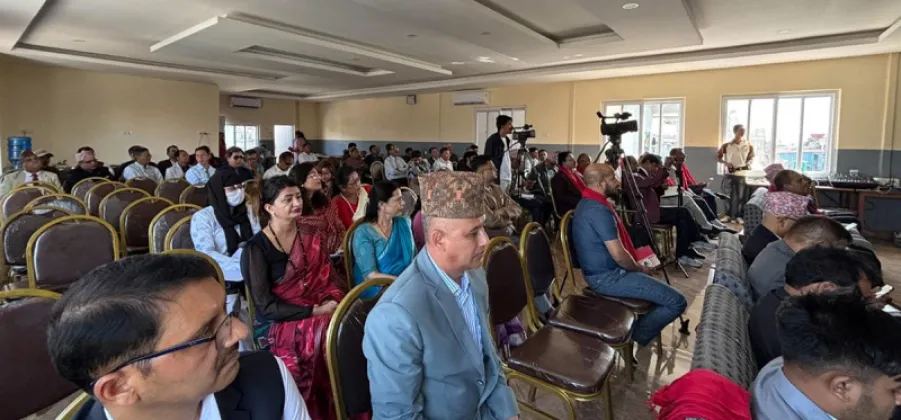
The Ministry of Education and Sports held an education dialogue in Pokhara with stakeholders from Gandaki Province to gather input on making the proposed School Education Act practical, timely and student-centred. The programme, titled “Education Dialogue–Part 2 (Gandaki Province Discussion),” brought together education representatives and ministry officials, with Shailendra Jha, chief adviser to the education minister, attending as chief guest. The ministry’s political adviser, Saroj Gautam, and representatives of HISSAN also took part.
Consultation on the proposed law
The dialogue focused on the proposed School Education Act and the ministry’s stated aim of shaping legislation around students’ needs. By convening education stakeholders from Gandaki, the ministry created a forum for discussion as it works to make the proposed law relevant to conditions in the province and workable in practice. The programme’s title identified it as the second part of the ministry’s education dialogue series, with this session dedicated to a provincial discussion in Gandaki.
The ministry’s objective, as described for the event, was not simply to discuss a draft in the abstract. It was to hear from people connected with education and use that engagement to help make the proposed act practical and timely. The student-centred focus was a central stated goal of the discussion. The information made public about the programme did not detail specific provisions under consideration or set out recommendations made during the session.
Officials and education representatives take part
Jha attended as the chief guest, while Gautam participated in his role as the ministry’s political adviser. Representatives of HISSAN were also among those taking part. Their presence brought ministry representatives and an education-sector organisation into the same discussion on the proposed legislation.
The gathering was described as a dialogue with education stakeholders from Gandaki Province. That format placed consultation at the centre of the programme: rather than presenting the event as a formal announcement of a completed law, the ministry convened participants to discuss how the proposed act could be shaped. The available details identify the participants and the purpose of the meeting, but do not provide a full list of attendees or describe individual remarks.
Student-centred approach remains the stated priority
Making the act student-centred was a defining part of the ministry’s stated purpose for the Pokhara programme. The dialogue was also intended to help ensure the proposed law is timely and practical. Those aims connect the discussion to the way legislation is developed: the ministry sought stakeholder engagement while considering a proposal intended to guide school education.
The meeting’s focus on practicality signals that the ministry wants the proposed act to be considered in terms of how it can work, as well as what it should seek to achieve. Its emphasis on timeliness points to the ministry’s intention to address the proposal in a current and relevant way. The event information, however, does not specify which aspects of school education participants discussed, what changes they proposed, or how their views will be incorporated into the draft.
The Pokhara dialogue therefore marked a consultative step in the ministry’s effort to develop a School Education Act that reflects its stated priorities. With officials and HISSAN representatives participating alongside other Gandaki education stakeholders, the discussion provided a provincial forum for engagement. The ministry’s stated aim is to make the proposed law practical, timely and centred on students; further details about the draft and the outcomes of the consultation were not included in the information available about the programme.