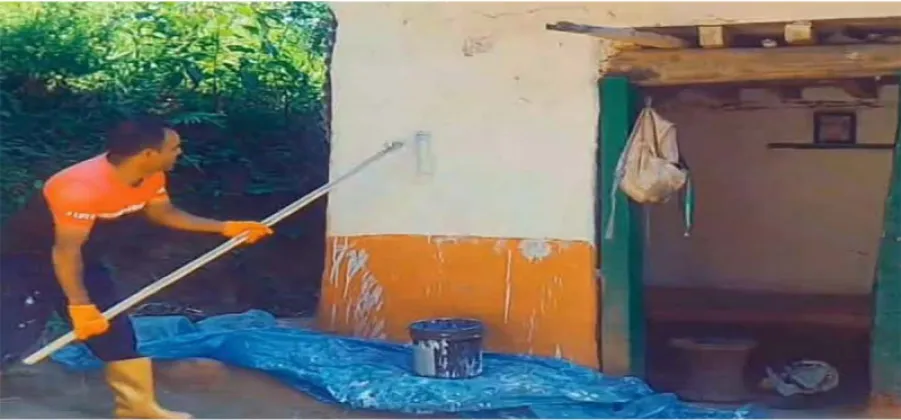
The traditional practice of plastering and decorating houses with soil and red clay is fading in villages across Bhojpur district, eastern Nepal, according to reports published on 14 October 2026. Before Dashain, homes were traditionally coated with white, yellow, red and black soil, gathered from rivers and other local sources. The custom has increasingly given way to market-bought lime and modern paints, leaving the older method less visible in village life.
A seasonal tradition rooted in local materials
The practice was closely associated with preparations for Dashain, when households used soil and clay to refresh the appearance of their homes. Rather than relying on commercially prepared coatings, people traditionally collected different-coloured soil from nearby rivers and other places in their local surroundings. White, yellow, red and black earth were used to decorate walls, while red clay, known locally as kamera, was also part of the customary plastering. Together, these materials gave homes a finish made from resources available in the area.
The custom was more than simply applying a single layer of mud. The use of soils in several colours formed part of the seasonal decoration described in the reports. In the period before Dashain, walls were coated and given a refreshed appearance using the locally collected materials. The practice connected preparations for the festival with the surrounding landscape: the soil and clay used on homes came from rivers and other local sources rather than from the shops that now supply lime and paint.
Lime and modern paints replace older methods
The reports point to the growing use of market-bought lime and modern paints as the change pushing traditional mud-plastering into obscurity. These products are increasingly used in place of the soil-and-clay coatings that were once common in villages. As the newer materials become more widely used, the practice of gathering coloured earth and applying it to house walls ahead of Dashain is fading.
The shift is reflected in the contrast between the two approaches. Traditional plastering relied on white, yellow, red and black soil, as well as red clay collected locally. The newer approach described in the reports uses lime bought in the market or modern paint. The accounts do not give figures for how many households still use the traditional method, or identify how quickly the change is occurring. They do, however, describe the custom as disappearing from village life as commercial alternatives gain ground.
A custom becoming less visible in Bhojpur
The decline of the practice means that one familiar way of preparing homes for Dashain is becoming less common in Bhojpur. In the traditional approach, the work of coating walls was tied to the seasonal use of local earth and clay. The changing preference for lime and paint has altered that routine, and the reports describe the older custom as fading rather than continuing as a widespread practice.
The available reports do not specify which villages have retained the tradition, how many households continue to plaster with kamera, or what factors beyond the use of commercial products may be involved. They centre on the broader change: a local method of decorating homes with river and locally sourced soil is being displaced by bought materials. The customary colours and red clay remain central to accounts of how houses were once prepared before the festival, even as the method becomes increasingly uncommon.
The fading practice highlights a visible change in how homes in Bhojpur are decorated ahead of Dashain. For generations, the seasonal finish described in the reports came from coloured soil and red clay gathered locally. Today, market-bought lime and modern paints are increasingly taking their place. The reports published on 14 October 2026 document that transition, while offering no indication of whether the traditional method may continue in some households or villages.